Vanzetti Engineering: All Smiles for 2025
Vanzetti Engineering closed 2025 with an overall positive balance, driven above all by the marine sector, and looks with confidence to 2026 by focusing on product innovation and emerging markets
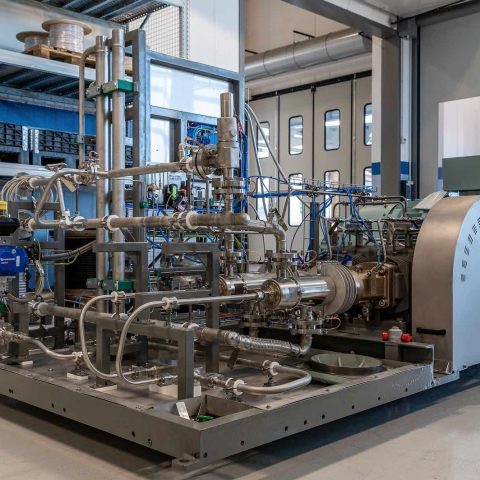
With a turnover of over 51 million euros and a two-year backlog of revenue coverage, despite a context marked by complex geopolitical dynamics and a progressive global competitive realignment, Vanzetti Engineering closed the 2025 fiscal year with an overall positive balance, consolidating its position in strategic reference segments such as the marine sector and continuing investments in research and development to face the technological challenges of the coming years.
LNG in the Automotive Sector
In the automotive sector, LNG showed a contraction over the last year compared to initial expectations, mainly due to high volatility in methane prices and a European regulatory framework increasingly oriented toward green energy carriers, which penalized the internal combustion engine market in favor of electric vehicles. “The peak in LNG energy prices significantly affected the confidence of fleet operators, lengthening investment return times and causing the European market to lose competitiveness to the Asian one,” explains Andrea Capuani, Chief Commercial Officer of Vanzetti Engineering. “This reduced new installations, while still leaving room for retrofit interventions.“
Despite this unfavorable scenario, automotive is recording good growth potential in India, a market that is also showing positive signs in the industrial field. The latter, in particular, is a sector in which Vanzetti Engineering achieved good results in 2025, focusing especially on biogas, which is undergoing a phase of constant growth, and on industrial gases.
“Precisely in relation to industrial gases, in 2025 the MOCA certification, which certifies the conformity of components with suitability requirements for contact with substances intended for consumption, was extended to additional pumps and skids, thus expanding the scope of application to plants intended for food sector processes,” specifies Luca Gazzera, Automotive & Industrial Business Unit Manager.
Marine Business Performance in Vanzetti’s 2025 Overview
On the other hand, the performance of the marine sector was widely positive in 2025, now representing more than 70% of the company’s turnover and where Vanzetti Engineering maintains a leadership position, with a significant market share in Fuel Gas Systems. In fact, the Fuel Gas System segment for marine applications continued to grow, supported by a structural demand for high-reliability solutions and a medium-to-long-term vision that sees LNG as a key fuel until at least 2035. “We are not facing a fossil fuel like the others: LNG maintains a clear competitive advantage and will continue to play a central role in the energy transition, transforming over time into an increasingly clean methane, for example as bio-LNG or e-LNG,” underlines Capuani.
New 3×50% Architecture for High Flow Rates
In 2025, one of the most significant developments was the completion, with in-house validation, of the new VT-3 high-pressure pump architecture with 3×50% redundancy, designed to meet the needs of large container ships. The evolution of the marine market, in fact, requires increasingly high flow rates and pressures, particularly for units exceeding 16,000 TEU.
The new solution allows for flow rates exceeding 20 m³/h, effectively doubling the current capacity covered by the Vanzetti portfolio, which has traditionally focused on Triplex architectures up to 11 m³/h with 2×100% redundancy. “With this architecture, we significantly broaden our market perimeter, maintaining the levels of quality and reliability that distinguish Vanzetti design,” highlights Federico Buono, Marine Business Unit Manager.
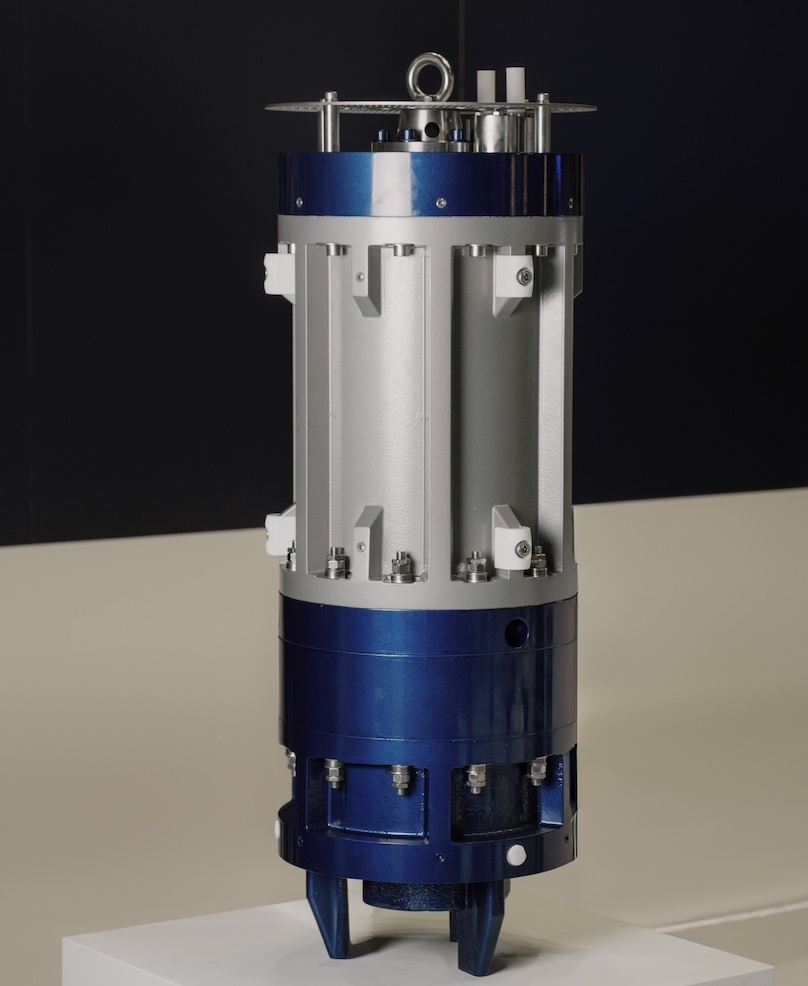
From a technical and economic point of view, the 3×50% solution guarantees lower GHG and BOG emissions, especially during port maneuvers during which it is possible to work at lower flow rates to reduce consumption. Furthermore, this architecture offers greater operational flexibility, optimized after-sales management, and advantages in terms of both CAPEX and OPEX.