Lomarlabs and Blaze Energy to Pilot Compact Onboard Fuel Reforming for Multi-Fuel Engines
lomarlabs, a venture catalyst advancing maritime innovation, has entered into a collaboration with Blaze Energy to pilot a third-generation, compact, engine-integrated fuel reformer designed to accelerate the practical adoption of alternative fuels in commercial shipping
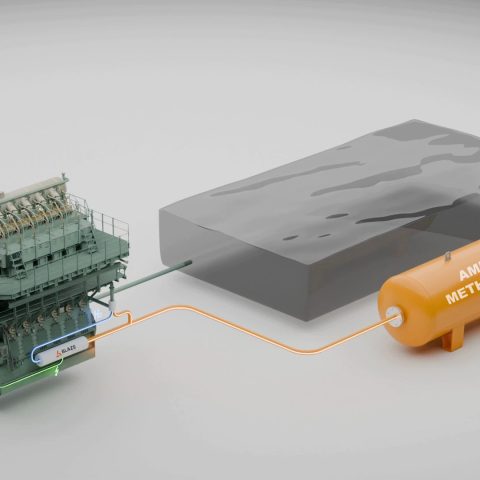
The collaboration with Blaze Energy will culminate in a pilot installation onboard a Lomar vessel, enabling Blaze Energy to validate its multi-fuel reforming system, under real marine operating conditions. The Flex-Fuel Reformer converts ammonia, methanol, or LNG into hydrogen directly onboard the ship, allowing propulsion and power generation machinery and equipment to efficiently operate on full or partial hydrogen blends to reduce associated emissions without compromising operational flexibility. The installed system will be first proven through ammonia.
Alternative Fuels: the Integrated Solution of Blaze and lomarlabs
Against the backdrop of tightening regulation – including the EU Emissions Trading System (EU ETS) and FuelEU Maritime – shipowners face increasing uncertainty around future fuel pathways, fuel availability, and long-term compliance strategies. With vessels representing multi-decade investments, the risk of premature lock-in to a single fuel or propulsion solution has become a central strategic concern.
Blaze Energy addresses this challenge by enabling existing engines to operate efficiently with multiple alternative fuels through compact, engine-integrated fuel reforming. By converting ammonia, methanol, or LNG into hydrogen directly at the engine, the system supports hydrogen-assisted combustion without the need for large standalone equipment or dedicated hydrogen supply chains.
Injecting small quantities of hydrogen accelerates combustion of slow-burning fuels such as ammonia – reducing ammonia slip, improving combustion efficiency, and mitigating methane slip in LNG engines. This allows owners to achieve measurable emissions and efficiency benefits while preserving operational and commercial optionality across fuels.
The pilot is scheduled for installation in early 2027, following land-based testing and engagement with classification societies. Both parties view the collaboration as a step toward developing engine-compatible, operationally credible pathways for alternative fuels—grounded in real-world testing rather than assumptions.
Stylianos Papageorgiou, Managing Director of lomarlabs
“The energy transition in shipping will be non-linear, and multi-fuel for longer than we may want or expect. Technologies that create optionality, rather than betting on a single outcome, will be strategically important. Blaze Energy works to bring to market a technology that delivers optionality to owners and resolves engineering bottlenecks. Our collaboration is about giving new technology the space and support it needs to iterate, learn, and prove itself in the real world.”
Rok Sitar, CEO and co-founder of Blaze Energy
“This pilot marks a deliberate shift from proving technology to proving operability. By integrating Blaze Flex-fuel System with a trading vessel we are addressing one of the key bottlenecks in adopting alternative fuels: practical, safe, and flexible use in existing vessels. Collaborating with an owner of this caliber allows us to validate the system under class-relevant conditions and build a credible pathway toward broader deployment with owners, OEMs and class societies.”