Lifthium Energy: The European Way of Rare Earths
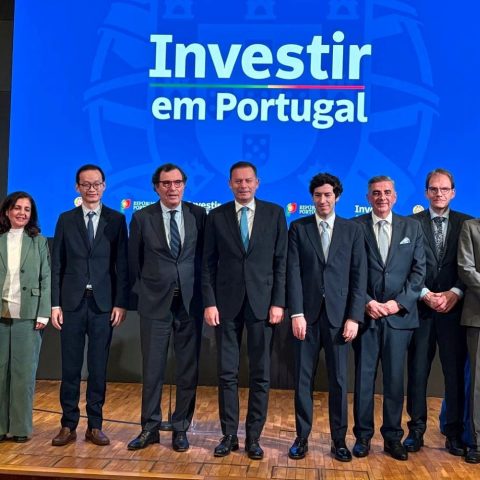
Lifthium Energy signed a contract with the State, under the Temporary Crisis and Transition Framework scheme, led by AICEP, relating to the industrial project in Estarreja. The contract provides for an incentive of €180 million to support the construction of a lithium refinery.
Europe’s lithium industry is here, and it is called Lifthium Energy. This signing is part of a phased development of the project, which continues to follow the usual criteria of technical, commercial and financial viability. Over the last two years, the lithium market and the European industrial context have become significantly more challenging, reinforcing the need for discipline, rigour and prudence in conducting the process.
Lifthium Energy and its Proprietary Lithium Technology
The Lifthium project is based on the development of proprietary lithium refining technology, designed from the outset to meet the environmental and industrial requirements of the European market. It is a technologically advanced solution, geared towards process efficiency, reducing the environmental footprint, promoting circularity and responsible integration into the battery value chain, in an increasingly demanding regulatory context.
This technological effort, developed with national and international teams and supported by continued investment in R&D, is one of the project’s main assets. It is also a central element in Lifthium’s positioning with potential industrial and financial partners, at a time when competitiveness, sustainability and technological robustness are determining factors for any long-term decision.
Looking for a Strategic Partner
The next step will focus on seeking and negotiating a strategic partner, as well as consolidating market and financing conditions that will support a robust investment decision.
“The goal is to establish commercial, strategic and financial partnerships that support a solid and sustainable long-term decision,” says Duarte Braga, CEO of Lifthium Energy.
Lithium Refining Technology
Lifthium has successfully completed a yearlong test program that has made it possible to refine lithium chloride (LiCl) by electrolysis on an industrial scale. The results obtained over a year of testing in Canada – carried out at Noram/Nesi’s facilities, in close partnership with this company – represent a technical paradigm shift, paving the way for the industrial adoption of a lithium hydroxide monohydrate (LHM) production route.
During the tests, the energy efficiency of the cells was evaluated in different operating configurations, as well as the purity levels of the lithium hydroxide (LiOH) produced, using the battery grade standard as a reference. Demonstration scale testing was carried on industrial scale cells and totalled more than 400 hours of operation.
In total, 25 m3 of high-purity lithium hydroxide for batteries was produced from lithium chloride brine supplied and pre-treated by Lifthium. The solution obtained was of high chemical purity, in accordance with the requirements for further conversion to battery-grade lithium hydroxide monohydrate.
The company plans to launch a first plant by 2027, with a refining capacity of around 28,000 tonnes of lithium hydroxide monohydrate per year, using renewable energy sources, sufficient to produce batteries for more than one million electric vehicles.