LiquidPiston Revitalizes the Outlook for Rotary Engines
Hailing from the United States, LiquidPiston introduces a new take on the rotary engine designed to overcome the hurdles of the energy transition. Helping us dive deeper is a prominent figure in the world of internal combustion engines, Vincenzo Perrone
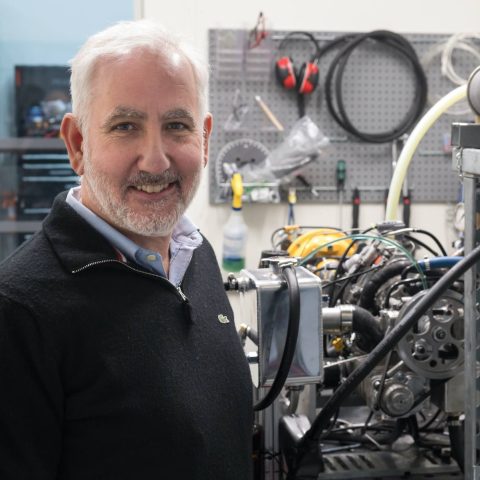
“Rotary engines are really exciting, and the outlook of the LiquidPiston project is genuinely compelling. It represents a real opportunity to disrupt a market that has largely settled into stagnation.”
This is how Vincenzo Perrone frames his view on LiquidPiston, a company he joined after a long career at the helm of Rehlko’s engine division, choosing what he describes as a fresh new start. A new journey rooted in established technologies, yet deliberately aimed at moving beyond the conservative paradigms of the internal combustion engine, paradigms increasingly shaped by regulatory acceleration and cost management rather than pure engineering innovation.
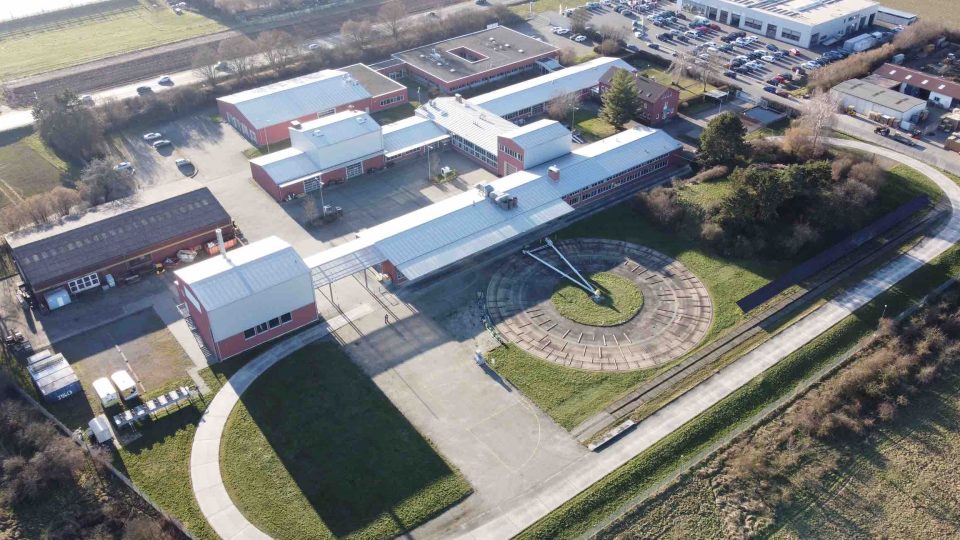
“LiquidPiston is a research-and-development company headquartered in Bloomfield, Connecticut, roughly two hours from Boston,” Perrone explains. “With a deep pool of engineering talent and innovation-first culture, we have designed a new breed of engine that exploits the intrinsic advantages of the rotary architecture, while overcoming the structural limitations of the traditional Wankel design. By reimagining the rotary engine, we’ve maximized power density and fuel flexibility.”
About Fuel Flexibility
Fuel flexibility is a defining pillar of the project. “The engine is designed to operate on a wide range of fuels: avgas, kerosene, diesel, and gasoline, as well as biogenic and paraffinic fuels. Owing to their geometry, rotary engines naturally lend themselves to high-speed operation, which aligns well with the performance targets we are pursuing.”
LiquidPiston’s technology is therefore aimed at applications where compactness and low mass are critical, and where high rotational speeds are not a constraint but an advantage. “Variable-speed generator sets have seen significant technological progress in recent years and represent one of the most promising application areas, alongside machines such as compressors and pumps,” says Perrone. “Unmanned aerial vehicles are also attracting growing interest. Drones are an almost ideal application: the maximum engine speed is dictated by the propeller tip speed, and 7000 rpm is absolutely compatible. A small, lightweight engine capable of running on jet fuel is a strong value proposition for the U.S. Government. Not surprisingly, power generation and UAVs are the two application fields currently undergoing testing and validation.”
To improve efficiency, LiquidPiston is leveraging the Atkinson cycle as an element of the company’s patented optimized thermodynamic cycle. “The Atkinson concept is based on over-expansion—by delaying exhaust port opening, consistent with Atkinson-cycle principles in four-stroke engines—to increase efficiency and extract more useful work from the combustion process. LiquidPiston is developing a two-stroke version of the engine in order to combine these benefits with the inherent compactness and low weight of a two-stroke architecture.”
Intellectual property is another cornerstone of the strategy. “The company has filed 117 patents covering the engine and related hybrid power solutions and enabling technologies. The key departure from the Wankel architecture is that the combustion chamber is not rotating. Instead, it is integrated into the stationary engine housing. This allows combustion to be more controlled, as the chamber geometry remains fixed, offering direct injection and higher compression ratios resulting in improved efficiency.”
Fully Self-Sufficient
Rapid development cycles are enabled by strong in-house capabilities. “LiquidPiston operates its own machine shop, which makes us fully self-sufficient in supporting development and low volume prototype manufacturing. This gives us short response times, which are an integral part of our strategy. Our R&D team is composed of powertrain engineers working with highly advanced software-based simulation tools, combining fluid dynamics, combustion analysis, performance simulation, and sealing behavior with experimental data acquisition to continuously refine the analytical models.”
In closing, Perrone highlights an aspect that speaks directly to the company’s innovative mindset. “One of the most fascinating elements of this engine is that there is virtually no scientific literature available: there is no established baseline. Every day, we write a new chapter. It is an intense, highly innovative process, standing in sharp contrast to the relatively stagnant landscape of conventional piston-engine development.”