Wacker Neuson and Rehlko – Also Powering the new Roller RT SC4
Wacker Neuson's remote-controlled trench roller RT SC4 is powered by Rehlko's Kdw 1003
We got a first-hand look at the Rehlko – Wacker Neuson pairing at the recent DemoDays, in 2025. The Wacker Neuson RT SC4 trench roller confirms its close relationship with Rehlko, adopting the company’s compact diesel engine, the KDW 1003. This is a one-litre engine (bore x stroke 75×77.6 mm), certified Tier 4F and Stage V, delivering 14.8 kilowatts (i.e. 19.8 horsepower) at 3,000 rpm. Maintenance intervals are simplified and eased by the integrated injection system, the overhead camshaft and the robustness of the cast-iron engine block. The belt-driven valve train reduces noise impact.
Rehlko’s compact one-litre engine, built to work “in the trenches”
The new remote-controlled RT trench roller by Wacker Neuson complies with the European Standard EN 474 and features a combined radio and infrared remote control system: While the radio signal ensures stable data transmission between the roller and the remote control, the infrared system continuously monitors the direct line of sight, thus ensuring greater safety for the operator and other people on the construction site. If this is interrupted – for example, in deep or winding trenches, behind buildings, or around corners – the machine stops automatically.
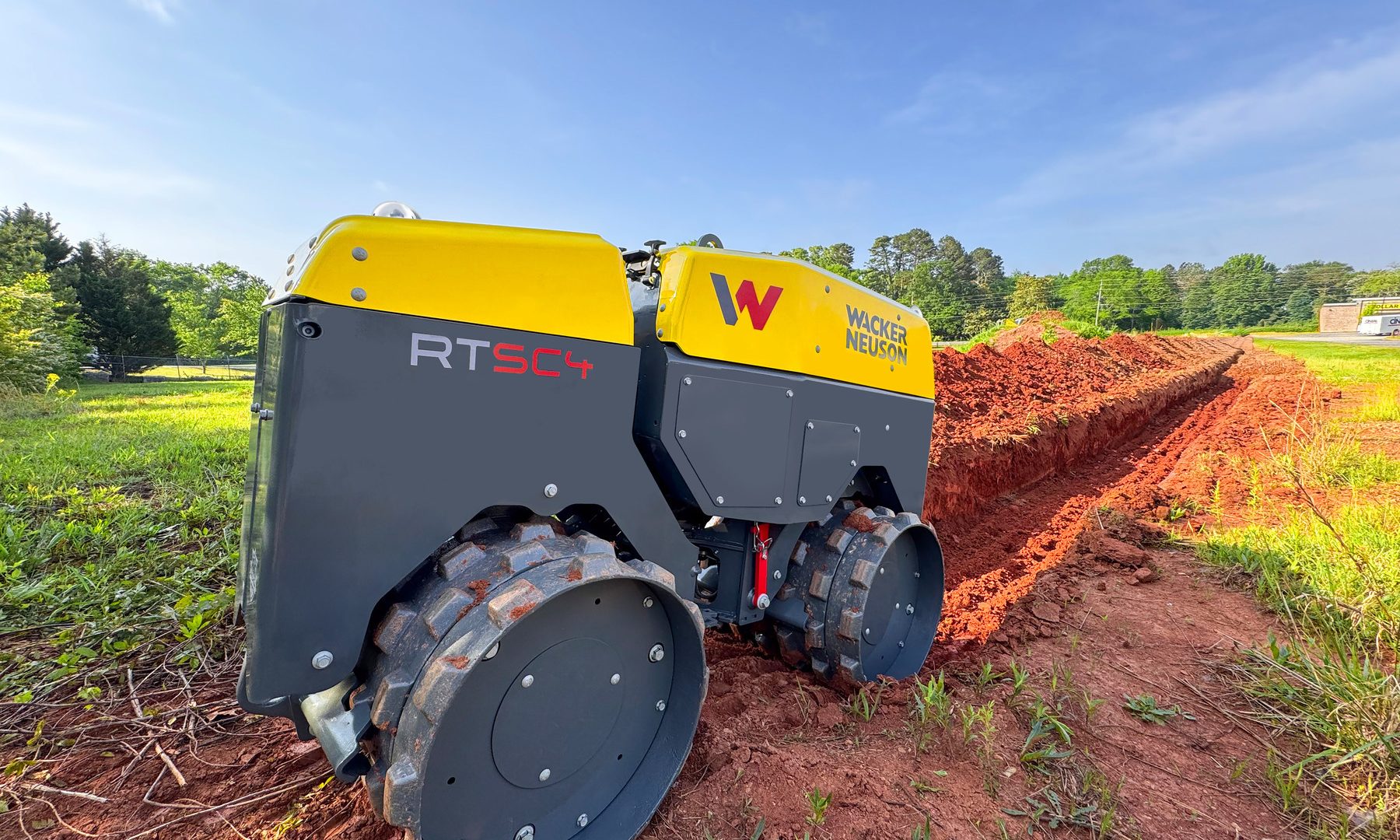
All control functions are in the hands of the operator, and an LED display provides information about running time, maintenance, and diagnostics. The patented return-to-center function automatically resets the roller to straight travel – without any operator intervention. This ensures consistent compaction results, especially in long trenches as well as in pipeline and utility construction applications. The trench roller’s large fuel tank allows for longer operating intervals for continuous compaction work without refueling. The drive motor and the vibration system integrated into the drum body are configured to be maintenance-free for the first 1,000 operating hours and, together with optimized service access, help to keep downtime to a minimum on demanding infrastructure construction sites.