Lhyfe Renewable hydrogen for the first Motorway Hydrogen Refuelling Station in France
Lhyfe Supplies Renewable Hydrogen for the first Motorway Hydrogen Refuelling Station in France Accessible to HGVs, Operated by TEAL Mobility
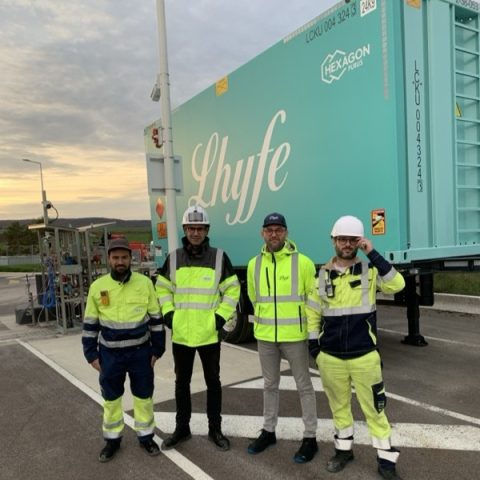
Let’s return to Lhyfe and its active role in the distribution of green and renewable hydrogen across the European continent. Lhyfe one of the world’s pioneers in the production of green hydrogen for the decarbonisation of mobility and industry – has been supplying France’s first motorway hydrogen station accessible to heavy goods vehicles, operated by TEAL Mobility, since November 2025.
This station, located on the A4 motorway in the Grand Est region (northeastern France), opens up strategic corridors towards Germany and the Benelux countries, facilitating low-carbon mobility along east-west and north-south routes.
Lhyfe Supplies the Motorway hand-by-hand with TEAL
For the supply of this station, TEAL Mobility is working with Lhyfe, under a multi-year contract. Lhyfe currently has four renewable hydrogen production sites installed in France and Germany (21 MW), and its installed capacity is set to increase by 70% in 2026.
In May 2025, Lhyfe became the first French player to deliver RFNBO*-certified hydrogen (*Renewable Fuels of non-biological origin). Its four sites obtained this certification between May and September 2025, making the company the leading European player in terms of production and delivery capacity for RFNBO hydrogen produced through the electrolysis of water.
The RFNBO standard is the European Union’s most demanding standard for green hydrogen under the European Renewable Energy Directive. To deliver its hydrogen, Lhyfe has a fleet of 70 type-IV containers. Lhyfe supplies renewable hydrogen for the first motorway hydrogen refuelling station in France accessible to HGVs, operated by TEAL Mobility
The Words of the CEO
Matthieu Guesné, founder and CEO of Lhyfe: “Through this agreement with TEAL Mobility, we are now the leading operator of hydrogen stations for heavy goods vehicles in Europe. This is a strong signal, both of the growth of green hydrogen in mobility, and of the robustness of our model. The Reims Champagne Nord station is of particular importance for zero-emission goods transport in Europe. It opens up a new route between Paris and the border countries of the north-east, where hydrogen mobility is already very dynamic. Everywhere, European road transport transition is really getting off the ground, and we’re delighted about that.”