BYD Launched China’s First NEV-Dedicated All-Terrain Circuit
BYD Launched China’s First NEV-Dedicated All-Terrain Circuit in Zhengzhou
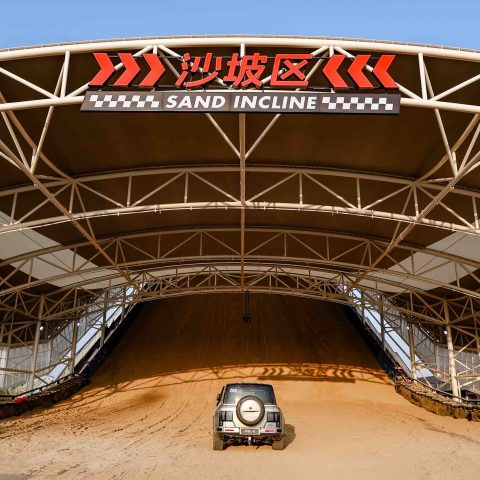
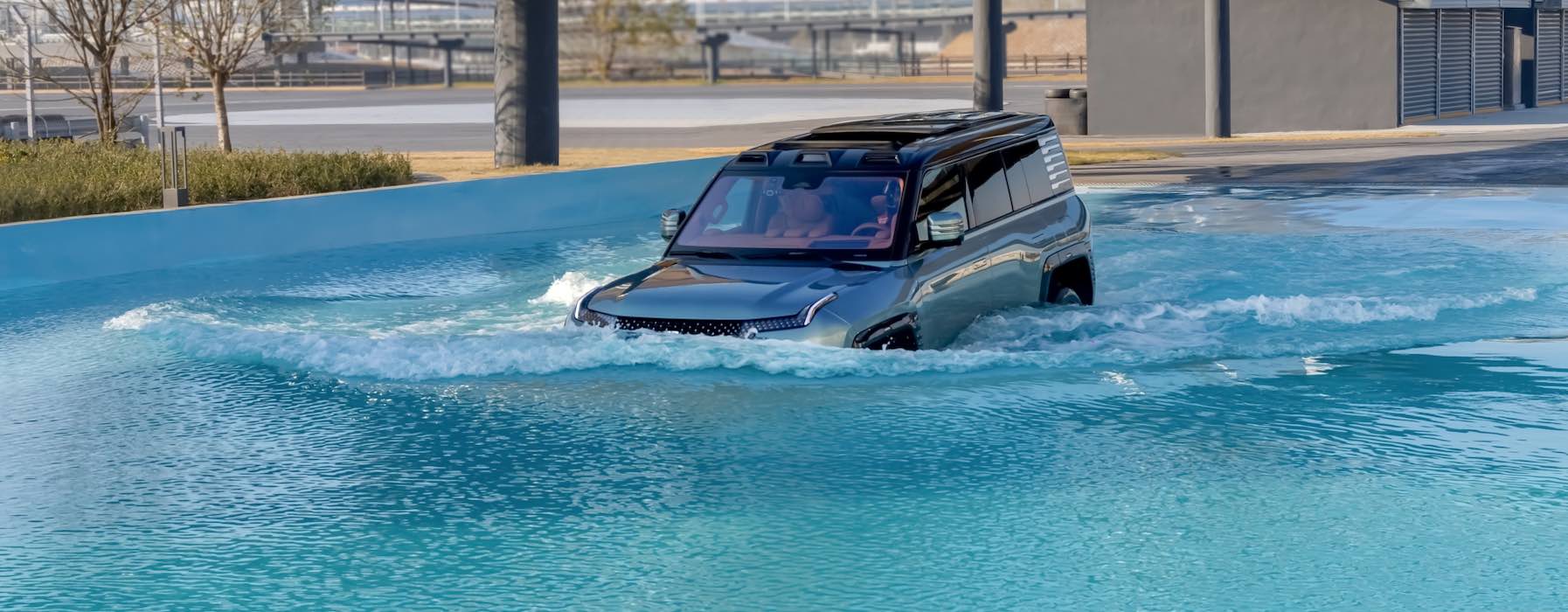
BYD officially opened its all-terrain circuit in Zhengzhou, China. Today for passenger cars, tomorrow for off-highway vehichles? The circuit includes eight experience zones, ranging from Indoor Sand Dune, Low-Friction Ring, Kick-Plate, Wading Pool, Dynamic Paddock, Race Track, Off-Road Park, to Camping Area.
BYD All-Terrain diversified experience
Differing from conventional single-track designs, BYD Zhengzhou All-terrain Circuit provides a distinctive experience that integrates vehicle water-crossing, indoor sand dune climbing, off-roading, among others, where visitors can explore diverse scenarios at one stop.
Constructed with 6,200 tons of sand to mimic the granular composition of the Alxa Desert, featuring a 29.6-meter vertical drop and a 28-degree slope, the Zhengzhou indoor sand dune has been certified by Guinness World Records as the highest and largest dune climbing facility for car testing.
The Low Friction Circle, China’s first 44-meter-diameter circular track, consists of 30,000 smooth basalt bricks and is paired with a 3 mm water-covering surface. This ensures a constant friction coefficient between that of ice and snow.
The 1,758-meter race track includes nine curves and a 550-meter straight acceleration section. A total of 27 off-road scenarios, span from beginner to advanced levels, enable the fun of off-road driving to be accessible to a wider audience. Even an urban SUV can confidently navigate through beginner-level terrain with the intelligent all-wheel drive.