Mercedes plug-in hybrid system: the diesel-electric star
The crown jewels of Mercedes plug-in hybrid system are still the 9G-Tronic transmission and the four-cylinder diesel engine OM654 in a 194 hp and 400 Nm version with Euro 6d TEMP emissions. We might then say that the marriage between hybrid technology and diesel is quite a perfect one. However, Dieselgate has put a shackle […]
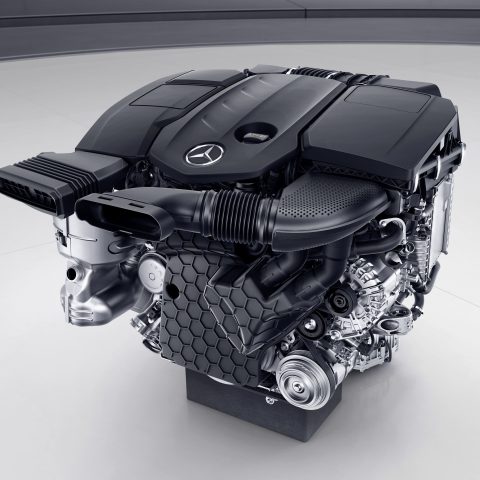
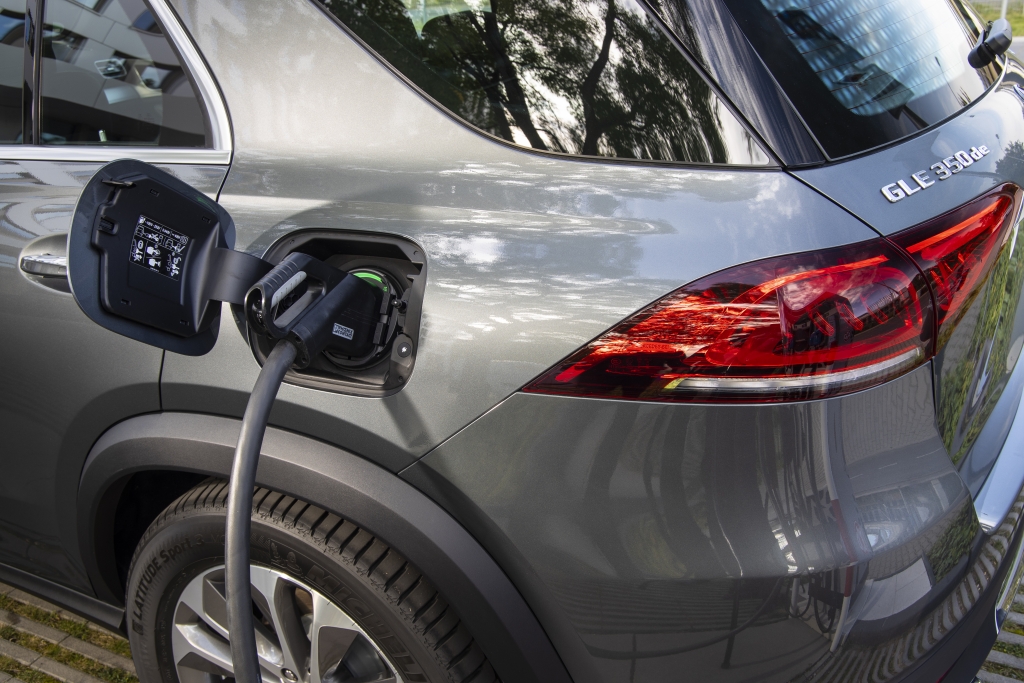
The crown jewels of Mercedes plug-in hybrid system are still the 9G-Tronic transmission and the four-cylinder diesel engine OM654 in a 194 hp and 400 Nm version with Euro 6d TEMP emissions. We might then say that the marriage between hybrid technology and diesel is quite a perfect one. However, Dieselgate has put a shackle on Diesel cycle’s legitimate ambitions. In Stuttgart, though, they still think otherwise. The maximum load that can be hauled by the GLE 350de reaches 3,500 kg, far surpassing E 300de sedan’s former record of 2,100 kg.
Increased capacity for the battery pack
The vehicle’s electric portion features a couple of third-generation innovations: the permanently excited synchronous motor now gets more powerful with 100 kW (10 more than its predecessor) with the same torque output of 440 Nm; plus, its newly-developed battery pack has a capacity of 31.2 kW as compared to the 13.5 kW of the previous generation. All of which results in a plug-in hybrid that needs less than 30 minutes to recharge at a DC charging station, can speed up to 160 km/h in purely electric mode and features an electric-only range touching 100km on the WLTP cycle, correlated to NEDC values.
SUSTAINABLE TRUCK OF THE YEAR 2020
Mercedes plug-in hybrid: a touch of hi-tech
Notwithstanding an empty weight of over 2,200 kg, teamwork with the OM654 grants the GLE 350de a 0-100 km/h time of 6.8 sec. by virtue of a 320 hp, 700 Nm combined (diesel+electric) output, basically the same as that of a conventional 6-cylinder diesel engine. Yet this hybrid can boast 29g/km CO2 emissions and a fuel consumption of 1.1 l/100 km in hybrid mode with a 25.4 kWh/100 km power consumption.
Adding a touch of hi-tech to the final picture, the 48 V onboard electrical system by Bosch does not only power the transmission and brake pump, but also the refrigerant compressor as well as the auxiliary heater included in the air-conditioning system, thus offering zero-emission winter pre-heating and summer pre-cooling of the cabin as a standard feature.