13.5 L John Deere Engine Powers the Bald Head Island Barge
John Deere Powers the Bald Head Island Barge with twin 6135AFM85, the 13.5L Engine for Marine Applications
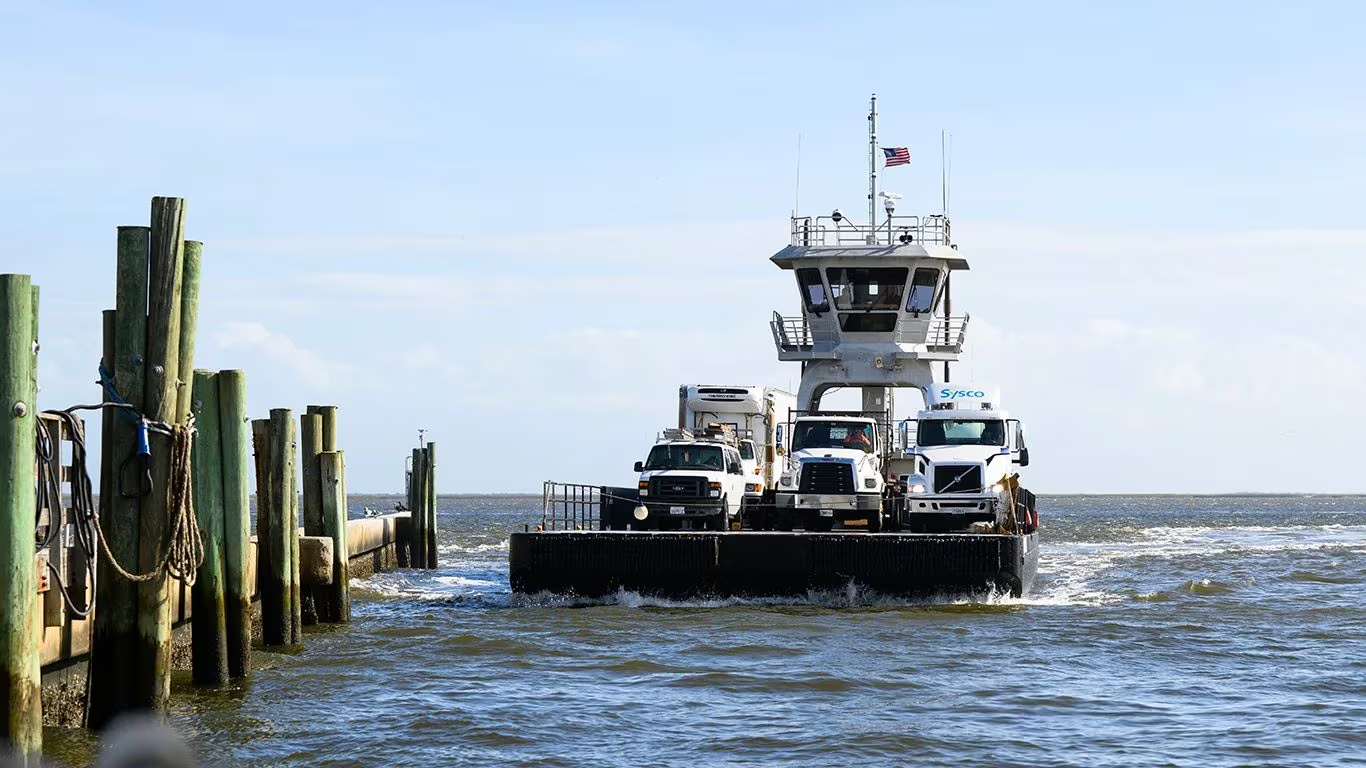
John Deere Power Systems is a frequent presence alongside commercially operated vessels in the light and medium-duty segment across the United States. A case in point comes from Deere’s 13.5-liter engine, which has found a home aboard a boat operating out of Bald Head Island, North Carolina.
“In essence, we are the bridge to the island,” says Bion Stewart, chief operating officer of Bald Head Island Transportation. “The tug and barge play a key role in supporting all of the infrastructure of the island. They run daily, Monday through Friday, and we provide things like fuel deliveries, food deliveries, and support for construction. We really do provide essential support.”
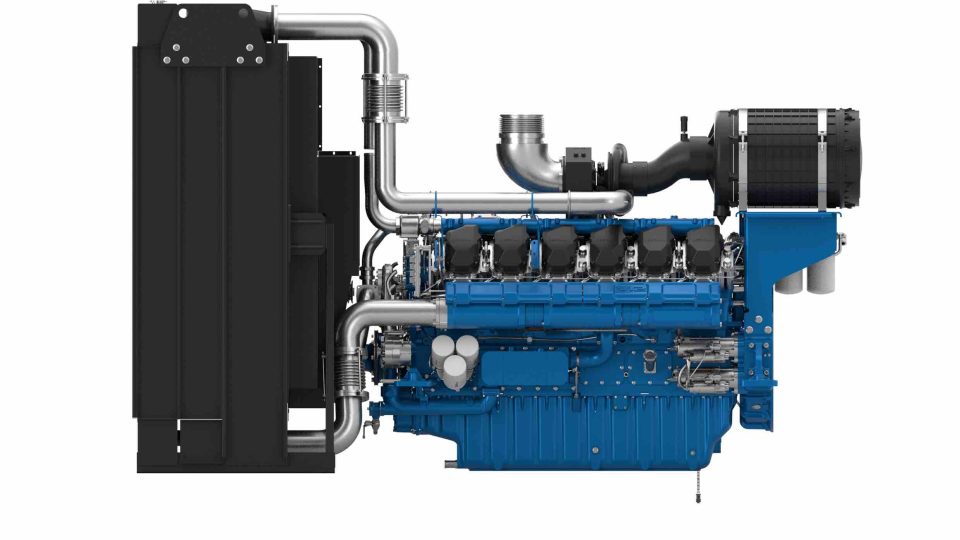
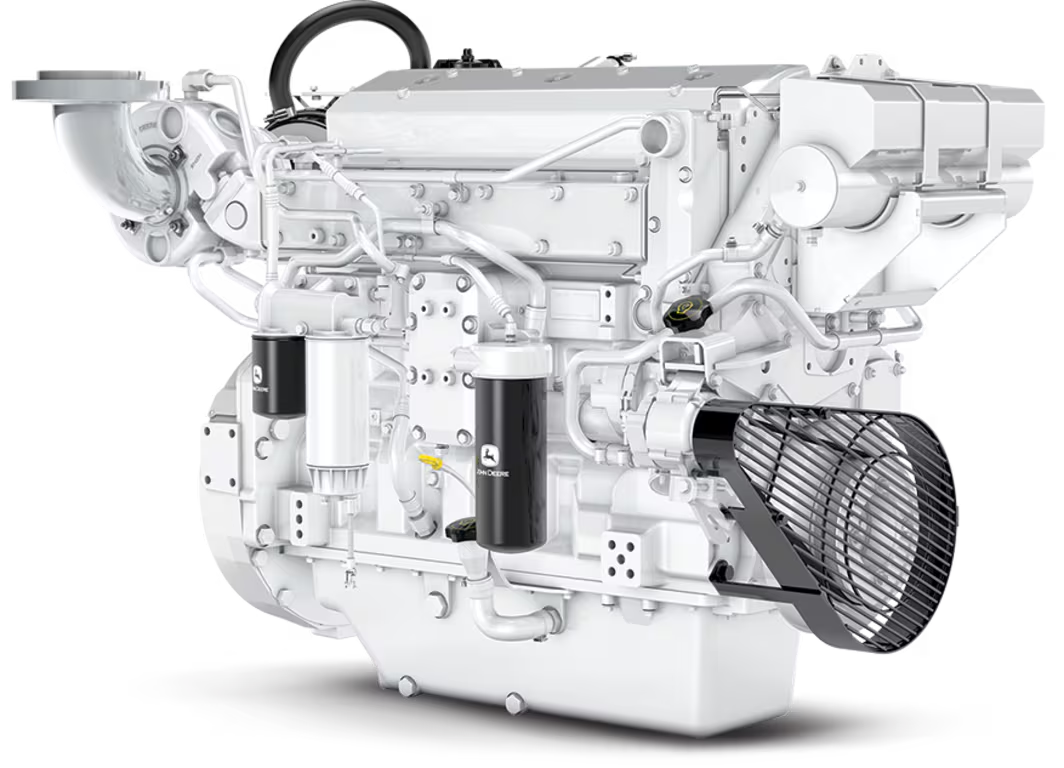
6135AFM85 Deere 13.5L Engine
Powering this indispensable operation are twin 6135AFM85 John Deere 13.5L marine engines, each providing 425 hp (317 kW). The decision to power the tug with John Deere engines was based on a reputation for dependability, one that has been demonstrated time and again on the water.
For the Bald Head Island Barge, downtime isn’t an option. Any interruption in service directly impacts the entire island community, making consistent engine performance a daily necessity.
Captain John “Rusty” Terry, who pilots the tugboat, knows this firsthand. When asked when reliability is most crucial, his answer is simple: “Every day.”
This commitment to daily performance is found in the engine room. According to Mike Babson, lead mechanic for Bald Head Island Transportation, the engines have logged 15,200 hours each with “hardly any problems.” For Babson, this performance validates their choice: “Reliability is the reason we chose them, and they have proven to be incredibly dependable.”
“We’ve found that the John Deere engines have been very, very efficient,” says Stewart. “They really don’t consume that much fuel for the amount of products and the weight and everything that we’re driving.”
This efficiency translates into tangible savings and less time spent refueling. Captain Terry confirms this, noting that the tug only needs to take on fuel once every two to three weeks — a testament to the engines’ economical performance under heavy loads.
Maintenance
To maximize uptime, routine maintenance needs to be as quick and straightforward as possible. The engine’s thoughtful design directly addresses this need. Babson points to several features that make his team’s job easier, such as easily accessible filter housings and multiple engine oil ports located on both sides of the engine. This layout allows mechanics to service the engines quickly and efficiently. He also noted that the advanced gaskets and seals help reduce leaks and drips.
For an operation as critical as the Bald Head Island Barge, the quality of the support network is just as important as the engines themselves. The team relies on the expertise and rapid response of their local John Deere marine dealer, James River Equipment, and John Deere engine distributor Flint Power Systems.
With only one tug and barge serving the entire island, a mechanical issue could halt the flow of essential goods. Stewart explains that the dealer’s readiness is a cornerstone of their success. “Their responsiveness is immediate,” he says. “They maintain a helpful parts inventory, so when we do have an incident, they’re here right away to get us back up and running.”
This commitment goes beyond simple repairs. Captain Terry recalls the time a James River technician proactively called him after seeing an alarm trigger remotely. Terry explains, “I’ve had their technician call me because he saw an alarm on his end. He’ll check in and ask, ‘Is everything okay?’ That’s how well they keep up with our engines.“