EU IAA – Industrial Accelerator Act
EU Commission Proposes Industrial Accelerator Act - IAA- to Strengthen Industry and Create Jobs in Europe
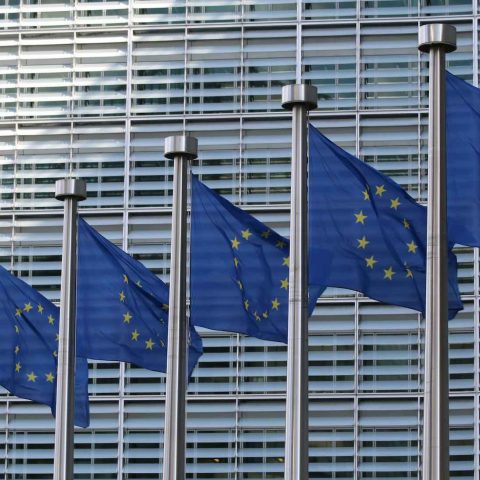
The EU’s Industrial Accelerator Act (IAA) aims to increase demand for low-carbon, European-made technologies and products. The ‘low carbon’ category inevitably brings industrial applications into play—ranging from NRMM (Non-Road Mobile Machinery) to decentralized power generation, as well as marine and heavy-duty automotive sectors.
The IAA Aims to Enhance EU Competitiveness
The EU’s Industrial Accelerator Act (IAA), published on March 4, 2026, states that it ‘will boost manufacturing, grow businesses, and create jobs in the EU, while supporting industry’s adoption of cleaner, future-ready technologies.’ The document sets ambitious goals during this critical phase of industrialization—particularly for the automotive industry—amid large-scale conflicts (primarily in Ukraine and Iran) that have triggered rising oil costs and risk fueling an inflationary spiral: the Act sets a goal to increase manufacturing’s share of EU GDP to 20% by 2035.
The IAA aims to increase value creation in the EU, strengthening our industrial base against the backdrop of growing unfair global competition and increasing dependencies on non-EU suppliers in strategic sectors. It therefore represents a strategy to support long-term economic growth, prosperity and security. In 2024, manufacturing represented 14.3% of EU GDP and therefore plays a vital role in Europe’s economic resilience, innovation lifecycle, and social fabric.
At the same time, the EU remains one of the world’s most open markets and is committed to maintaining that openness as a key source of economic strength and resilience. The proposal encourages greater reciprocity in public procurement, by providing equal treatment to countries that offer EU companies access to their markets, in line with the Draghi report. Content from partners with which the Union has concluded an agreement establishing a free trade area or a customs union, or that are parties to the Agreement on Government Procurement, and where relevant obligations of the Union exist under that agreement, shall be deemed to be of Union origin. For other public interventions, notably public schemes and auctions, partners can be covered within the IAA scope if they have a free trade agreement or customs union with the EU.
While remaining open to foreign direct investment, the IAA establishes conditions for major investments in strategic sectors exceeding €100 million where a single third country controls more than 40% of global manufacturing capacity. Such investments must create high-quality jobs, drive innovation and growth, and generate real value in the EU through technology and knowledge transfer, as well as compliance with local content requirements. They must also guarantee a 50% minimum level of European employment, ensuring businesses and citizens benefit alongside investors from access to the Single Market. In doing so, the IAA strengthens EU economic security and reinforces supply chain resilience.
Low-Carbon
The IAA introduces ‘Made in EU’ and low-carbon preferences in public procurement and public support schemes to boost demand for European industrial products — cement, aluminium to net-zero technologies like batteries, solar, wind, heat pumps, and nuclear. For steel, the Act proposes specific low-carbon preferences to create market demand.+
For more details: IAA