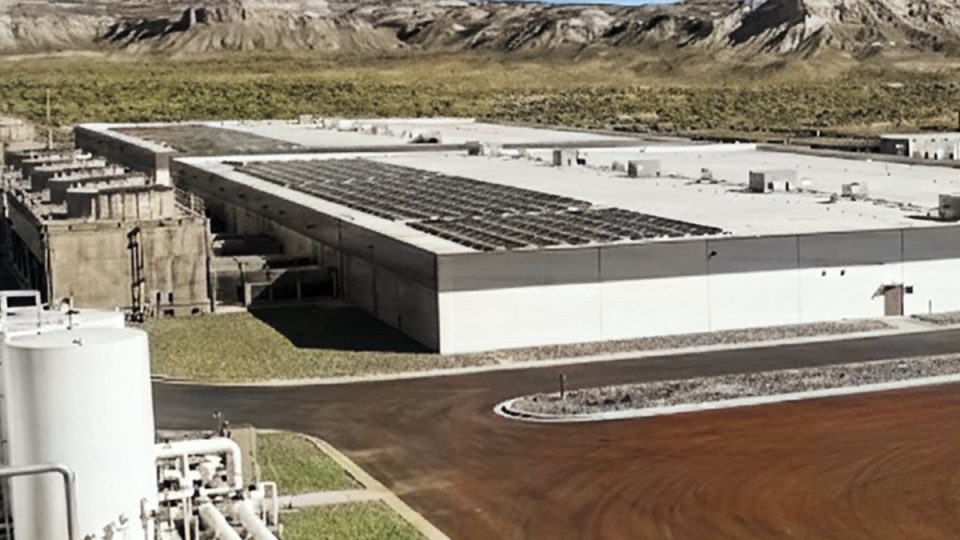
CurrentOS: The State of the Art of Direct Current
Direct Current Chapter 2. From the Current/OS Test Center, we explore a real-world DC microgrid. By managing 60kW of demand on a 20kW AC grid, the system leverages a bidirectional Interlink Converter, PV storage, and solid-state protection. Direct DC distribution to heat pumps and devices eliminates redundant conversions, significantly boosting efficiency and reducing hardware costs for next-generation building
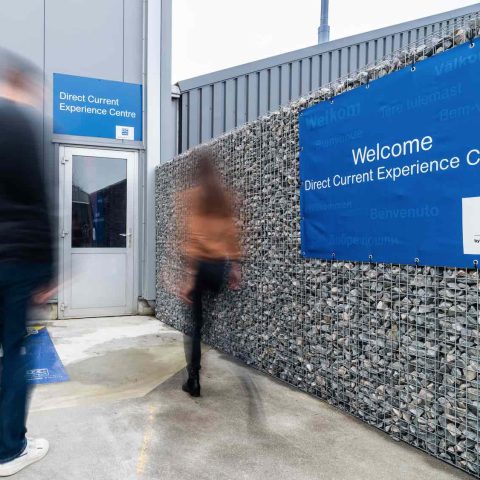
In our previous coverage, we introduced the Current/OS event aimed at promoting DC technology as a fully mature solution, beginning with an inside look at their test center. We move now from the lab to take a closer look at the building itself. It is connected to the national AC grid, even though its distribution, generation (PV), storage (batteries), and many loads operate in DC. This approach manages the building’s energy demand (60 kW), which exceeds its 20 kW AC grid connection.
Interlink Converter
This is where the Interlink Converter—the heart of the DC microgrid—comes into play. It is a high-power bidirectional AC-DC converter. Unlike traditional unidirectional PV inverters, it can both draw power from the AC grid (when solar is insufficient or batteries are low) and feed energy back into the grid during surplus production. It converts 400V AC (three-phase) to 700V DC, powering the building’s internal distribution, which uses a combination of electrical cables and busways (metal structures with aluminum or copper conductors used as an alternative to cabling).
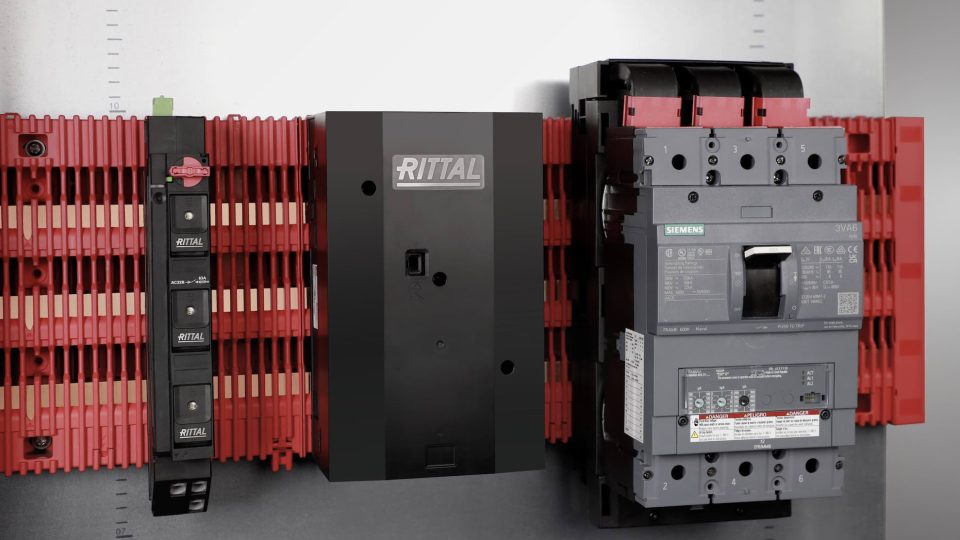
System protection is handled by solid-state circuit breakers, which operate via power electronics with no moving mechanical parts, ensuring safety and high reactivity. As for the storage system, a battery bank with a capacity of 40-50 kWh is connected to the DC bus. A dedicated bidirectional DC converter handles battery charging and discharging, integrating solid-state protection.
How to Store Energy
The storage system compensates for the intermittent nature of renewables: a 10 kWp solar PV system is installed outside the facility. The panels are connected to the DC bus via a PV optimizer (DC-DC converter), which steps up the voltage to the required 700V DC, eliminating the need for an AC inverter.
The heat pump is powered by 350V DC, converted from the 700V bus via a Power Converter. USB outlets are also connected to the bus through a 700V to 48V DC converter, ensuring user safety (as 48V is inherently safe for human contact). There is also the potential for 48V DC wall sockets (similar to current AC Schuko plugs) to directly connect native DC devices, a practice already emerging in China.
While common motors—like those in heat pumps—are typically AC, speed regulation requires a Variable Speed Drive (VSD), which usually performs AC-DC-DC-AC conversions. By powering these motors directly in DC, the initial AC-DC conversion stage can be removed from the VSD, reducing costs for manufacturers and increasing overall efficiency.