AS Labruna HEVolution 80? Among the Prestigious DAME Design Award Nominees
AS Labruna’s HEVOlution 80 has joined the elite shortlist of nominees for the DAME Design Awards at METSTRADE Amsterdam
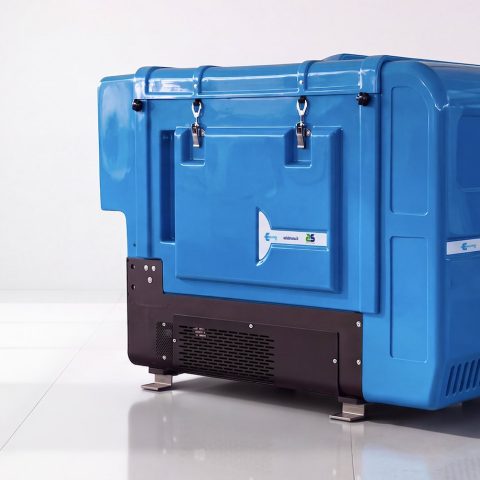
HEVOlution 80 has been nominated for the 2026 DAME Design Awards, the prestigious international accolade presented as part of METSTRADE in Amsterdam. The awards recognise products that stand out for innovation, design, functionality, sustainability and overall design quality.
The nomination represents an important endorsement of AS Labruna’s ongoing research and development efforts in marine electrification and intelligent onboard energy management.
Variable-Speed Hybrid Generator
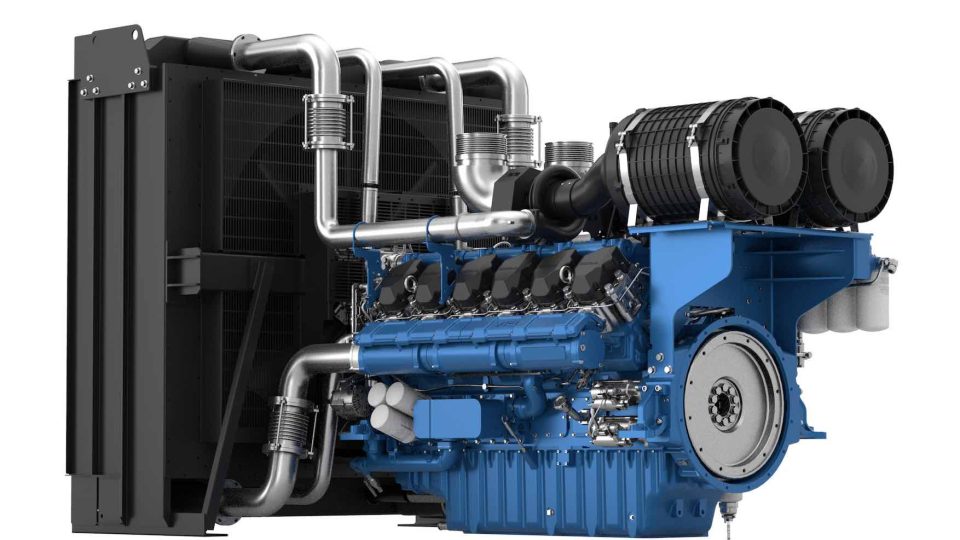
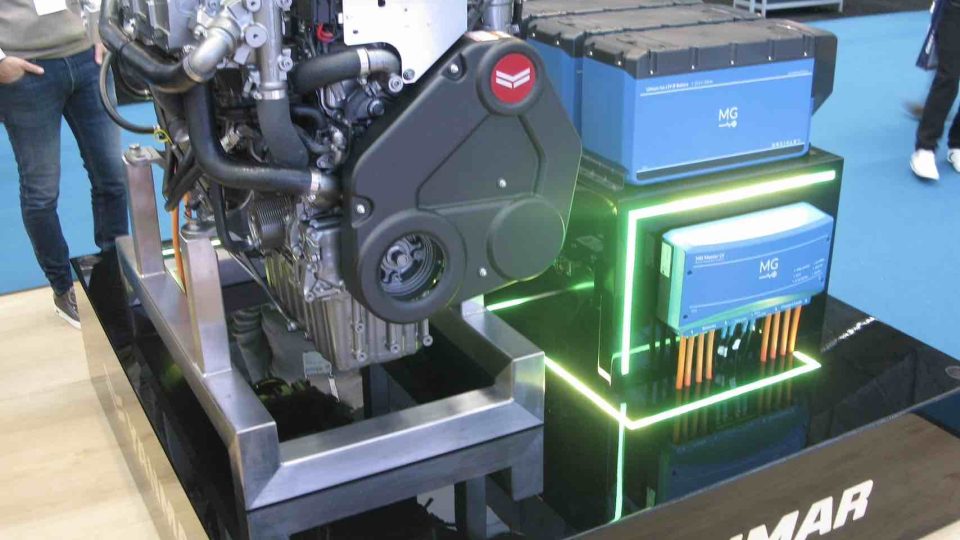
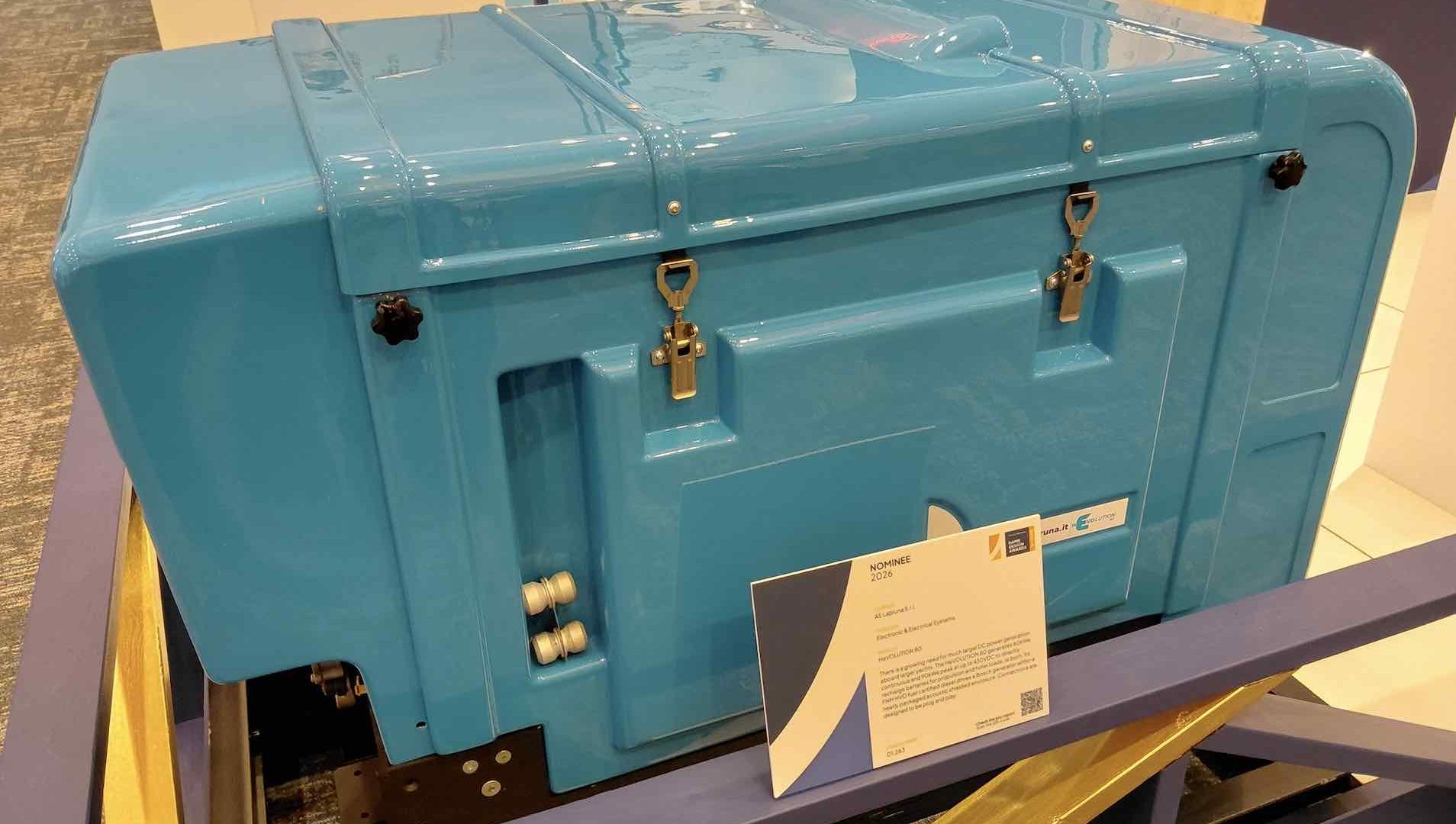
HEVOlution 80 is a variable-speed hybrid generator specifically developed for modern marine electric architectures. The system combines a 110 kW diesel engine, compatible with HVO fuel, with a compact Bosch Engineering electric generator in a highly integrated solution.
Its main distinguishing feature compared with a conventional marine genset is its ability to charge onboard batteries directly with DC power. Rather than generating AC electricity that must subsequently be converted to recharge the battery packs, HEVOlution 80 is designed as a dedicated DC fast-charging platform. Power is transferred directly to the battery system, reducing conversion stages, energy losses and the complexity of the onboard electrical architecture.
The system can recharge battery packs dedicated to electric propulsion, onboard services, or both, making it a strategic asset in the transition towards increasingly electrified vessels.
It Fits the Hybrid Propulsion Systems
Variable-speed operation also allows the combustion engine to adapt its performance to actual power demand, avoiding the constant-speed operation typical of conventional generators. This contributes to improved efficiency, lower fuel consumption and emissions, and reduced noise levels.
HEVOlution 80 has been designed around the principle of maximum integration. The entire system is housed in a compact, sound-insulated enclosure, featuring a modern, functional design intended to minimise engine-room footprint and simplify installation.
Particular attention has also been paid to integration with shipyards. The main connection interfaces follow a plug-and-play philosophy, with the aim of reducing installation times, engineering workload and complexity for boatbuilders and system integrators.
A Bridge to Decarbonization
From an environmental perspective, HEVOlution 80 is designed to support a progressive reduction in the use of combustion engines for marine propulsion. Its fast-charging capability makes it possible to maximise the use of electric propulsion and battery-powered onboard services, while maintaining the range required for real-world marine applications.
HVO compatibility adds another sustainability benefit, allowing the use of a renewable fuel that can significantly reduce lifecycle greenhouse gas emissions compared with fossil diesel, depending on the production pathway.
Insights
“With HEVOlution 80, we set out to move beyond the traditional concept of a marine generator,” says Massimo Labruna, CEO of AS Labruna. “Our goal was not simply to develop a more efficient genset, but a system designed around the battery, which is now at the heart of new onboard energy architectures. Direct DC charging, variable-speed operation, compact dimensions and plug-and-play integration make HEVOlution 80 a practical platform to support shipyards and boat owners throughout the energy transition.”
The DAME Design Awards nomination reinforces AS Labruna’s position as a developer of systems integrating propulsion, power generation, energy storage and control electronics. The company’s objective is to make marine electrification not only technologically viable, but also industrially straightforward, reliable and practical to deploy.
With HEVOlution 80, AS Labruna brings a clear vision to METSTRADE: the energy transition in the marine industry will be driven by intelligent systems capable of integrating different energy sources and placing the battery at the centre of the onboard architecture.