DEUTZ optimizes SCR inducement
DEUTZ has updated its strategy for selective catalytic reduction inducement in off-highway internal combustion engines. The changes will be effective from the fourth quarter of 2026. According to the German company, this gives OEMs and machine operators greater flexibility in key markets and benefits from enhanced user-friendliness. At the same time, the new approach continues […]
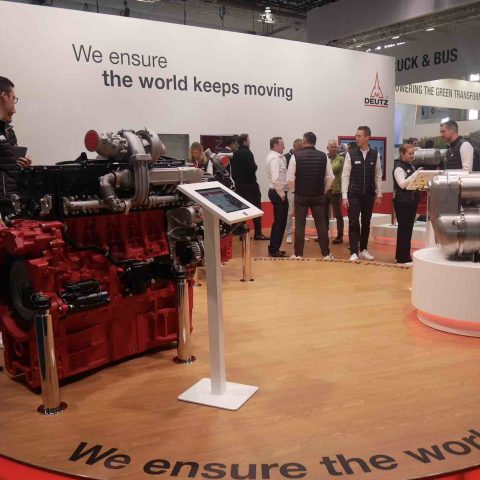
DEUTZ has updated its strategy for selective catalytic reduction inducement in off-highway internal combustion engines. The changes will be effective from the fourth quarter of 2026. According to the German company, this gives OEMs and machine operators greater flexibility in key markets and benefits from enhanced user-friendliness. At the same time, the new approach continues to comply with all relevant standards and legal requirements in the European Union and the United States.
DEUTZ Business Unit Engines CEO About SCR Improvements
“The new strategy offers significant benefits for our customers, including higher machine availability, less downtime and simpler fleet management,” says Markus Villinger, CEO Business Unit Engines at DEUTZ. “Naturally, we are implementing the more user-friendly SCR strategy in accordance with the applicable legal framework – delivering greater productivity and a future-proof emissions solution.”
The revised strategy will be available both as a software update for engines already in the field and for newly produced engines. It follows revised guidelines issued by the U.S. Environmental Protection Agency (EPA) (IACD-2025-10). The changes primarily address feedback from farmers, machine operators and truck drivers who were affected by sudden power reductions when problems occurred with the SCR system. Possible causes include a low level of diesel exhaust fluid (DEF), inadequate DEF quality or tampering with the system. Solutions for different market requirements For OEMs that want to use their engines in as many markets as possible without region- specific data sets, DEUTZ offers a harmonized SCR inducement strategy with a U.S./EU dual label.
EU Regulations
This strategy is based on EU regulations and enables an engine to operate in both markets. OEMs that sell their products exclusively in the United States can select the U.S.-only data set, where available. Future engines with U.S./EU dual certification, as well as revised engines approved exclusively for the U.S. Tier 4 emissions standard, will respond significantly less severely, particularly in cases involving DEF quality issues or tampering. In certain cases, the time until final inducement may be extended from the previous four hours to as much as 100 hours.
The “FORCED IDLE” previously required for the U.S. Tier 4 emissions standard will no longer apply in the future. This gives operators more time to remedy the cause in a controlled manner while continuing their work. This reduces unplanned interruptions, facilitates service and maintenance work, and lowers the risk of unexpected downtime, particularly for older fleets.
Key Points
- Updated SCR inducement strategy: DEUTZ will introduce its revised strategy for off-highway engines from Q4 2026, improving flexibility and ease of use while maintaining compliance with EU and US regulations.
- Reduced downtime: The new approach aims to prevent sudden engine power reductions and improve machine availability for OEMs, fleet operators and machine users.
- Software updates for existing engines: The revised strategy will be available both for engines already in service and for newly produced units.
- Different market configurations: DEUTZ will offer a harmonised US/EU dual-label strategy for engines intended for both markets, as well as a US-only data set for OEMs operating exclusively in the United States, where available.
- Less severe inducement measures: In certain cases, the time before final inducement can increase from four hours to up to 100 hours. The previously required “FORCED IDLE” for US Tier 4 engines will also be discontinued under the revised strategy.
When will DEUTZ introduce its revised SCR inducement strategy?
The new strategy will be available from the fourth quarter of 2026, both as a software update for engines already in the field and for newly produced engines.
What is the main benefit for machine operators?
The revised approach gives operators more time to address SCR system issues, reducing the risk of sudden power reductions and unplanned downtime. It also facilitates service and maintenance operations and helps improve fleet availability.
What types of SCR system issues does the new strategy address?
The changes primarily concern problems such as low diesel exhaust fluid (DEF) levels, inadequate DEF quality and system tampering, which can trigger engine power reductions.
What is DEUTZ’s expertise in this field?
In addition to decades of experience in developing electronic engine control systems for industrial engines, DEUTZ acquired a 50% stake in family-owned HJS Emission Technology two years ago. HJS specialises in exhaust gas aftertreatment.
How will the inducement response change under the revised strategy?
For future engines with US/EU dual certification and revised engines approved exclusively to the US Tier 4 standard, the response to certain issues, particularly DEF quality problems or tampering, will be less severe. In specific cases, the time before final inducement may increase from four hours to up to 100 hours. The previously required “FORCED IDLE” for US Tier 4 engines will no longer apply.