Li Ion Battery According Interact Analysis Outlook 2026
In the Interact Analysis Outlook 2026, you will find everything you need to understand the global trends in lithium-ion batteries
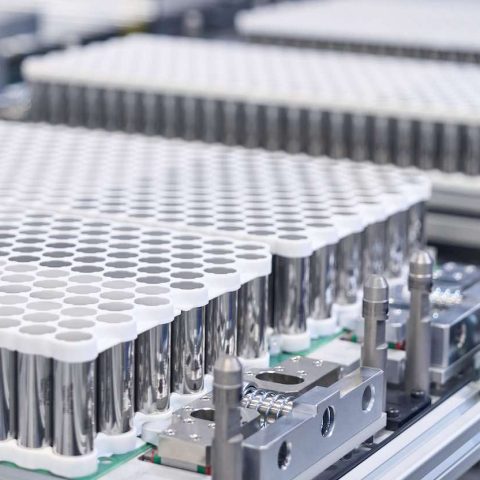
This analysis of global battery market trends is an extract from the Interact Analysis Outlook 2026 (click here to download the white paper). As usual, Interact Analysis provides us with the information needed to interpret the trends for individual applications or technologies.
Li Ion Market is Still Growing
In 2025, the Li ion battery market sustained growth, with record shipments and a rebound in battery manufacturing equipment demand. The recovery largely reflected renewed capacity expansion in China. Beneath this headline growth, however, the industry showed clear structural divergence.
Some enterprises strengthened their competitive positions, while others faced mounting pressure. Chinese companies continued to advance by leveraging integrated supply chains and scale advantages. In contrast, Japanese, South Korean, and other overseas players adjusted strategies in response to shifting demand, policy changes, and cost pressures. Looking to 2026, the industry faces both opportunities and challenges shaped by technology, policy, and market dynamics.
In 2025, Chinese Li ion battery supply chain companies achieved broad-based progress and remained the primary driver of industry expansion. Growth was supported by strong EV and energy storage system (ESS) demand, synchronized domestic and overseas capacity build out, and faster commercialization of next generation battery technologies.
- Rising demand improved capacity utilization: China’s new energy vehicle penetration rate continued to increase. Production and sales both exceeded 16 million units in 2025, approaching 50% penetration. Export volumes also expanded, supporting sustained EV battery demand. At the same time, rapid growth in ESS installations lifted overall industry capacity utilization from its 2024 trough. Leading battery manufacturers operated at or near full utilization.
- Capacity expansion supported equipment demand: Improved industry sentiment encouraged battery producers to restart domestic expansion plans, directly increasing demand for Li ion battery manufacturing equipment. Chinese battery companies also accelerated overseas capacity construction, with projects established across Europe and Southeast Asia. This trend enabled Chinese equipment vendors to expand internationally alongside their core customers.
- Solid state battery development accelerated: 2025 marked a turning point for solid state battery development. Material technology advanced steadily, equipment suppliers completed R&D and delivered small batch shipments, and battery manufacturers brought multiple pilot lines into operation. Demonstration projects and early product launches indicated a transition from laboratory research toward early industrialization. According to our research, announced planned capacity for solid state and semi solid state batteries in China reached nearly 650 GWh by the end of 2025, underscoring sustained investment in next generation technologies to secure long term competitiveness.
Slower Growth Outside China
In contrast, battery and equipment manufacturers in Japan, South Korea, and other regions faced slower growth in 2025. Heavy reliance on EV battery demand, combined with policy shifts and cost pressures, forced these companies to accelerate strategic adjustments.
- Pressure in European and US EV battery markets: Overseas battery suppliers remained concentrated in EV applications, with limited exposure to the fast growing ESS segment. In 2025, changes in environmental policy in Europe and the US contributed to weaker demand growth. Rising upstream material costs further compressed margins. Several battery manufacturers scaled back EV battery expansion plans in the US market.
- Delayed capacity expansion reduced equipment demand: Slower capacity construction, particularly in North America, directly affected battery manufacturing equipment suppliers. Project delays and cancellations weighed heavily on equipment orders. South Korean equipment vendors were especially impacted, recording sharp year on year declines in related revenue in 2025.
- Strategic pivot toward ESS and solid state batteries: Non Chinese battery manufacturers accelerated portfolio diversification. Many increased investment in ESS batteries to gain exposure to a higher growth segment. At the same time, solid state batteries became a central long term focus. Leading companies, including Samsung, LG Energy Solution, and Panasonic, increased R&D spending to position solid state technology as a potential inflection point for future competitiveness.
AN INDIAN PORTRAIT BACK TO 2024
In 2026, expansion in energy storage and emerging applications, alongside continued technological progress, is forecast to support industry growth. At the same time, volatility in raw material prices, intensifying competition, and policy adjustments are expected to reshape competitive dynamics.
- Upstream material price volatility: From the second half of 2025, prices for key battery materials increased sharply. In China, lithium hexafluorophosphate prices tripled between the middle and the end of 2025. Average raw material prices in 2026 are forecast to exceed 2025 levels, placing sustained pressure on battery manufacturer margins.
- China’s export tax rebate adjustments: Intensifying competition, combined with reduced and phased out export tax rebates, continued to compress margins for Chinese battery manufacturers, particularly small and mid sized players. In the short term, this may create limited openings for overseas suppliers as some Chinese firms scale back export activity. Over the medium term, however, industry consolidation among leading Chinese companies is likely to intensify competition in higher end segments. Accelerated overseas capacity expansion by these leaders, may further increase pressure on local suppliers in regional markets.
- Rising trade protectionism and regional barriers: Deeper regionalization and stricter trade and technical barriers are reshaping supply chains. Local manufacturers outside China may gain short term advantages through policy support and alignment with regional standards. However, increased localization requirements are also forecast to raise production costs, offsetting some of these benefits.