Yanmar is working on industrial gas-powered engines
Yanmar is developing and improving its gas-powered industrial engines Yanmar has developed gas-powered industrial engines that utilize LPG (Liquid Petroleum Gas) and meet both U.S. EPA Tier2, CARB Tier4 and EU Stage V emissions regulations. Adding the two clean burning and quiet industrial engine models, 4TN88G with a maximum output of 45 kW and 4TN98G […]
Yanmar is developing and improving its gas-powered industrial engines
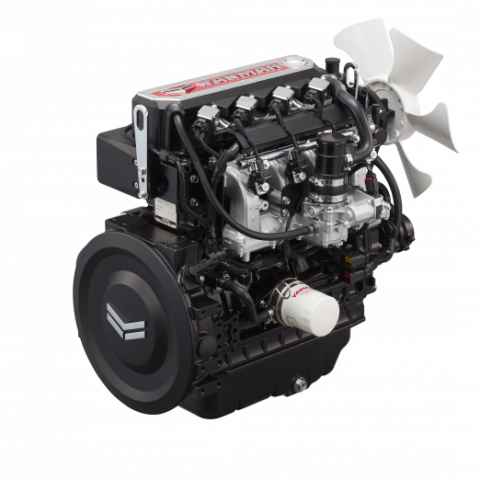
Yanmar has developed gas-powered industrial engines that utilize LPG (Liquid Petroleum Gas) and meet both U.S. EPA Tier2, CARB Tier4 and EU Stage V emissions regulations. Adding the two clean burning and quiet industrial engine models, 4TN88G with a maximum output of 45 kW and 4TN98G with a maximum output of 63 kW to its lineup, Yanmar is ready to better meet the diverse needs of its customers. Furthermore, Yanmar has plans to introduce bi-fuel specification models that can run on both LPG and gasoline.
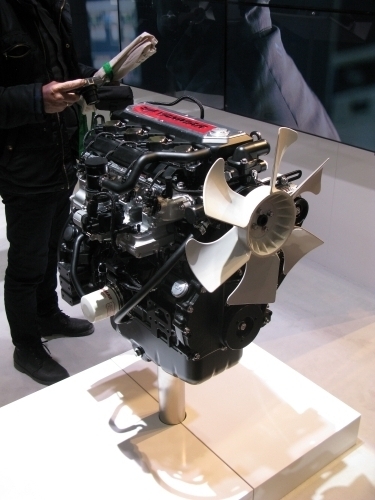
Gas engines produce very little particulate matter and this can make them ideal for work indoors and in enclosed areas, where environmental concerns are a major consideration.
Yanmar has more than 30 years of experience working with gas-powered engines. This experience together with the knowledge of industrial diesel engine technology has allowed Yanmar to develop a proprietary gas combustion system for high output, fuel efficient and compact engines.
Yanmar can now provide customers with a “One-Stop Solution”, whereby Yanmar can offer either a diesel or gas power source in one-stop sales contact, with maximum compatibility to the customer’s equipment. With the addition of these gas engines to Yanmar’s existing industrial engine lineup, Yanmar aims to meet customers’ demands with a versatile range of power solutions.
Mass production schedule for the two engines: 4TN88G (LPG specifications) in 2020 and 4TN98G (LPG specifications) in 2021.
YANMAR AND DOOSAN MINI-EXCAVATORS
Main features
The 4TN88G is a Vertical, 4-cycle water-cooled, naturally aspired gas-powered engine with 4 cylinders and a three way catalyst. A displacement of 2.2 liters, a rated output of 45 kW and a maximum torque of 175 Nm at 1,800 rpm.
The engine comes with higher specific power, with Yanmar’s proprietary engine control system that optimizes the air intake. With the development of gas engines, a combustion system optimized for LPG has been realized by implementing a high compression ratio and reducing intake pump loss. This has yielded fuel consumption reductions of 10% compared to current mixer systems resulting in longer operational hours for a same sized LPG tank, and reducing the lifecycle cost for the customer.
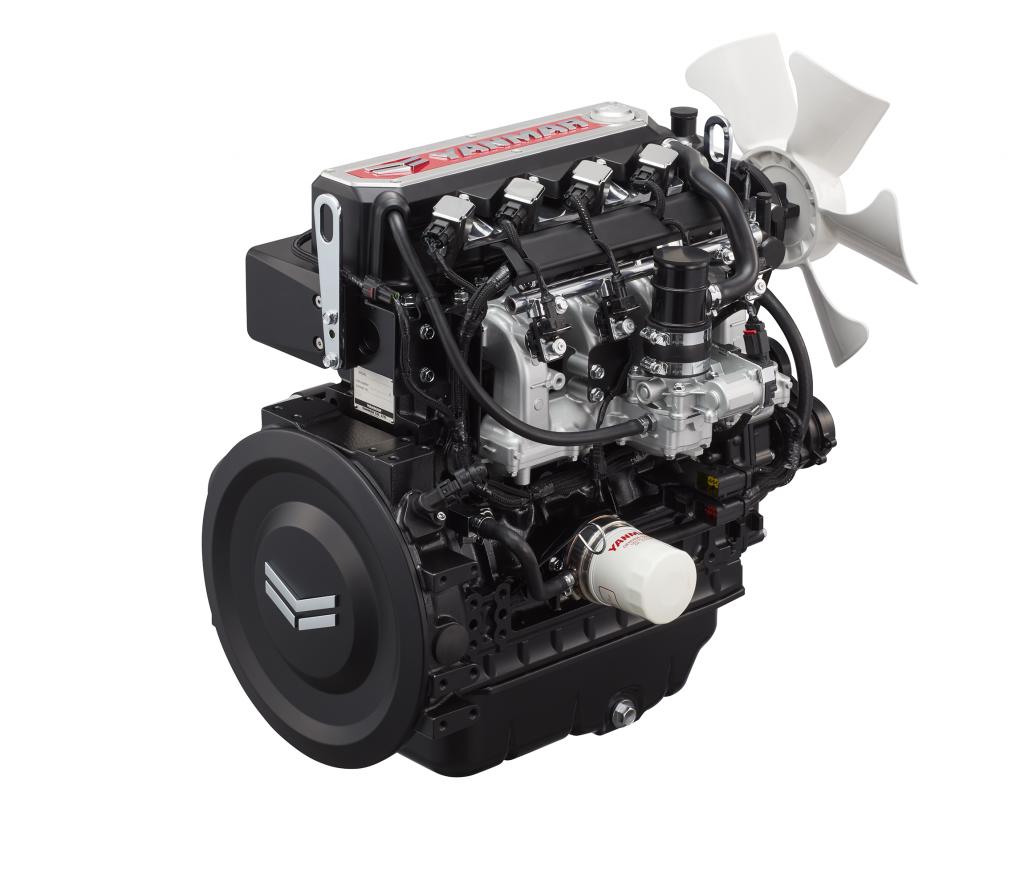
Basing the engine on the endurance of Yanmar’s industrial diesel engine crankcase, together with optimized cooling systems and materials for heat resistance in high-temperature components such as cylinder head, intake and exhaust valves, and pistons, means that the reliability required of industrial engines is realized, even at the high combustion temperatures characteristic of stoichiometric combustion.
Yanmar’s compact air-fuel mixing system also results in a smaller engine (by approximately 9%) by eliminating the conventional gas engines with mixer system. Furthermore, the engine layout enables easy installation to forklifts, construction equipment, agricultural equipment and more.