Electric drivetrain on the Agrifac sprayer
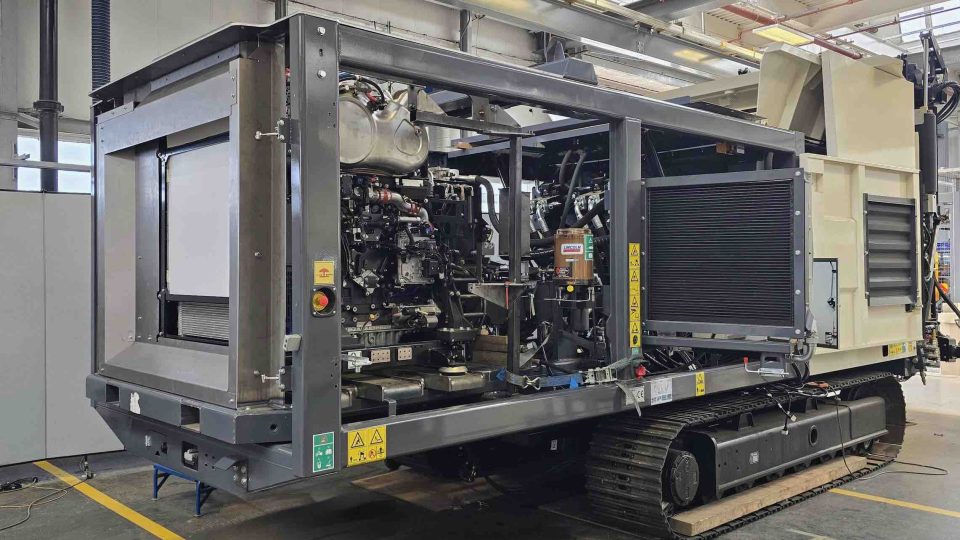
Agrifac introduces a new drive platform for the current generation of its self-propelled sprayers. This allows the same machine to be supplied in a diesel-electric, hybrid or fully electric configuration
Agrifac has gone where agricultural machinery manufacturers are most reluctant to tread: striking the ICE designation from the price list of one of its sprayers and offering an electric driveline instead or an hybride one, at least. For us, the news is also an opportunity to welcome World-Agritech.com to our publishing house. The editorial team of POWERTRAIN International will thus be able to take content from the agricultural world directly from the journalistic source.
Back to the Agrifac e-Sprayer
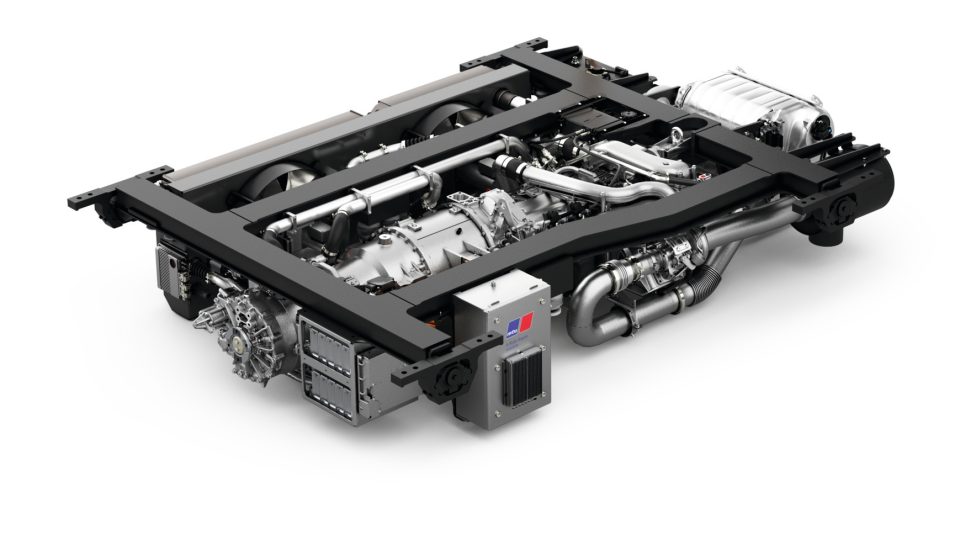
In every case the basis is the same fully electric drivetrain. What differs is the way the electrical energy is generated and stored. In the diesel-electric configuration, a six-cylinder diesel engine continuously supplies power for the drive via a generator. In the hybrid configuration, the machine runs on a battery pack and a more compact four-cylinder diesel engine acts as a range extender: it recharges the battery when needed, so that operational availability is not limited by battery capacity. The fully electric configuration runs solely on an externally charged battery pack.
Which configuration is the best fit depends on the application and the available infrastructure. The design also leaves room to adopt other energy sources in the future, as soon as these become technically and economically suitable for agricultural machinery.
More power at the wheels
An electric drivetrain is more efficient. Whereas with a conventional drive, a large proportion of the engine power is lost before it reaches the wheels, the efficiency of the electric drivetrain is above 95 per cent. As a result, more power remains available for the drive. The hybrid model can deliver 301 hp continuously, with a peak of up to 447 hp for short periods. For the diesel-electric and fully electric configurations, the power output has not yet been finalized, but in all cases it will be at least equal to that of the conventional machine. Thanks to the high efficiency a considerably larger share of it reaches the wheels.
With the new drive platform, Agrifac responds to changing market demands, stricter emissions regulations and the rapid development of battery and energy technology. The focus is not on one specific energy source, but on an electric drive that can be supplied with energy in various ways.
The diesel-electric configuration is expected to reduce fuel consumption by around 35%. With the hybrid configuration, the saving rises to approximately 50%. In both cases the sprayer remains fully operational. External charging is possible with the hybrid configuration, but not necessary.
The fully electric configuration makes locally emission-free working possible. This variant is particularly of interest for applications where sufficient charging capacity is available and daily operations fall within the battery capacity.
To read the final part…
Simply click on the corresponding World Agritech link.