Daimler Truck, HHLA and Kawasaki Heavy Industries Launched Strategic Partnership to Establish Liquid Hydrogen Supply Chain for Europe
Daimler Truck, HHLA and Kawasaki Heavy Industries have signed a MoU “Hydrogen Technology World Expo” in Hamburg to explore the development of a reliable and cost-effective supply chain for green liquid hydrogen via the Port of Hamburg to the European hinterland
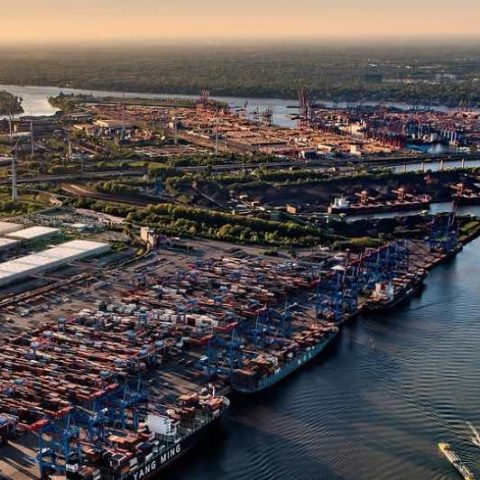
Daimler Truck, Hamburger Hafen und Logistik AG (HHLA), and Kawasaki Heavy Industries have signed a Memorandum of Understanding at the international trade fair “Hydrogen Technology World Expo” in Hamburg. The partnership aims to explore the development of a reliable and cost-effective supply chain for green liquid hydrogen via the Port of Hamburg to the European hinterland.
Kawasaki and Daimler: hydrogen to reduce the carbon footprint of the transport
This collaboration is designed to enable the import of liquid hydrogen from hydrogen-producing countries to Germany, reinforcing Hamburg’s role as a hub for sustainable energy logistics. Over the coming months, the partners will assess the logistical requirements for transshipment and onward transport by road and rail. The initiative also seeks to attract additional companies and institutions to form a consortium that spans the entire hydrogen value chain.
The signing of the MoU underscores the strategic importance of liquid hydrogen for the energy transition and the transformation of European industry. The partners bring complementary expertise to the table: Kawasaki Heavy Industries as an experienced technology provider in the field of hydrogen infrastructure, HHLA as a European network logistics provider, and Daimler Truck as a global commercial vehicle manufacturer with a focus on CO2-neutral battery-electric and hydrogen-based drive systems.
Andreas Gorbach, Head of Truck Technology at Daimler Truck
“Europe will continue to rely on green energy imports in the future and hydrogen will play a key role here. The partnership is an important step in this direction, and we will need more initiatives like this to strengthen Europe’s position as a leader in liquid hydrogen. What makes it special is that our Mercedes-Benz GenH2 Truck can not only be powered by liquid green hydrogen – the truck can also transport it via road. And the best thing about it: Hydrogen allows us to increase the speed of decarbonization – and reduce the scope and cost of the already slow expansion of the power grid.”
Annette Walter, Chief Financial Officer, Hamburger Hafen und Logistik
“Hydrogen is one of the keys to a climate-neutral future – and we at HHLA are committed to actively shaping this transformation. Liquid hydrogen plays a central role in this, as it can be transported independently of pipelines – a decisive advantage for mobility, logistics, aviation, and especially for small and medium-sized companies. Our goal is to reliably supply the industry with hydrogen via our European logistics network. The partnership with Kawasaki Heavy Industries and Daimler Truck is an important step toward making liquid hydrogen more widely available and jointly advancing decarbonization.”
Kei Nomura, Executive central Manager, Hydrogen Strategy Division, Kawasaki Heavy Industries
“Liquid hydrogen is a vital key to realizing a sustainable energy society, and we have long been committed to building the technological foundation to support it. We are very pleased to be working with HHLA and Daimler Truck to explore the feasibility of establishing an international supply chain for liquid hydrogen in Europe, starting with Hamburg. Kawasaki Heavy Industries possesses proven technologies and experience in the production, storage, transportation, and reception of liquid hydrogen. We will leverage this expertise to contribute to the development of a hydrogen supply network in Europe. Going forward, we remain committed to expanding the use of liquid hydrogen through global partnerships and accelerating the transition to a decarbonized society.”
Individual Partner Strategies
The Kawasaki Group is implementing innovative solutions with the objective of addressing societal challenges set forth in Group Vision 2030 which defines its three focal fields as “A Safe and Secure Remotely-Connected Society,” “Near-Future Mobility,” and “Energy and Environmental Solutions,” and providing new customer value. With its focus fixed on the realization of hydrogen-based societies in which hydrogen is proactively utilized, as detailed in the Basic Energy Plan of Japan, Kawasaki is working together with government agencies and related companies, both in Japan and overseas, to develop technology for the early establishment of a hydrogen supply chain from production to transportation, storage, and usage.
A key part of this strategy is the commissioning of liquid hydrogen (LH2) carrier ships in different sizes (small, medium and large) with up to 160,000 m3 of liquid hydrogen on board and in the future ships comparable to today’s LNG carriers.
Hamburger Hafen and Logistik is aiming to become climate-neutral throughout the Group until 2040. As a European logistics group, HHLA is also positioning itself in the area of importing and distributing hydrogen. With its network extending from various seaports to the European hinterland, the company is well positioned to seize new opportunities in the field of hydrogen import and transport. Furthermore, HHLA is working intensively on the use of fuel cells in handling equipment and in heavy goods transport with its Clean Ports & Logistics cluster. The aim of these efforts is to contribute to the sustainable reduction of greenhouse gases and other harmful emissions.
To decarbonize transport, Daimler Truck is pursuing a dual-track strategy with both battery-electric and hydrogen-powered vehicles. Since 2021, the company has been developing and testing its Mercedes-Benz GenH2 Truck prototypes equipped with fuel cells, demonstrating their reliability and performance for flexible, long-haul transport. In 2023, a prototype GenH2 Truck showcased the potential of liquid hydrogen for road transport by completing a 1,047-kilometer trip across Germany on a single tank of liquid hydrogen under real-world conditions. Daimler Truck has also recently concluded initial customer trials, with a fleet of five GenH2 Trucks collectively covering more than 225,000 kilometers in actual operations. Building on this success, a second phase of trials with the same fleet and different customers is planned for the upcoming year. Looking ahead, Daimler Truck intends to produce a small series of 100 next-generation semitrailer tractors at its Mercedes-Benz plant in Woerth, Germany, with customer field operations scheduled to begin at the end of 2026. The company aims to achieve large-scale industrialization of fuel cell technology and commence series production of hydrogen-powered trucks—initially targeting the European market—in the early 2030s.