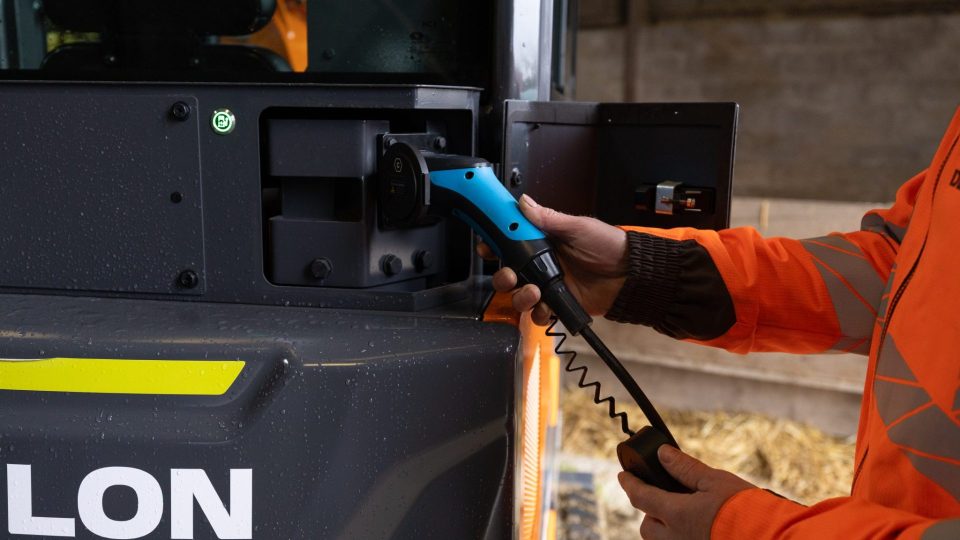
Horse Powertrain and Repsol to boost efficiency and reduces vehicle fuel consumption
The next-generation HORSE H12 Concept hybrid engine, using Repsol’s 100% renewable fuel, boosts efficiency and reduces vehicle fuel consumption by 40% to below 3.3 liters per 100 kilometers1
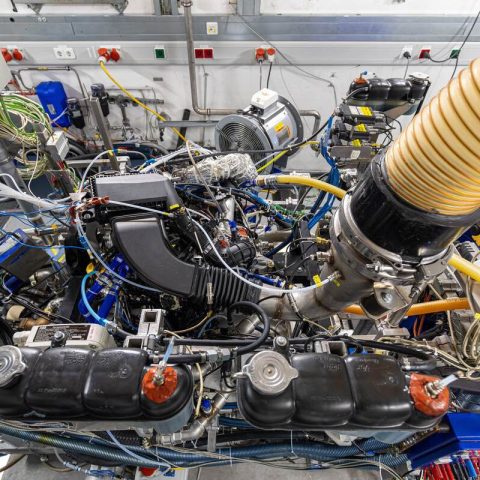
The agreement with Repsol is yet another ‘token of presence’ for Horse Powertrain in the world of on-road and off-highway applications. We previously reported on the supply deal with Corvus, which we experienced firsthand at Agritechnica. Horse — born from the joint efforts of Renault and Geely, with the contribution of Aramco — has developed, via its Horse Technologies division, a next-generation hybrid powertrain in collaboration with Repsol, operating on 100% renewable gasoline. Speaking of Horse and the automotive industry, before the Hannover event, we caught up with them at Busworld Europe.
Horse Powertrain and Repsol for HORSE H12 Concept engine
The HORSE H12 Concept engine introduces enhancements to the combustion system and reductions in internal losses, achieving 44.2% peak brake thermal efficiency (BTE) while reducing vehicle fuel consumption by 40% (in comparison with 2023 average passenger car new registration in Europe)1 to below 3.3 liters per 100 kilometers, according to standardized European testing (WLTP).
When using the 100% renewable fuel, a mid-sized car equipped with the HORSE H12 Concept powertrain and driving an average of 12,500 kilometers per year, will emit 1.77 tons of CO₂ per year less than a vehicle with a traditional fuel and combustion engine.1, 2
A 17:1 compression ratio
The hybrid powertrain system incorporates the HORSE H12 Concept engine, an evolution of the HR12 engine that includes a combustion system designed at a 17:1 compression ratio, a new-generation EGR, an optimized turbocharger, a high-energy ignition system, and an improved hybrid gearbox with optimized energy management, as well as reduced internal friction enabled by new Repsol lubricants.
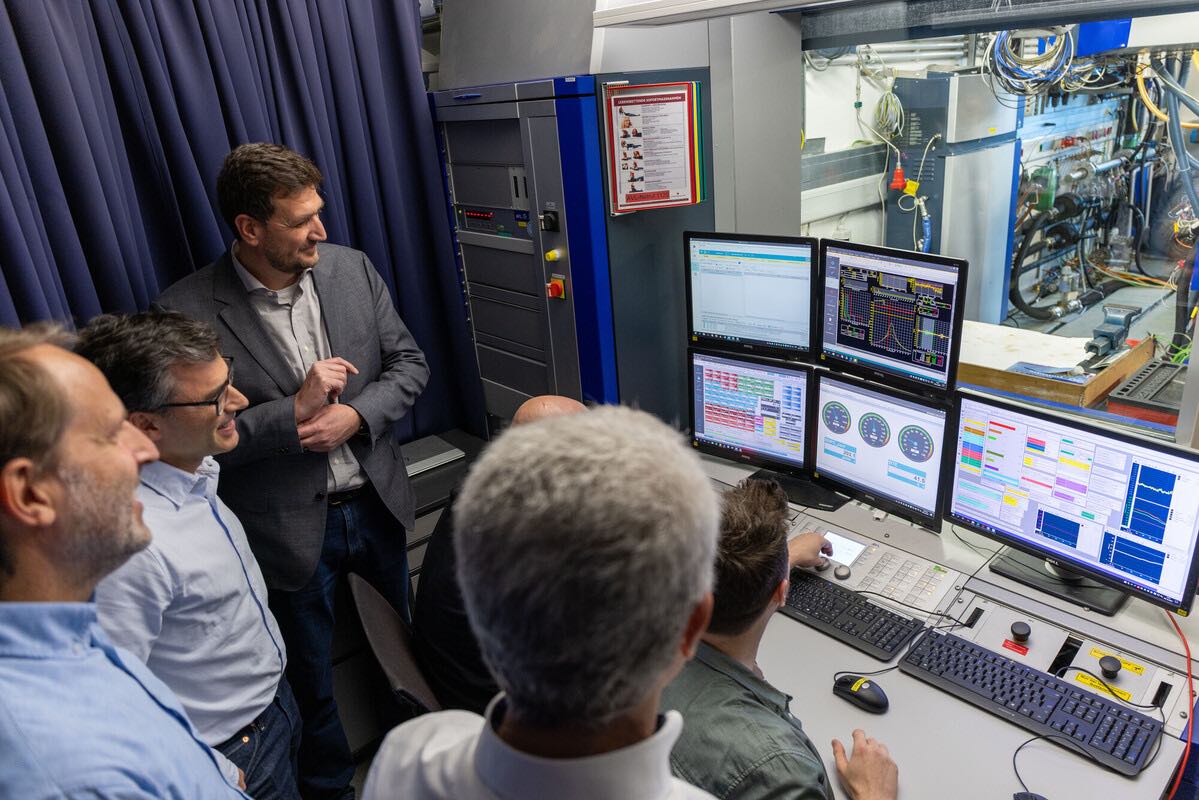
The project, led by teams from the Horse Technologies Division in Valladolid and the Repsol Technology Lab in Madrid, has produced its first two prototypes and validated performance. The first demonstrator vehicle is expected to be presented in early 2026. This is the first step towards industrial production of highly-efficient hybrid engines.
More than 97% of Europe’s current vehicle parc (ACEA) is still combustion-based, so delivering solutions capable of reducing CO2 emissions today – such as highly efficient engines and alternative fuels – play a complementary role alongside electrification, hydrogen, and other emerging technologies on the road to mobility net zero.
Quoting Horse and Repsol
Luis Cabra, Executive Managing Director of Energy Transition, Technology, Institutional Affairs and Deputy CEO of Repsol, states: “This collaboration shows that decarbonization can be accelerated through innovative and accessible technological solutions. The use of 100% renewable fuels is a net zero emission solution, complementary to electric vehicles, for decarbonizing the transport sector. Supporting clear and ambitious regulation that drives investment in renewable fuels and highly efficient engines is essential for Europe to reduce transport emissions faster in a more competitive and effective manner.”
Patrice Haettel, Chief Operating Officer at Horse Powertrain and Chief Executive Officer at Horse Technologies, adds: “The HORSE H12 Concept is an example of how highly efficient engines and renewable fuels can reduce emissions today, without waiting for future solutions. As a company, we believe that relying on a single technology is not the fastest way to cut emissions. This is why we advocate a technology neutral approach that enables innovation across all solutions – electric, hybrid, range extenders and low-carbon fuels.”
In October, Repsol achieved a technological milestone by producing gasoline of 100% renewable origin at industrial scale at its Tarragona facility. This new product is compatible with existing gasoline vehicles, with no modifications required. Nexa 95, Repsol’s highest-quality 95-octane renewable gasoline, is already available at 30 service stations in Spain.
Repsol is the leading producer of renewable fuels in the Iberian Peninsula with the first industrial plant dedicated to the production of 100% renewable fuels from waste, in Cartagena (Spain). The company will start operations at a second plant in Puertollano in 2026. Additionally, Repsol will also launch a demonstrator e-fuels plant in Bilbao in 2026.