MatH2: Together for the Hydrogen
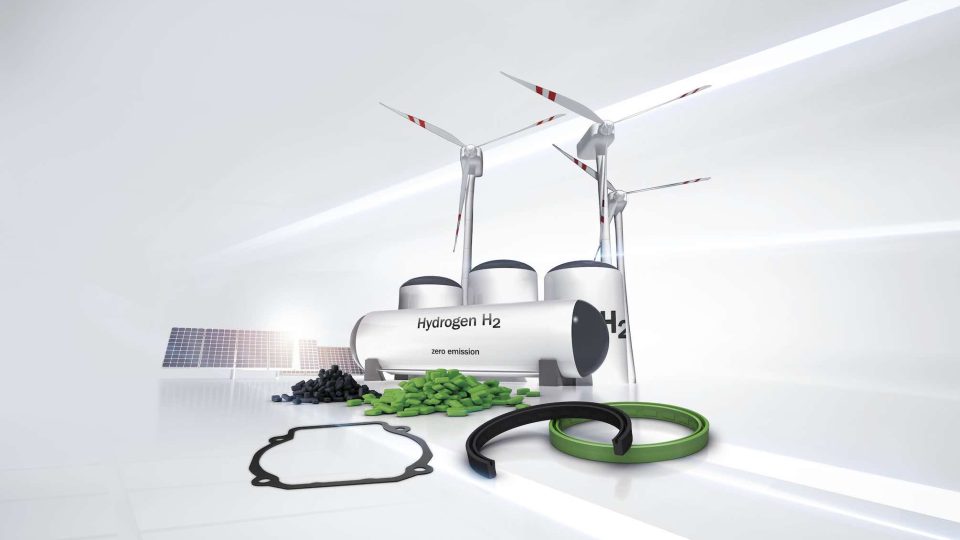
A new consortium called MatH2 has been launched to unlock material technology barriers to hydrogen adoption. The MatH2 consortium aims to address the industry’s urgent need to validate safe, hydrogen compatible materials, by creating a new portfolio of affordable materials and components that withstand hydrogen and other chemicals key to the hydrogen economy, and technologies to enable them
Wärtsilä is a member of a new, multi-sectoral consortium which aims to tackle one of the greatest challenges facing the energy transition: how to safely store and transport clean hydrogen. The Business Finland co-innovation project is led by VTT Technical Research Centre of Finland Ltd.
While the global hydrogen market is growing – reaching 97 million tonnes (Mt) globally in 2023i – it is faced with significant limitations to adoption due to a lack of hydrogen compatible materials that allow for safe and cost competitive scaling.
The new consortium MatH2 aims to create a complete, industry-driven and innovative ecosystem to deliver essential hydrogen-compatible materials and technologies required to tackle critical materials reliability challenges and scale the hydrogen transition globally.
Insights about MatH2
Rasmus Teir, Director, Technology Strategy & Decarbonisation at Wärtsilä says: “Scaling hydrogen cost efficiently is one of the defining energy challenges for the energy transition – one that cannot be achieved in isolation. By bringing together the entire hydrogen value-chain, we are bridging the gap between research and industry to overcome the barriers preventing the growth of hydrogen across Europe and globally. Doing so will accelerate deployment, while enabling hydrogen to become a safe, affordable and scalable fuel that will accelerate the world’s energy transition toward a net zero future.”
Materials degradation by hydrogen embrittlement or corrosion needs to be managed and the reliability of critical locations, such as welds, secured, while enabling storage and transfer of hydrogen at various scales within reasonable costs; this framework forms the most significant challenge facing the hydrogen economy today, slowing adoption and undermining cost competitiveness. The aim of the consortium is to address these challenges, allowing technology developers to benefit from reliable, predictable material behaviour that enables hydrogen-ready engines, pipeline reactors and fuel processing systems, alongside significant strides for researchers.
By driving these advancements, the consortium aims to offer the market components with enhanced durability, lower degradation under hydrogen service, and enhanced cost competitiveness, which, in turn, can help accelerate the pace of adoption of hydrogen globally.
Finland is a Good Place to Drive the Hydrogen Economy
The MatH2 consortium is leveraging Finland’s unique position to harness the hydrogen economy thanks to the country’s abundant access to low-cost, carbon-free electricity and biogenic carbon dioxide for hydrogen-derivative production, alongside strong electrical grid infrastructure.
The outcome of the consortium can contribute to accelerating Finland toward becoming a leader in the hydrogen market, set to contribute up to €34 billion annually to national GDP by 2035 and create more than 60,000 jobs in technology development and infrastructure production, while also contributing to the European Union’s target of 20 million tonnes per year of renewable hydrogen supply by 2030ii. By overcoming the reliability challenges of materials, MatH2 can unlock more secure access to sustainable fuels, power and industrial products, while reducing the risk and cost in hydrogen infrastructure – in turn, making future energy systems stable, sustainable and resilient.
The new consortium, MatH2, has been established under WISE – Wide and Intelligent Sustainable Energy, a Business Finland co-funded collaboration with the ambitious aim of developing zero-emission balancing power to help accelerate the move towards decarbonisation. WISE is led by Wärtsilä – a technology company at the forefront of the transition towards a 100% renewable energy future and already leading critical innovation within the hydrogen economy. The MatH2 consortium consists of altogether 10 industry and research partners, spanning the full hydrogen value chain, from materials suppliers, component manufacturers, technology providers through to end-use industries. The consortium includes industry leaders EOS, Neste, Nordic Tank, Teknos, SSAB, Bumax, SP Stainless and two research partners, VTT and University of Oulu.
Earlier in June Wärtsilä announced that it has started validation of a new 100% hydrogen engine to power Spain’s national electricity grid in Bermeo, northern Spain – the world’s first demonstration of a large-scale, 100% hydrogen engine. The demonstration marks a significant step beyond hydrogen-ready technologies, proving that engine-based power generation can run entirely on hydrogen in real grid conditions – paving the way for this capability to become a reality at scale in the future.
i IEA: Global Hydrogen Review 2024, Hydrogen Demand
ii European Commission: Hydrogen