Parker announces new test rig for fuel cell technology
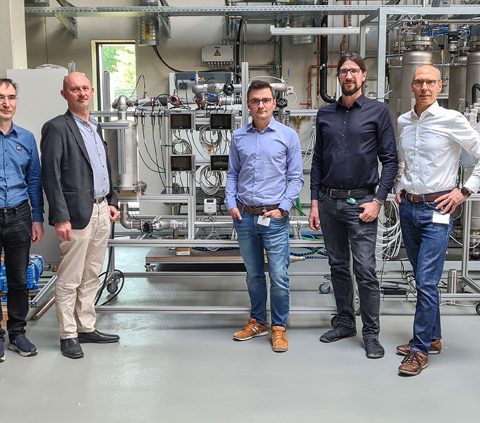
Parker announced the successful completion of the specialized test rig to test the membrane technology in ways that are much more advanced and aids to develop robust system solutions for fuel cell. It was produced in partnership with the Fraunhofer Institute for Microengineering and Microsystems (IMM).
Parker Hannifin’s Filtration business has reached a major milestone on the journey towards mass production of hollow fibre membrane technology for fuel cell humidification applications, a vital step towards reducing carbon emissions.
By enabling optimal moisture levels, hollow fibre membrane technology allows fuel cells to last longer and to perform more efficiently and reliably. It supports the transition from fossil fuels, accelerating the shift to fuel cell electrical vehicles in the next five years.
Parker announced the successful completion of the specialized test rig which is to validate products by Parker OEM (Original Equipment Manufacturer) customers. This new technology enables Parker to test the membrane technology in ways that are much more advanced and aids to develop robust system solutions for fuel cell. It was produced in partnership with the Fraunhofer Institute for Microengineering and Microsystems (IMM), a Germany-based non-profit for scientific research.
Burkhard Hartmann, R&D Officer at Parker’s Engine Mobile Filtration Europe (EMFE) Division, said: “The results speak for themselves: this has been an outstanding collaboration with the Fraunhofer Institute. It moves us all towards better, more efficient, more reliable fuel cell electrical vehicles, a vital step towards a cleaner, better tomorrow.”
Gunther Kolb, Representative from the Fraunhofer Institute for Microengineering and Microsystems, said: “Fuel cell technology is key to reduce emissions worldwide. The partners are confident that the hollow fibre membrane technology will be further improved, the service life of the fuel cell humidifiers will be extended, and their efficiency will be increased for the customers.”