Landi Renzo and the dynamic blending
What is meant by dynamic blending? We asked Landi Renzo. It is a concrete way to have blended hydrogen digested
In Landi Renzo’s terms, gas also means blending — for example, with hydrogen. This made us curious about dynamic blending, so we reached out to them, knowing they are actively involved in the field. We put together a think tank, and they delivered insightful answers.
Andrea Piovesan, Head of Electronic & Applications at Landi Renzo, explains: “Over the last two years, we’ve been involved in an onboard blending project in partnership with an OEM. First, we worked with a truck and then with an engine tested on a test bench to conduct more in-depth analyses of dynamic blending than what’s possible directly on the vehicle. After all, a truck — like any other application — is essentially a static demonstrator, limited by certain constraints. The vehicle doesn’t allow you to explore the full range of blending substitution as you can in a test cell, where it’s possible to operate in complete safety. Through this process, we gained experience in blending hydrogen and methane dynamically, as the substitution rates could be adjusted.”
What is dynamic blending?
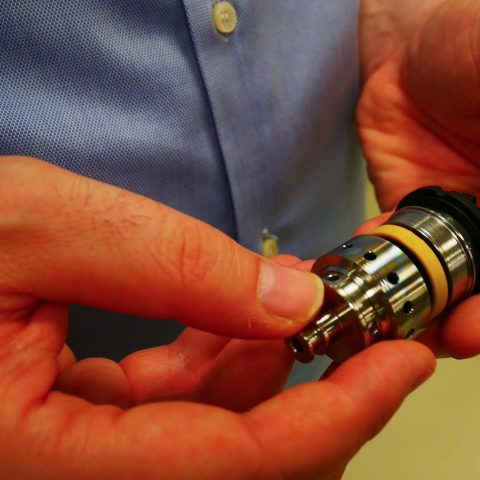
Giuseppe Miletto has a long history with methane projects, including one many years ago focused on developing a supply chain for automotive gas blends. “Years later, I was involved in a dynamic blending project. We call it dynamic because it involves refueling two tanks — one for methane and one for hydrogen. A system determines how, where, and to what extent methane can be replaced with hydrogen in the injected mixture. The substitution can range from zero to high percentages, around 25–30% by mass — which corresponds to an even higher percentage by volume. In theory, we could replace the fuel entirely and run solely on hydrogen. Dynamic blending is smart because it adjusts the substitution rate based on the engine’s current operating conditions. Using the available components, we developed a system capable of injecting both fuels stored onboard. This includes a dynamic dosing system for the two fuels, featuring an electronic pressure regulator developed in-house at Landi Renzo and a control unit that dynamically adjusts the amount of hydrogen and methane injected into the rail.”
SAFE and Compressor Plants
Riccardo Bagagli, CTO of SAFE, which makes compression plants within the Landi Renzo Group, highlights the company’s significant contribution to dynamic blending. “From an infrastructural point of view, we design plants to manage the feeding into the grid of gas produced from renewable sources, such as renewable methane, which is mixed with natural gas of fossil origin. Another example is hydrogen compression plants, used to inject hydrogen into the grid and mix it with natural gas. The dynamic aspect of blending becomes crucial because the production of renewable gas is variable by nature. Plants must therefore be designed to provide operational flexibility so that the feed pressure can be kept constant while the production pressure is potentially variable.” Another area of focus for SAFE concerns the technological upgrading of existing plants, with particular attention to compatibility with increasing hydrogen rates. One example is the pipeline emptying system during maintenance operations.”