IAA 2026 Media Summit. Insights from Frankfurt
The IAA Media Summit 2026 kicked off today at 5:00 PM CET with a high-profile lineup of speakers who outlined a clear picture of what Europe must do to meet decarbonization challenges: avoid overregulation and support both infrastructure development and affordable energy costs
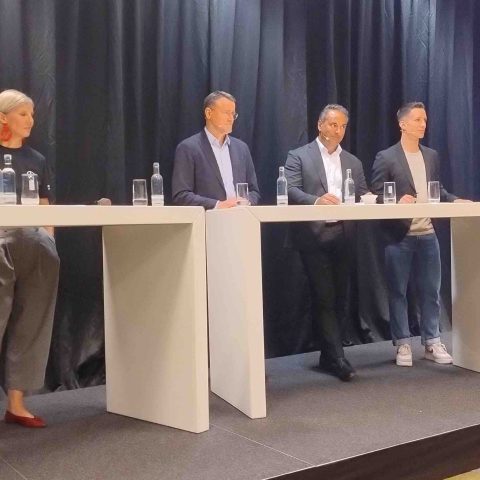
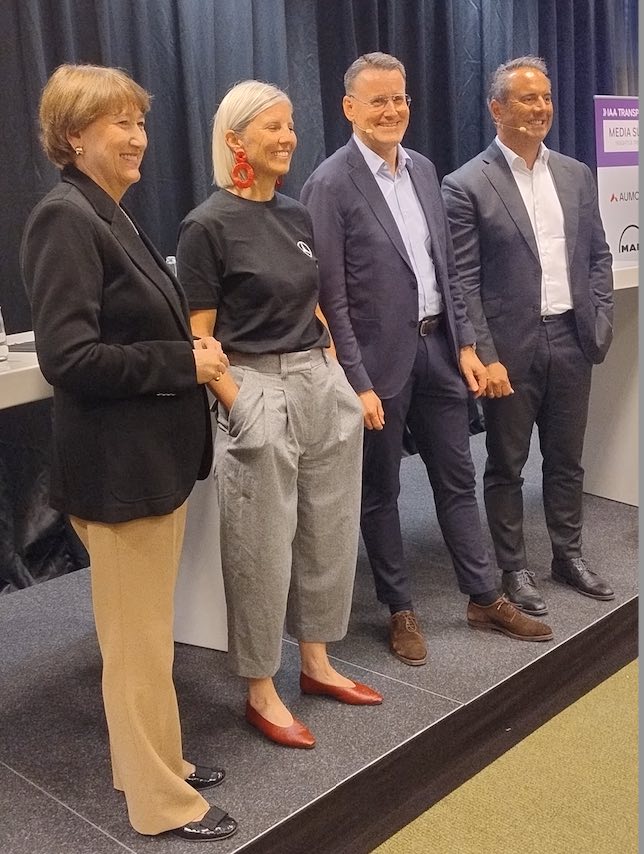
The opening evening of the IAA 2026 Media Summit set the tone for what promises to be a strategically important edition of the show. The spotlight was firmly on the leading figures of Germany’s commercial vehicle industry, from Karin Rådström, CEO of Daimler Truck Holding, and Alexander Vlaskamp, CEO of MAN Truck & Bus, to key technology suppliers such as Mahle, represented by Roger Busch, Corporate Executive Vice President Sales and Engineering at Mahle International.
Representing the host organization was Hildegard Müller, President of the German Association of the Automotive Industry (VDA), while the discussion was moderated by Simon Schütz, Head of Department “Communication, Events & Marketing” VDA, who successfully balanced an informal atmosphere with a highly focused and substantive agenda.
The event gathered journalists from around the world – including India, China, South Africa and all over Europe – as well as ourselves from Sustainable Truck & Van, represented by Powertrain International.
Decarbonization’s two bottlenecks
The evening’s debate was broad in scope and long-term in vision, but two issues emerged as the main bottlenecks to decarbonization in Europe: infrastructure and the absence of a clear, effective and realistic EU policy framework.
Speakers repeatedly stressed that the transition to zero-emission freight transport cannot rely solely on ambitious targets. Without adequate charging and energy infrastructure, and without regulatory consistency across member states, the pace of adoption risks falling far short of expectations.
Europe, the U.S. and China: contrasting approaches
The discussion also highlighted the increasingly divergent philosophies of major global markets.
- United States: policymakers are perceived as moving toward greater deregulation and market-driven flexibility.
- Europe: the prevailing approach was described as heavily regulation-driven, with participants warning against excessive complexity and administrative burdens.
- China: some speakers expressed appreciation for what they viewed as a more systematic, coordinated and long-term industrial strategy.
The numbers behind the urgency
One figure summed up the challenge facing Europe’s heavy-duty sector: only 2 percent of heavy-duty vehicles in Europe are currently electrified. For many participants, this statistic underscores how much acceleration is still needed if the continent is to approach its decarbonization objectives.
The consensus in the room was clear: the industry is ready to move forward, but infrastructure deployment and pragmatic policymaking will determine whether Europe can realistically achieve its climate ambitions in commercial transport.
The message is clear and unequivocal: the technology is there, and European manufacturers do not fear the looming threat of Chinese competition, such as Sany and Sinotruk. Instead, their main concerns are the infrastructural deficit and energy, which must be scalable and affordable to foster manufacturer competitiveness and improve the Total Cost of Ownership for end users.
Alongside the usual refrain regarding the BEV formula and the chimera of hydrogen, biofuels have also emerged as a means to mitigate tailpipe emissions for the over fifty percent of the vehicle fleet currently Euro 5 compliant or lower. Additionally, Euro 7 is seen as an effective solution for future vehicle registrations. Roger Busch offered an evocative provocation, noting that as suppliers, they see a growing interest in range extenders.
Tuesday June 9th, at Percuma
Tomorrow morning, the stage at the Percuma and Botanical in Eppstein will feature Hildegard Müller, President of VDA, who will kick off the proceedings. She will be followed by Achim Puchert, CEO of Mercedes-Benz Trucks; Andree Hohm, Director of the Aurora Program, Business Area Autonomous and Commercial Mobility, Aumovio; Andreas Schmitz, CEO of Schmitz Cargobull; Friedrich Baumann, Chief Sales Officer at MAN; and Manuel Kallweit, Head of Economic Intelligence & Economics of Masterclass Commercial Vehicle Market. Finally, Erhan Eren, Director of Platform Beyond Vehicle at Kia Europe, and Maximilian von Löbbecke, Managing Director of Renault Trucks Deutschland, will take the stage. The closing speech will be delivered by Jan Heckmann, Head of IAA.