MAHLE and the World IAA Premiere: Range Extender for Trucks
IAA world premiere: MAHLE new range extender system for heavy electric trucks facilitates transition from diesel
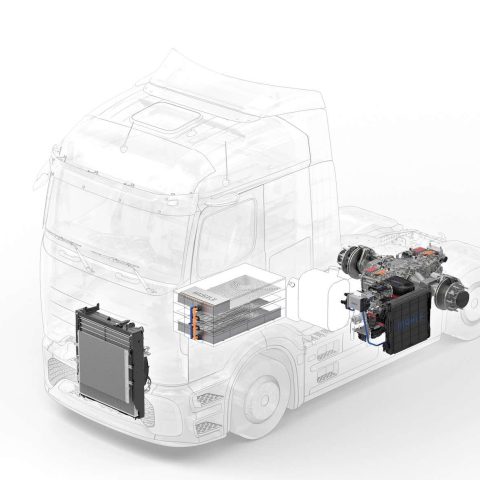
We’ve already flagged the resurgence of hybrid technology, at least in automotive and off-highway. It’s a solution that also applies to the REEV (Range Extended Electric Vehicle) format. We’ve also covered the IAA preview and manufacturers’ demands regarding infrastructure. REEV could offer a good compromise between low emissions and a shortage of charging infrastructure. MAHLE has positioned itself to meet this need, with the presentation set to take place at the IAA in Hanover.
IAA in Hannover is the Right Place To Display the MAHLE Range Extender System
MAHLE will be showcasing its new range extender system for heavy electric trucks as a world premiere. This system provides a flexible range without any compromises and efficiency without restrictions. With this MAHLE innovation on board, a battery-electric truck can cover all the daily ranges required.
“Our range extender is a smart “emergency power unit” that is activated at precisely the right moment and significantly increases the range available,” said Marco Warth, Vice President MAHLE Corporate Research and Advanced Engineering.
The key component of the new system is an efficient high-voltage generator with a continuous output of 110 kilowatts (kW) and a peak output of up to 130 kW, driven by a compact internal combustion engine. The high-voltage generator supplies reliable power to the electric drive system even on difficult trips with a full load.
Thanks to its newly developed advanced oil cooling system, the generator has a power density of more than 7 kW per kilogram, allowing a high power output with reduced weight and simplified interfaces.
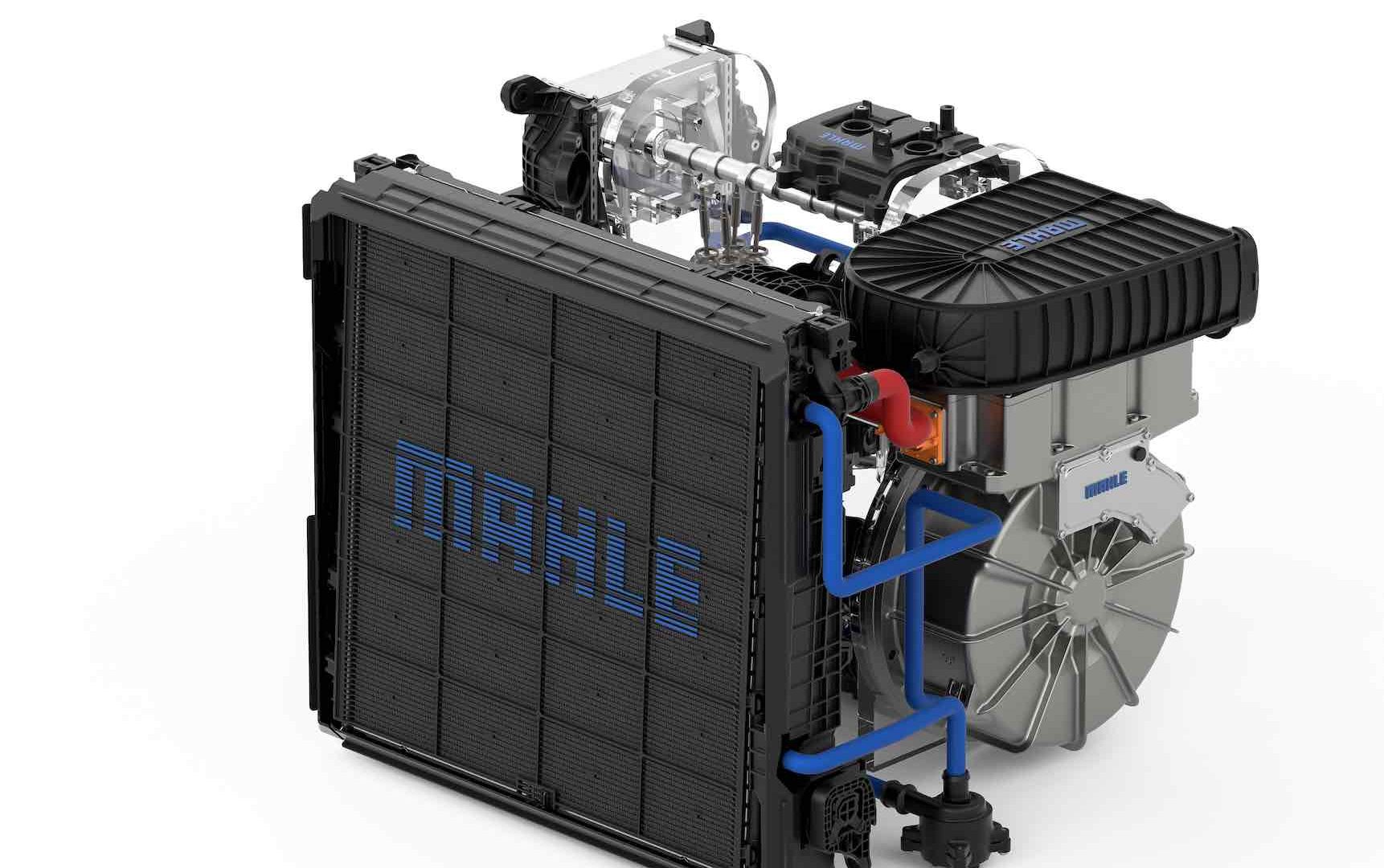
MAHLE has developed its range extender system as an autonomous unit combining generator, internal combustion engine, thermal and fluid management systems, fuel tank, AdBlue tank and exhaust gas treatment in a compact “box”. This unit will fit into the normal battery installation space of a battery-electric truck and can therefore be integrated into existing battery-electric vehicle platforms without any problems. The system replaces about one-third of the present battery capacity of a battery-electric truck, allowing the truck to be equipped with a smaller battery. As a result, the rear axle load is reduced by about 400 kg and the total vehicle weight by about 600 kg. All in all, a range extender BEV truck can reach a total range of more than 800 km, with the battery providing about 400 km and the range extender the remaining 400 km.
Under real-life operating conditions, the truck emits about 80 percent less CO2 in range extender operation than a truck with a conventional drive system. If the internal combustion engine, which is biofuel-ready thanks to MAHLE components, is operated with renewable fuels such as the advanced HVO100 bio-diesel, the truck has virtually zero CO2 emissions.
A comprehensive thermal management system with 48 kW of high-temperature and 15 kW of low-temperature cooling capacity ensures stable operation of the range extender system under heavy-duty operating conditions.
For the internal combustion engine, MAHLE has continued the development of components to reduce fuel consumption and operating costs. For example, the new Power Cell Unit (PCU) features higher performance, a longer service life and greater efficiency. The new oil management system combining the oil filter, oil cooling system and bypass valve as well as other optional functions, also features improved efficiency and economics. Depending on the material used for the housing, the material cost can be reduced by up to 20 percent, the CO2footprint of the product by up to 50 percent and the weight by as much as 25 percent. In addition, this product has a longer service life, further reducing overall operating expenses. The PCU and the oil management module can also be used with other types of drive system and are being showcased for the first time at IAA Transportation.
“Our range extender is the key to disconnecting the market ramp-up of battery-electric trucks from the inadequate pace of infrastructure development,” said Marco Warth. “If the charging station is busy, or alternative routes are called for as a result of weather conditions or congestion and infrastructure reaches its limits, other fleets can be stranded; an e-truck with range extender just carries on. Operational availability is maintained, even under peak conditions.”
MCT: NO Rare Earth Elements
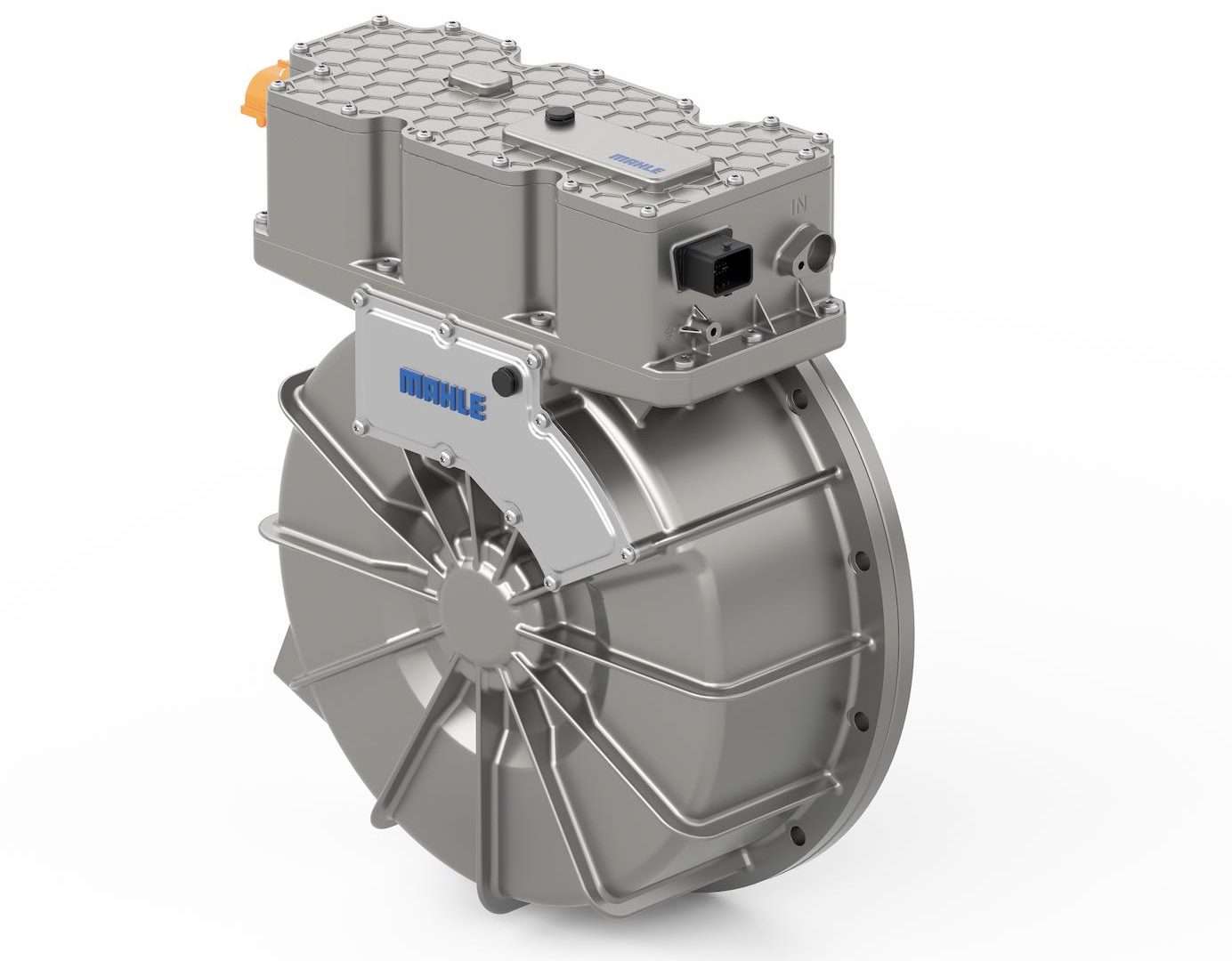
As another world premiere at IAA Transportation, the company is showcasing a MAHLE Contactless Transmitter (MCT) electric motor developed for use on the electric drive axles of heavy commercial vehicles. This motor is not equipped with permanent magnets and therefore does not require any rare earth elements. Compared with a benchmark permanent magnet synchronous motor (PMSM), the MCT electric motor saves up to 3 kilograms of rare earth magnets per vehicle. The avoidance of rare earth magnets further reduces the environmental footprint of the electric drive system.
The new motor from MAHLE is 10 percent lighter and more efficient than permanently excited electric motors with magnets under real-life driving conditions. The advantage compared with the permanently excited variant is higher efficiency within a significantly larger operating envelope covering a variety of different driving situations. The MCT electric motor has a peak output of 370 kW and torque of over 900 Nm at 3,900 rpm. The motor efficiency in the VECTO cycle, an EU simulation tool for determining the fuel efficiency of new vehicles, is about 95 percent.
In Europe, MAHLE is present in every battery-electric and fuel cell truck. The company is the market leader for electric climate compressors and among the top three in the marketplace as regards electric pumps and fans. In China, MAHLE is working together with all truck manufacturers to expand its presence in electrified vehicles. The group intends to grow in the commercial vehicle sector, especially with thermal management modules, electric fans, charging connection boxes, battery cooling plates and traction motors.
Trucks Account for Around 20% of the Business
Medium and heavy commercial vehicles account for about 20 percent of the group’s business with the automotive industry. The group benefits not only from its development and production network in all major markets but also from its broadly diversified customer portfolio. MAHLE cooperates with more than 120 customers in the commercial vehicle and off-road sector. Orders received for commercial vehicle business in the first half of 2026 were significantly above the corresponding figure for the previous year, as in passenger car business. “We expect that we will grow more strongly than the market with our commercial vehicle products over the next five years,” said Arnd Franz. MAHLE sees the greatest potential for growth in Asia.
The CEO mentioned structural challenges and uncertainties for the business environment, including poor prospects for the European economy, customs tariff developments that were difficult to plan and poor demand in North America as well as growing competitive pressure from Chinese imports in Europe, especially as regards battery-electric vehicles.
Renewable fuels need to be expanded
The internal combustion engine remains the dominant drive system for commercial vehicles throughout the world. The share of internal combustion engines in this sector is expected to fall only slightly from the current figure of about 83 percent to about 73 percent by 2035, while electric drive systems will continue to grow but will still play a secondary role.
Even if the ramp-up of e-mobility were to succeed as planned, the CO2emissions of the conventional fleet would still remain at the 2010 level, said Arnd Franz, referring to figures published by the International Energy Agency (IEA). “It is therefore clear that, in addition to electrification, supplies of sustainable fuels such as HVO100 and bio-LNG need to be massively expanded.“
Biofuels and Hydrogen
Large quantities of biofuels are already available and these can help in effectively reducing carbon dioxide emissions immediately, also and especially with respect to existing vehicles. The MAHLE Global Biomobility Center in Brazil has been in operation for two years for the further development of biofuels, bio-materials and related applications. Currently, the research and development facility is working on a wide variety of projects, for example for optimizing the efficiency of biofuel engines and multi-fuel engines as well as new, sustainable materials and their applications.
MAHLE also sees hydrogen and hydrogen derivatives as a key factor for the de-fossilization of the road transport sector and is therefore working on all the major hydrogen engine projects that are currently in progress.
The use of hydrogen for power generation in fuel cells is a further technology which is interesting for the future of the commercial vehicle sector. At the same time, this sector will be a key factor in developing a hydrogen economy in view of its size and existing structures. MAHLE is currently participating in a large number of major development projects in Europe and Asia. Arnd Franz: “It will only be possible to embark on the future of the hydrogen economy without hydrogen-powered commercial vehicles if massive, risky state subsidies are made available.”
As regards Europe, Franz called for an objective review of the CO₂ fleet regulation for heavy commercial vehicles. Ideally, this should be combined with the review of the AFIR (Alternative Fuels Infrastructure Regulation) by the end of 2026. The objectives should be ambitious but should be aligned more closely with market reality, infrastructure and technical feasibility.
“Technological diversity will be crucial,” said Franz. “Battery-electric vehicles, hydrogen and renewable fuels for internal combustion engines must be used together to reduce CO₂ emissions. Range extender systems should also be recognized pragmatically as a facilitator of electrification and taken into consideration in regulations.”
He added that successful transformation was generated through the effective interaction of regulation, infrastructure, funding and industrial policy. Europe should turn more strongly towards an integrated approach, said Franz.
“The transformation to climate-neutral road transport is technically feasible and can also be accomplished economically,” said the CEO. However, he added that this would only be possible if industry, government and customers acted together in a coordinated way. “At MAHLE, we contribute technological diversity and comprehensive systems competence to actively forge ahead with the transformation. The truck of the future will operate with MAHLE!“