Tevva testing hydrogen-electric 7.5 ton truck
Tevva’s engineers accumulated more than 1,000 km in the 7.5t hydrogen-electric vehicle, driving between Tevva’s London headquarters and the Scottish border at Berwick-on-Tweed, England’s most northernmost town.
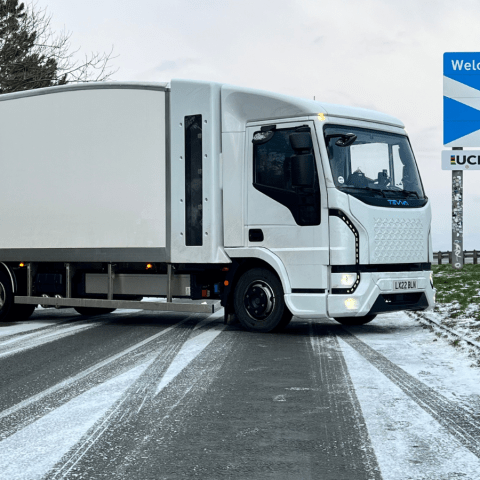
While Tevva remains focused on building and delivering its battery-electric 7.5t truck, testing and development of its hydrogen-electric counterpart continues apace.
Four Tevva engineers: Charlie Cordell, Byron Dolman, Ryan Clark and Toby Hurst were doing exactly that recently, with a “range test” of Tevva’s dual-energy prototype truck. The exercise saw the foursome accumulate more than 1,000km (approximately 620 miles) in the 7.5t hydrogen-electric vehicle, driving between Tevva’s London HQ and the Scottish border at Berwick-on-Tweed – England’s most northernmost town.
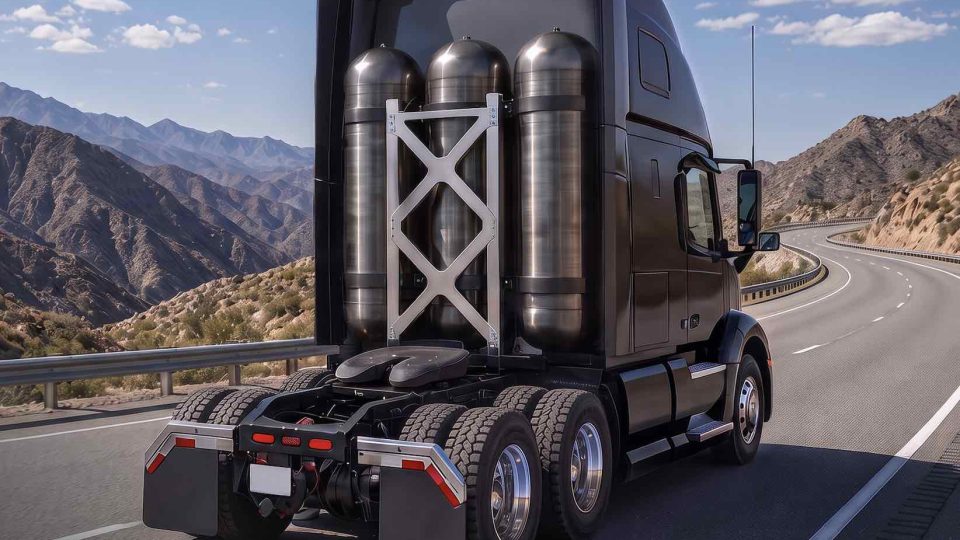
The return journey saw the truck cover almost 350 miles alone, without needing a single stop for recharging. This was made possible by the truck’s hydrogen fuel cell which tops up the range-extended (Rex) vehicle’s lithium battery when needed.
Lead Engineer, Tevva Rex, Charlie Cordell said: “It was an amazing trip and we were so pleased the truck covered so many miles on the return leg, without the need to stop for a charge. The trip was a terrific demonstration of the range you can achieve in a truck that uses a blended system of electric and hydrogen. The freezing conditions were extremely challenging, but helpful too, in allowing us to gather important data about vehicle performance, meaning we could make tweaks here and there and tailor its development.”
Temperatures rarely climbed above freezing during the trip, and at one point it dropped to minus 10. The Tevva engineers stopped off for hydrogen refuelling at Element 2 in Teesside on the first leg of the journey, as well as an earlier stop in the midlands. Element 2 is currently building a national infrastructure of hydrogen refuelling sites.
Impressions from the road
The company’s Chief Development Officer Andrew Hagan said: “Providing the hydrogen for this significant journey is a proud moment. The superior range on this fuel cell vehicle is a comfort and reassurance for organisations ordering new vehicles and updating their fleets. We are building refuelling stations where they are needed most and removing diesel from our roads. This infrastructure will enable Tevva truck drivers to go the distance.”
Engineer Ryan Clark, 25, joined Tevva two years ago after completing his engineering degree at Glasgow University. He says the exercise demonstrates the direction of traffic as far as hydrogen is concerned. “On paper, of course, the range it achieved was expected”, he said. “But it’s still a great feeling, to put the prototype together and see it blasting that kind of mileage. What we’re doing here is exciting. I talk to friends who are working in automotive and typically new engineers only get the chance to shadow teams working on significant projects. At Tevva, there’s a sense of empowerment, an opportunity to get your hands dirty.”
Graduate Engineer Toby Hurst, 24, agrees. He said: “With the distance it did, it performed extremely well – considering the conditions we faced. We had a good laugh getting the job done too. We like to enjoy what we’re doing but we’re deadly serious about testing our vehicles and playing our part in the zero-emission revolution.”
During the trip, Ryan said the futuristic truck drew lots of admiring glances from fellow travellers and just as many questions.
Tevva’s approach to hydrogen technology
Tevva’s revolutionary hydrogen fuel-cell range extension technology enables its vehicles to do all the work of diesel, with total peace of mind about cost, range, and environmental impact.
By adding hydrogen into the energy mix, Tevva delivers a solution that gives operators the ability to decarbonise their fleets at the pace needed by climate science and demanded by society. The company is taking a dual-energy approach to zero-emission mobility, utilising the best of battery-electric and hydrogen technology to maximise the performance of our vehicles. Tevva is committed to making hydrogen convenient, affordable and sustainable for its customers.