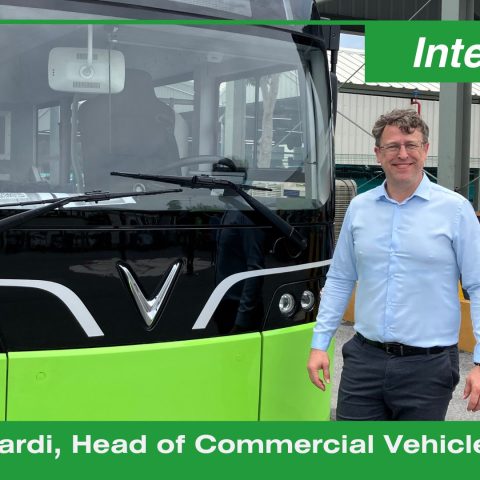
Vinfast is a global player in the automotive industry. Diego Ghirardi is the new leader of the Vietnamese Company's commercial vehicles division
By
Editorial staff
VinFast is accelerating its ambitions in the commercial vehicle sector, with new electric bus models under development for Europe and a growing role in regional export markets. The Vietnamese manufacturer has already entered the European e-bus conversation with the presentation of a 12-metre and 8-meter battery-electric buses at Busworld 2025, while continuing to expand domestic operations, also through the VinBus network.
Against this backdrop, during a recent media trip in Vietnam that gave us the opportunity to take stock of VinGroup ecosystem and of VinFast manufacturing processes, Sustainable Bus spoke with Diego Ghirardi, recently appointed Head of Commercial Vehicles, about the group’s production volumes, vertical integration strategy, export roadmap and the next generation of buses being developed for international markets.
With more than 25 years of experience in the global automotive industry, Diego Ghirardi has held senior engineering and program leadership roles at Rivian, Ford Motor Company, Bosch and MEVCO across Europe, Australia, the United States and Asia.
An Italian Manager for a Vietnamese Company
Originally from Italy and graduated in Mechanical Engineering from the University of Genoa, Ghirardi joined VinFast in 2024 after working in the United States on electric pickup trucks and SUVs at Rivian. At VinFast he initially served as Chief Engineer for the VF8 program before moving to the helm of the commercial vehicles division in March 2026.
“On our e-buses for the European market we are currently introducing changes inside the bus structure compared to the vehicles presented at Busworld 2025. And we aim to introduce our new electrical architecture, which we developed and started introducing in passenger cars a year ago, and which gives us the possibility to reduce the number of components, reduce assembly, and therefore save not only on costs, but also on weight. It also makes the vehicle easier to repair in case there are problems, so we also meet customer needs in terms of maintenance.”
Let’s begin with a two-part question: what experience did you brought to VinFast, and what did you find at VinFast that somehow complements everything you had done before?
“I definitely already had experience in vehicle development, pickup trucks, commercial vehicles, both in the combustion engine field and in electric vehicles. So I brought that experience with me when I arrived here at VinFast, where I started in the position of Chief Engineer for the VF8. What I learned here was definitely the speed of execution, which here in Asia is completely different compared to Europe, the United States and Australia.”
“However, above all, one thing that is different in Asian markets, not only in automotive but in every field, is that in Europe or in the Western world we are always forced to make a trade-off between quality, cost and time. People always say: you have this triangle in which you can move, and if you want to have high quality and be fast, then you must spend a lot, or the other permutations. Here this concept does not exist. Here you must have all three at the same time, and you must aim to get to market quickly, bring the highest quality, and keep costs low.”
Since March 2026 you are covering the position of Head of Commercial Vehicles. Can you provide us a sort of identity card of the group in terms of volumes?
“Currently our commercial vehicles production is 90 percent headed to the domestic market. We made a 12-metre electric e-bus for Europe a couple of years ago, and now we are developing a revised 12-metre and an 8-metre vehicle, again for the European market.
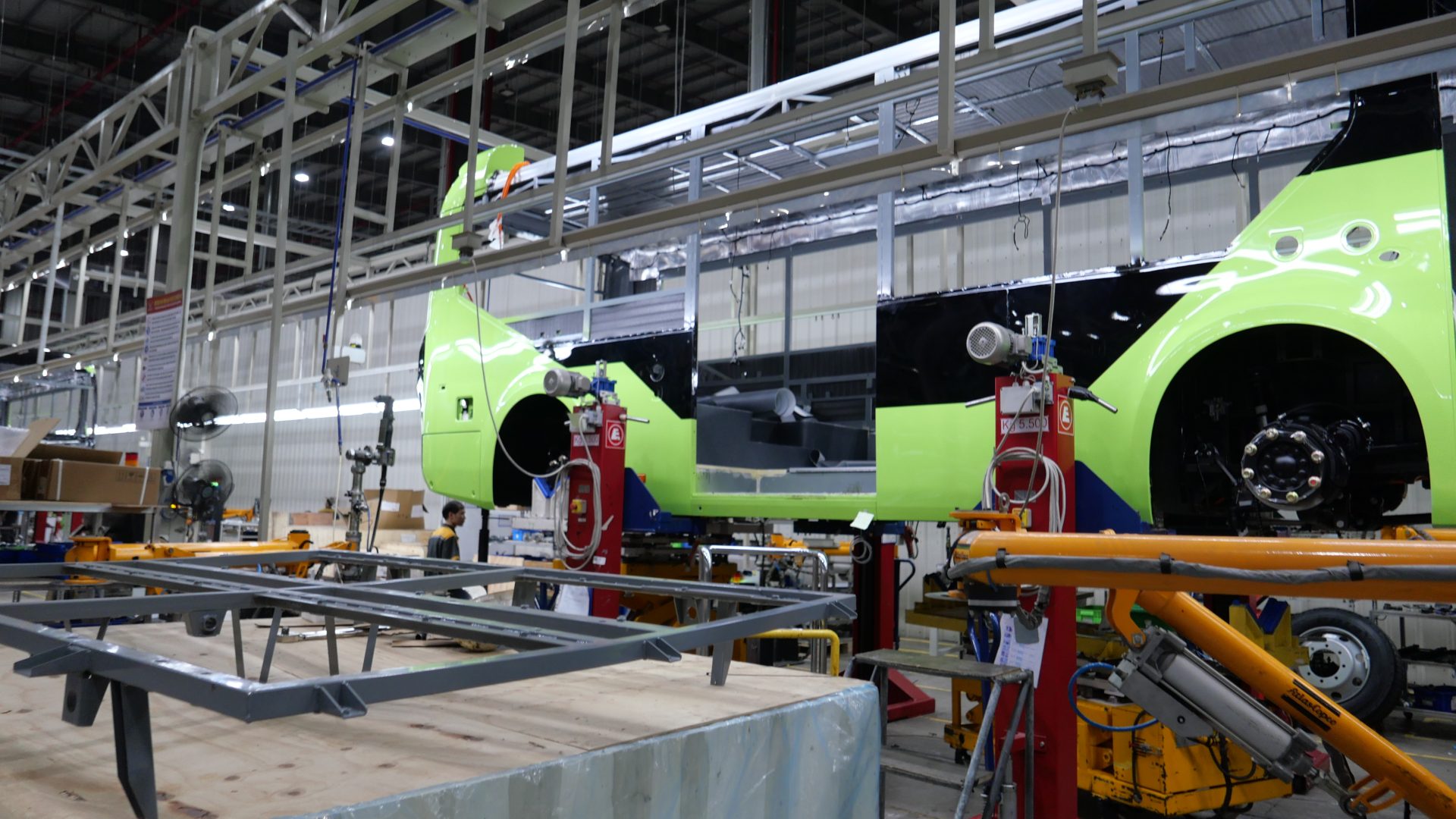
The number of buses we sell here in Vietnam is obviously heavily influenced by the fact that we also have a company within VinGroup, namely VinBus, and therefore we also build our buses for our own company. This gives us the flexibility to handle contracts for the city of Hanoi, the city of Ho Chi Minh or other contracts, and therefore keep our production full in moments when fewer orders arrive. This allows us to keep the factory running continuously, without needing downtime because there are no orders. We produce around 4,500 to 5,000 buses per year across different models, in the 6, 8 and 10-metre segments.
We have complete ownership of the software stack, so we design our hardware components, manufacture them ourselves and run our own software on top of them. This gives us the ability to optimise the system continuously and introduce changes almost instantly. As a result, we can react much faster to market feedback, implement improvements more quickly, add new functionalities and address areas where customers may not yet be fully satisfied. Because the entire chain is managed internally, we do not need to coordinate separately with one supplier for hardware, another for software, and then handle integration, testing and validation afterwards. We can do everything directly in-house.”
And about goods transportation?
“We have a van called the EC Van, designed for last-mile delivery in the city. It is very small, basic, but it is receiving an excellent response from the market. We launched it four or five months ago and it has started selling very well because it adapts perfectly to local conditions: small and narrow roads, heavy traffic, not very large volumes to transport. So that vehicle fits perfectly into its market. We also have plans to move into larger vans, but we are talking about maybe a year and a half from now.”
Why vertical integration is a winning card
Vertical integration is a topic that is widely discussed in the market and is often presented by Chinese manufacturers as one of their main selling points. How VinFast positions itself on this topic overall?
”Actually, vertical integration is VinFast’s winning card, because in the factory we not only have hot stamping, cold stamping and assembly, which every manufacturer has, but besides batteries — therefore both our own cells and battery assembly — we also make our electronic components ourselves. That is, we take the motherboards and we have our own assembly factory where we assemble all the various electronic components.”
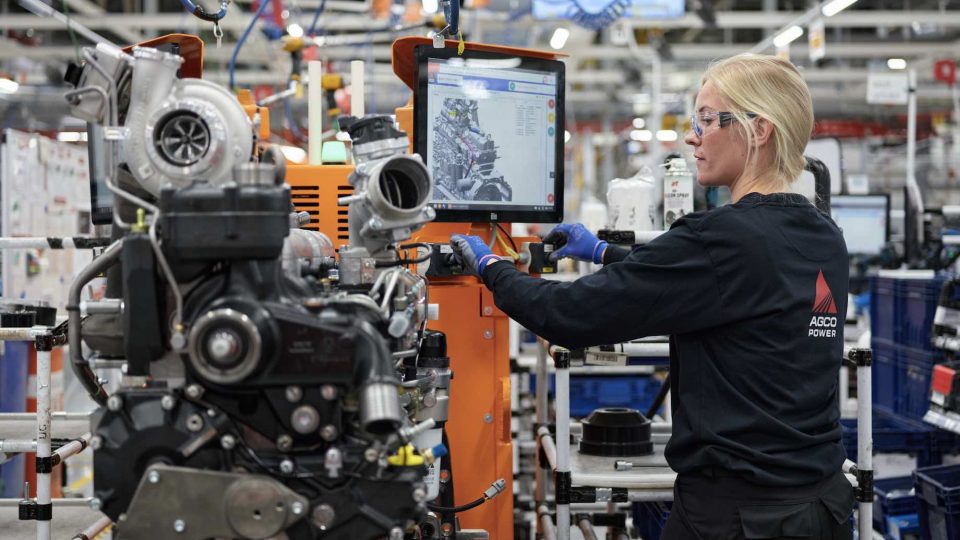
The performance of the Fendt 600 Vario recorded by the PowerMix at the DLG test centre in Gross-Umstadt, Germany, is the result of close collaboration between Fendt and AGCO Power in Linnavuori, Finland
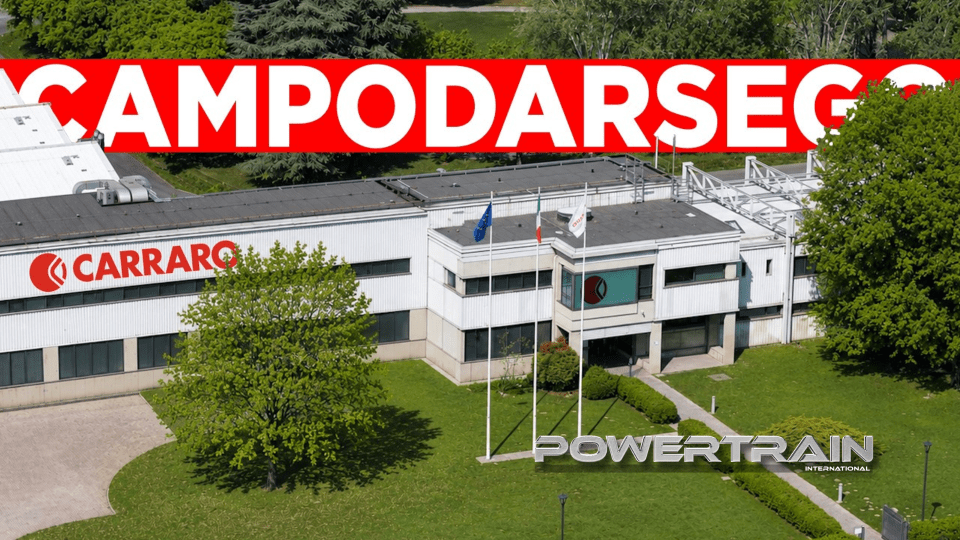
We visited the Padua area to tell the story and strategic role of the Carraro plant in Campodarsego, the headquarters and beating heart of the group, which specializes in axles and transmissions for agricultural and construction machinery. Here is the video
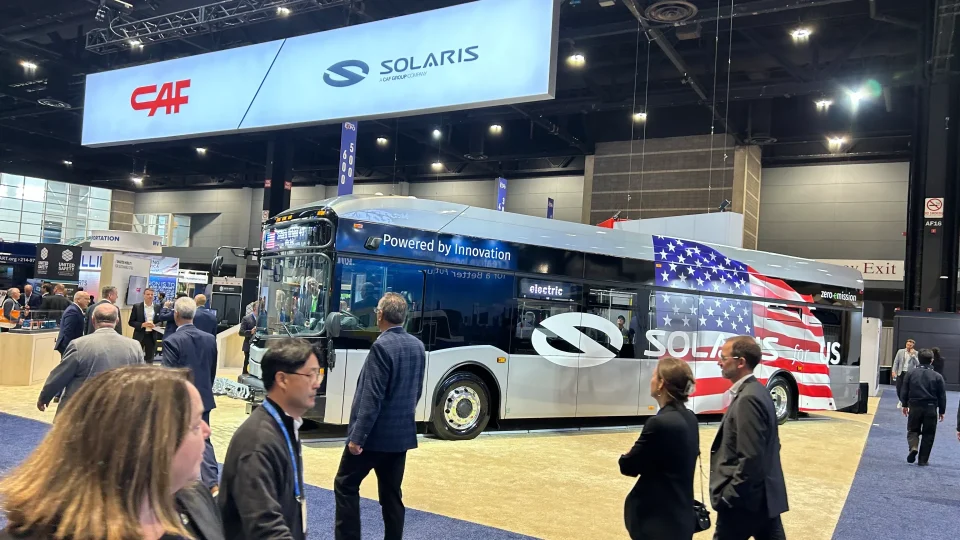
Our colleagues at Sustainable Bus attended APTA Expo 2026. In addition to what you will find here, the link at the bottom of the page leads to coverage of Gillig, NFI Group, Nova Bus, Solaris, VinFast, Karsan, Ballard and BAE Systems
Turkish manufacturer BMC unveiled the new PRO L 1856 at IAA Transportation 2026. Developed for international long-haul operations, the new 4x2 tractor is powered by a 12.9-litre Cummins engine delivering 560 hp and 2,500 Nm, coupled with a ZF automated manual transmission
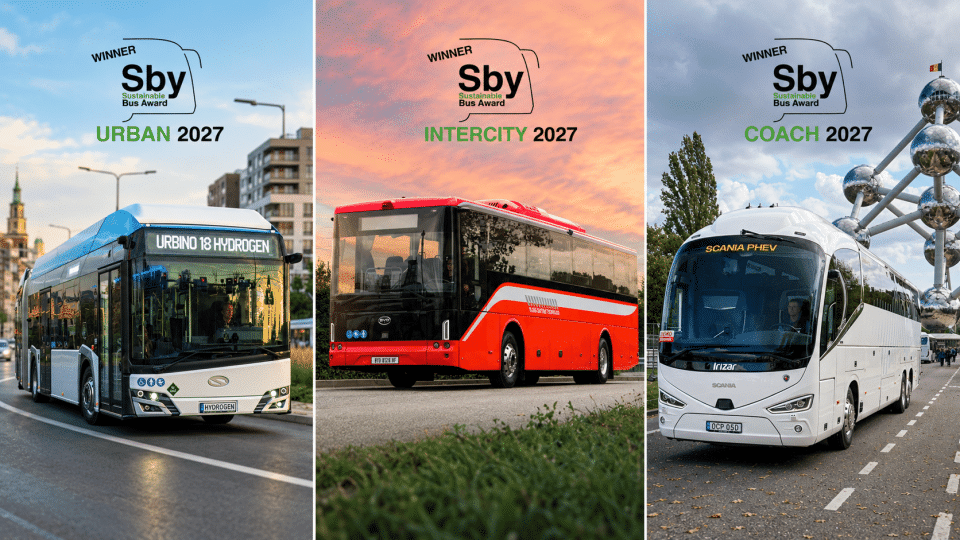
An anthology of propulsion systems emerged from the Sustainable Bus Awards 2027, featuring plug-in hybrids, full electrics (BEVs), and hydrogen fuel cells
More than 140,000 people attended IAA Transportation 2026 in Hannover, where 1,589 exhibitors from 46 countries presented over 150 world premieres and new products. International participation reached a new high, while electrification, charging infrastructure, hydrogen and autonomous driving dominat...
Subscribe to our weekly newsletter and browse the magazine
X This Website uses cookies, small text files placed by the site on the computer or mobile device, which automatically collect some information that the user does not provide directly. Cookie Policy ACCEPTCookie settings
Manage consent
Privacy Overview
This website uses cookies to improve your experience while you navigate through the website. Out of these cookies, the cookies that are categorized as necessary are stored on your browser as they are essential for the working of basic functionalities of the website. We also use third-party cookies that help us analyze and understand how you use this website. These cookies will be stored in your browser only with your consent. You also have the option to opt-out of these cookies. But opting out of some of these cookies may have an effect on your browsing experience.
Necessary cookies are absolutely essential for the website to function properly. These cookies ensure basic functionalities and security features of the website, anonymously.
Cookie
Duration
Description
cookielawinfo-checkbox-advertisement
1 year
Set by the GDPR Cookie Consent plugin, this cookie is used to record the user consent for the cookies in the "Advertisement" category .
cookielawinfo-checkbox-analytics
11 months
This cookie is set by GDPR Cookie Consent plugin. The cookie is used to store the user consent for the cookies in the category "Analytics".
cookielawinfo-checkbox-functional
11 months
The cookie is set by GDPR cookie consent to record the user consent for the cookies in the category "Functional".
cookielawinfo-checkbox-necessary
11 months
This cookie is set by GDPR Cookie Consent plugin. The cookies is used to store the user consent for the cookies in the category "Necessary".
cookielawinfo-checkbox-others
11 months
This cookie is set by GDPR Cookie Consent plugin. The cookie is used to store the user consent for the cookies in the category "Other.
cookielawinfo-checkbox-performance
11 months
This cookie is set by GDPR Cookie Consent plugin. The cookie is used to store the user consent for the cookies in the category "Performance".
CookieLawInfoConsent
1 year
Records the default button state of the corresponding category & the status of CCPA. It works only in coordination with the primary cookie.
JSESSIONID
session
The JSESSIONID cookie is used by New Relic to store a session identifier so that New Relic can monitor session counts for an application.
PHPSESSID
session
This cookie is native to PHP applications. The cookie is used to store and identify a users' unique session ID for the purpose of managing user session on the website. The cookie is a session cookies and is deleted when all the browser windows are closed.
viewed_cookie_policy
11 months
The cookie is set by the GDPR Cookie Consent plugin and is used to store whether or not user has consented to the use of cookies. It does not store any personal data.
Functional cookies help to perform certain functionalities like sharing the content of the website on social media platforms, collect feedbacks, and other third-party features.
Cookie
Duration
Description
bcookie
1 year
LinkedIn sets this cookie from LinkedIn share buttons and ad tags to recognize browser ID.
bscookie
1 year
LinkedIn sets this cookie to store performed actions on the website.
lang
session
LinkedIn sets this cookie to remember a user's language setting.
lidc
1 day
LinkedIn sets the lidc cookie to facilitate data center selection.
UserMatchHistory
1 month
LinkedIn sets this cookie for LinkedIn Ads ID syncing.
__cf_bm
30 minutes
This cookie, set by Cloudflare, is used to support Cloudflare Bot Management.
__sharethis_cookie_test__
session
ShareThis sets this cookie to track which pages are being shared and by whom.
Performance cookies are used to understand and analyze the key performance indexes of the website which helps in delivering a better user experience for the visitors.
Cookie
Duration
Description
_uetsid
1 day
Bing Ads sets this cookie to engage with a user that has previously visited the website.
_uetvid
1 year 24 days
Bing Ads sets this cookie to engage with a user that has previously visited the website.
Analytical cookies are used to understand how visitors interact with the website. These cookies help provide information on metrics the number of visitors, bounce rate, traffic source, etc.
Cookie
Duration
Description
advanced_ads_page_impressions
10 years
This cookie is set by the Advanced Ads. This cookie is used to measure the number of previous page impressions.
CONSENT
2 years
YouTube sets this cookie via embedded youtube-videos and registers anonymous statistical data.
_ga
2 years
The _ga cookie, installed by Google Analytics, calculates visitor, session and campaign data and also keeps track of site usage for the site's analytics report. The cookie stores information anonymously and assigns a randomly generated number to recognize unique visitors.
_gat_gtag_UA_27868640_1
2 hours
Set by Google to distinguish users.
_gat_UA-117121979-1
1 minute
A variation of the _gat cookie set by Google Analytics and Google Tag Manager to allow website owners to track visitor behaviour and measure site performance. The pattern element in the name contains the unique identity number of the account or website it relates to.
_ga_C5NW3HRZCQ
2 years
This cookie is installed by Google Analytics.
_ga_EPNXRXEESF
2 years
This cookie is installed by Google Analytics.
_gcl_au
3 months
Provided by Google Tag Manager to experiment advertisement efficiency of websites using their services.
_gid
1 day
Installed by Google Analytics, _gid cookie stores information on how visitors use a website, while also creating an analytics report of the website's performance. Some of the data that are collected include the number of visitors, their source, and the pages they visit anonymously.
Advertisement cookies are used to provide visitors with relevant ads and marketing campaigns. These cookies track visitors across websites and collect information to provide customized ads.
Cookie
Duration
Description
advanced_ads_browser_width
1 month
This cookie is set by Advanced ads plugin.This cookie is used to measure and store the user browser width for adverts.
fr
3 months
Facebook sets this cookie to show relevant advertisements to users by tracking user behaviour across the web, on sites that have Facebook pixel or Facebook social plugin.
IDE
1 year 24 days
Google DoubleClick IDE cookies are used to store information about how the user uses the website to present them with relevant ads and according to the user profile.
MUID
1 year 24 days
Bing sets this cookie to recognize unique web browsers visiting Microsoft sites. This cookie is used for advertising, site analytics, and other operations.
test_cookie
15 minutes
The test_cookie is set by doubleclick.net and is used to determine if the user's browser supports cookies.
VISITOR_INFO1_LIVE
5 months 27 days
A cookie set by YouTube to measure bandwidth that determines whether the user gets the new or old player interface.
YSC
session
YSC cookie is set by Youtube and is used to track the views of embedded videos on Youtube pages.
yt-remote-connected-devices
never
YouTube sets this cookie to store the video preferences of the user using embedded YouTube video.
yt-remote-device-id
never
YouTube sets this cookie to store the video preferences of the user using embedded YouTube video.
_fbp
3 months
This cookie is set by Facebook to display advertisements when either on Facebook or on a digital platform powered by Facebook advertising, after visiting the website.
__Host-GAPS
2 years
This cookie allows the website to identify a user and provide enhanced functionality and personalisation.