Parker F1e and F12e Series pumps
Parker Expands Its Bent Axis Pump Portfolio With the New F1e and F12e Series for Electrification
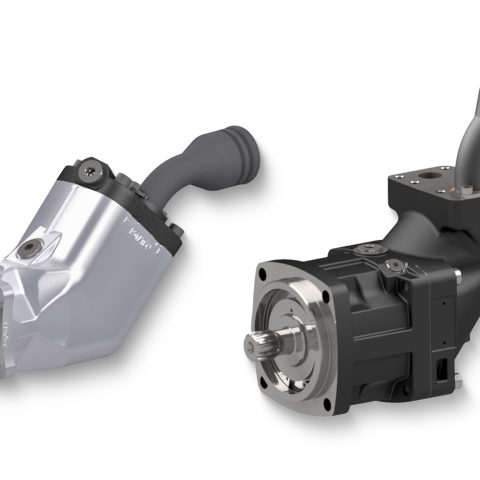
Parker Hannifin launched the new F1e and F12e hydraulic pumps, designed for variable speed drive applications. The Parker F1e and F12e pumps offer highly efficient hydraulic control within a system, ensuring optimal performance in electric-driven applications. The technology behind the F1e and F12e pumps allows for a wide range of operating speeds, maximizing the flow while lowering the torque.
When paired with asynchronous or synchronous electric motors and controlled by frequency controllers, these pumps operate with exceptional efficiency and reliability, leading to significant energy savings.
F1e and F12e explained by Parker specialist
“The launch of the F1e and F12e hydraulic pumps marks a significant milestone in Parker’s commitment to driving the electrification of heavy-duty machinery,” said Fredrik Magnusson, Business Development Manager at Parker’s Pump & Motor Division Europe. “These pumps deliver exceptional efficiency and reliability across a wide range of operating conditions, enabling our customers to reduce emissions without compromising performance. By integrating advanced technologies that minimize energy loss and noise, we are helping to pave the way for a cleaner, quieter, and more sustainable future in hydraulic systems.”
For both full electric and hybrid systems
Parker’s F1e and F12e pumps are designed to integrate seamlessly with contemporary electric systems, including hybrid and fully electric vehicles. In addition to their efficiency, the F1e and F12e pumps are engineered to reduce pressure pulsation, which can cause vibrations that lead to unwanted noise in the hydraulic system. By reducing these pulsations, Parker enhances the overall performance and user experience of hydraulic systems, creating a quieter and more reliable solution.