Monaco Energy Boat Challenge 2026, Italy wins: AS Labruna and Arcistratega key players in the Open Class
The 600 HP full-electric vessel nears 30 knots in the YCM Speed Record, ranking among the three fastest in the trial. AS Labruna is the only company representing Italy in the Open Sea Class, while the Italian success also stems from the results of the universities of Bologna and Genoa and the Politecnico di Milano
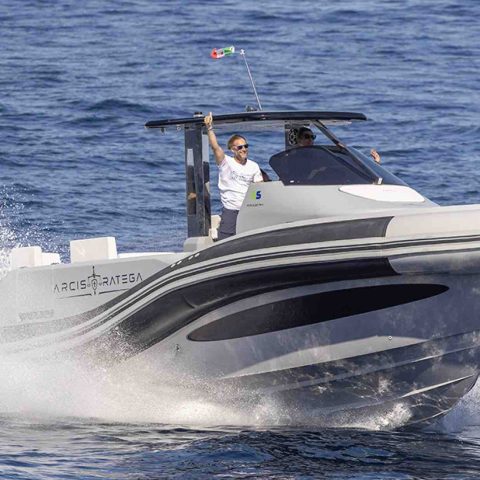
AS Labruna continues its wave of success at the Monaco Energy Boat Challenge 2026, following last year’s success in Venice. In the thirteenth edition of the event organized by the Yacht Club de Monaco, Italian projects achieved significant results in both university research and industrial innovation, highlighting the expertise developed in our country in the field of electric propulsion and energy management.
Standing out were the university teams UniBoAT from the University of Bologna, Elettra UniGe from the University of Genoa, and Physis PEB from the Politecnico di Milano, key players in the competitions and awards dedicated to technological innovation. On the industrial front, AS Labruna was the only company to represent Italy in the Open Sea Class with Arcistratega, the electric vessel that ranked among the three fastest in the trial during the YCM Speed Record.
This result strengthens the Italian balance sheet of an edition that gathered students, engineers, universities, and companies from 21 countries in the Principality, once again transforming the port of Monaco into an international laboratory dedicated to decarbonization and the evolution of propulsion and energy systems for the marine sector. In this scenario, AS Labruna brought to the water a project born with a precise purpose: to test, under real operational conditions, technologies capable of contributing to the evolution of electric boating. In fact, Arcistratega was not developed exclusively to participate in a competition, but as a technological platform on which to integrate propulsion systems, energy storage, and digital solutions.
Arcistratega nears 30 knots: 600 electric HP in the water at the Monaco Energy Boat Challenge 2026
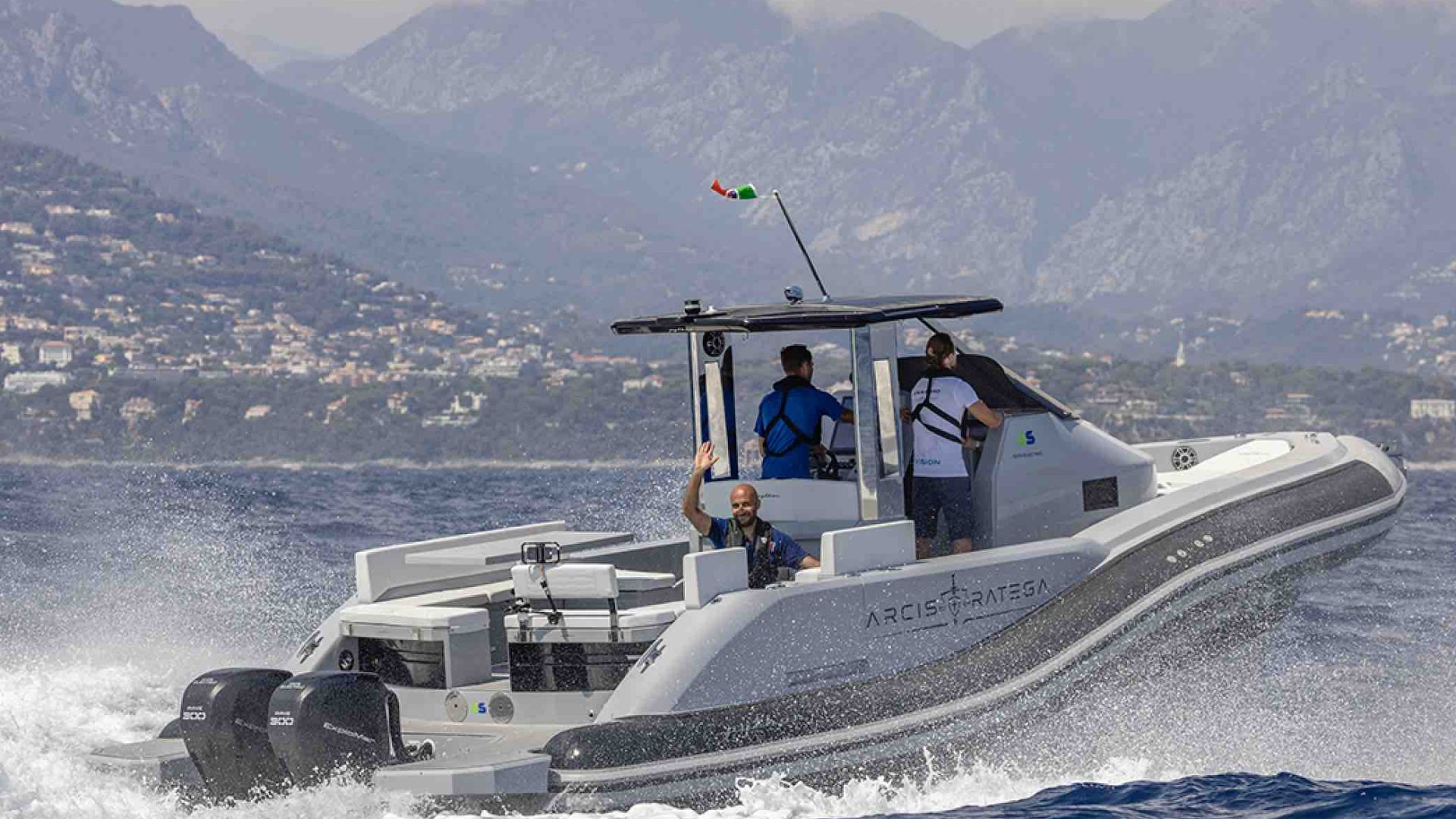
Ten meters in length, two 300 HP electric outboards, and an energy capacity of 250 kWh are some of the figures of Arcistratega, the electric vessel with which AS Labruna faced the sea trials of the Open Class, a category in which technologies are tested under operational conditions regarding performance, autonomy, reliability, and safety.
During the YCM Speed Record, Arcistratega neared 30 knots, ranking among the three fastest vessels in the trial. Ahead of the Italian boat were only the Frauscher x Porsche 790 Spectre, capable of exceeding the 50-knot threshold by reaching 51 kn, and Energy, with 45 kn.
The result takes on a special value within the framework of Italian participation in the event: AS Labruna was the only company to represent Italy in the Open Sea Class, and Arcistratega brought the Italian colors among the three fastest vessels of the YCM Speed Record, flanking on the industrial side the results obtained by university teams in the other categories of the Monaco Energy Boat Challenge. However, the speed reached in the waters of Monaco tells only part of the work carried out by AS Labruna, because the project stems from a broader vision, built around the concept of energy integration. The goal is not simply to install an electric propulsion system on a vessel, but to understand how to produce, store, distribute, and manage energy in the most efficient way possible, making different technologies communicate within a single architecture.
Arcistrega: Storage, PV Panels, Methanol Fuel Cell
On board Arcistratega, the 250 kWh storage system, photovoltaic panels, and a methanol fuel cell dedicated to auxiliary services coexist—a configuration particularly relevant in an edition of the Monaco Energy Boat Challenge where alternative fuels, and methanol in particular, found increasing space in concrete testing at sea.
For AS Labruna, in fact, the electric transition of boating cannot be reduced to the simple replacement of a thermal engine with an electric one, because the issue concerns the vessel’s entire energy system and involves the ability to increase efficiency, optimize available resources, and integrate different solutions coherently. Arcistratega was born with this objective and allows for the testing of batteries, energy production systems, and new technologies directly at sea. From this perspective, Monaco represented much more than a competition, offering the opportunity to gather data on system behavior and to interface directly with international companies, designers, and research centers.
Energy, artificial intelligence, and data management
The innovation of Arcistratega also concerns the monitoring and management of the vessel. The project integrates Sea 4.0 for the remote control of the main onboard parameters, artificial intelligence systems applied to predictive maintenance, and blockchain technology for the vessel’s digital passport. The collection and analysis of data allow for monitoring system status, identifying potential anomalies, and anticipating maintenance interventions, integrating propulsion, energy, and onboard information within a single technological ecosystem.
An approach that reflects the evolution of AS Labruna, a company with over 55 years of experience in boating that is expanding its expertise from propulsion to the integration of energy and digital systems. Participation in the Monaco Energy Boat Challenge is part of this path of research and experimentation in the field of electric boating. The Italian success in Monaco, from the results of UniBoAT of the University of Bologna, Elettra UniGe of the University of Genoa, and Physis PEB of the Politecnico di Milano to the presence of AS Labruna in the Open Sea Class, confirms the value of the skills developed in Italy between university research and industry.
In a rapidly evolving nautical scenario, Arcistratega represents one of the most concrete expressions of the path undertaken by AS Labruna: not just an electric boat capable of nearing 30 knots, but a development and testing platform for the boating technologies of the future.