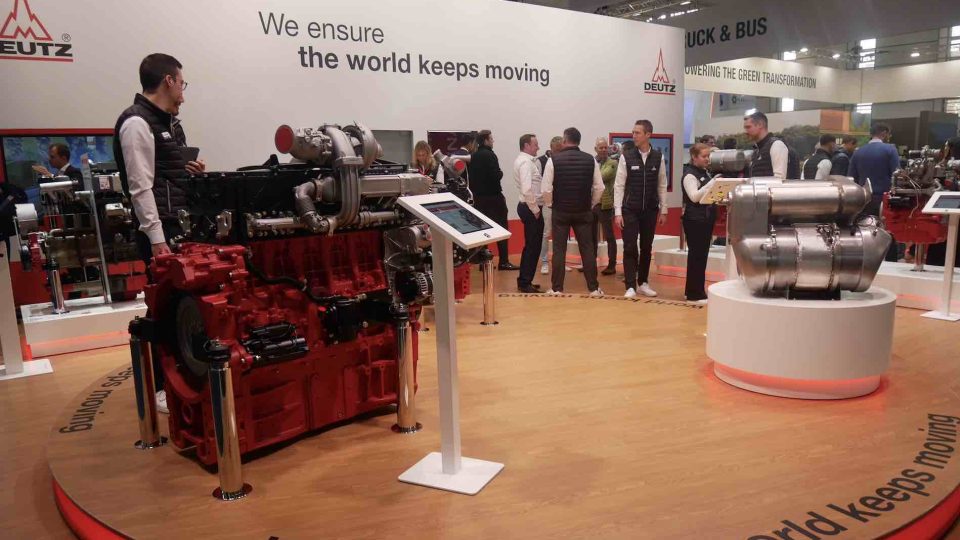
At IAA, Bosch puts itself forward as an all-round supplier for BEV trucks
Bosch pitches itself as the all-in-one supplier for BEV trucks at IAA. Markus Heyn: “The heavy-duty commercial vehicle business is a key growth area for us. We aim to double our sales in this segment by the mid-2030s”
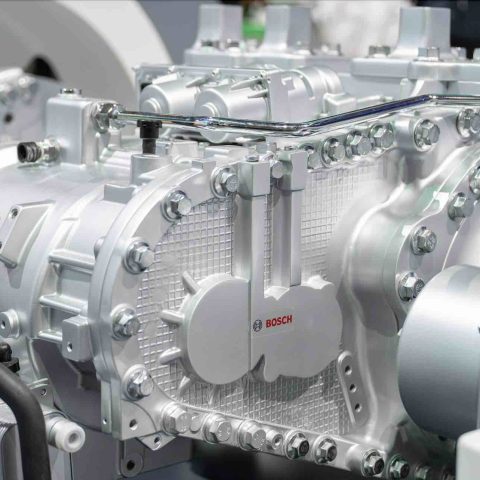
At IAA, Bosch went beyond simple product launches. Making the exit from internal combustion engines in heavy-duty transport a reality, rather than just a slogan, requires several levers — whether the route is hydrogen or battery packs. Bosch is equipped to supply them all in one.
A Growth About 1%
Following a strong first half of the year, Bosch expects global truck production to grow moderately by about 1 percent to approximately 3.3 million trucks, and then to 4 million units by the mid-2030s. On the basis of this forecast and the market uptake of corresponding technologies, Bosch sees the potential to double its heavy-duty commercial vehicle technology sales from today’s more than 4 billion euros by 2035. At the same time, assuming a solid final quarter, the Bosch Mobility business sector will be able to maintain its 2026 revenue level despite the current challenges and demanding market environment.
The company’s portfolio ranges from hardware and software to artificial intelligence and cloud-based services that make operating commercial vehicles safer and more economical. Bosch is also boosting its growth by entering new business areas. The company plans to establish a new joint venture with Brakes India and Wheels India, two subsidiaries of the TSF Group, to develop smart actuators for compressed air generation, compressed air treatment, air suspension, and parking brakes.
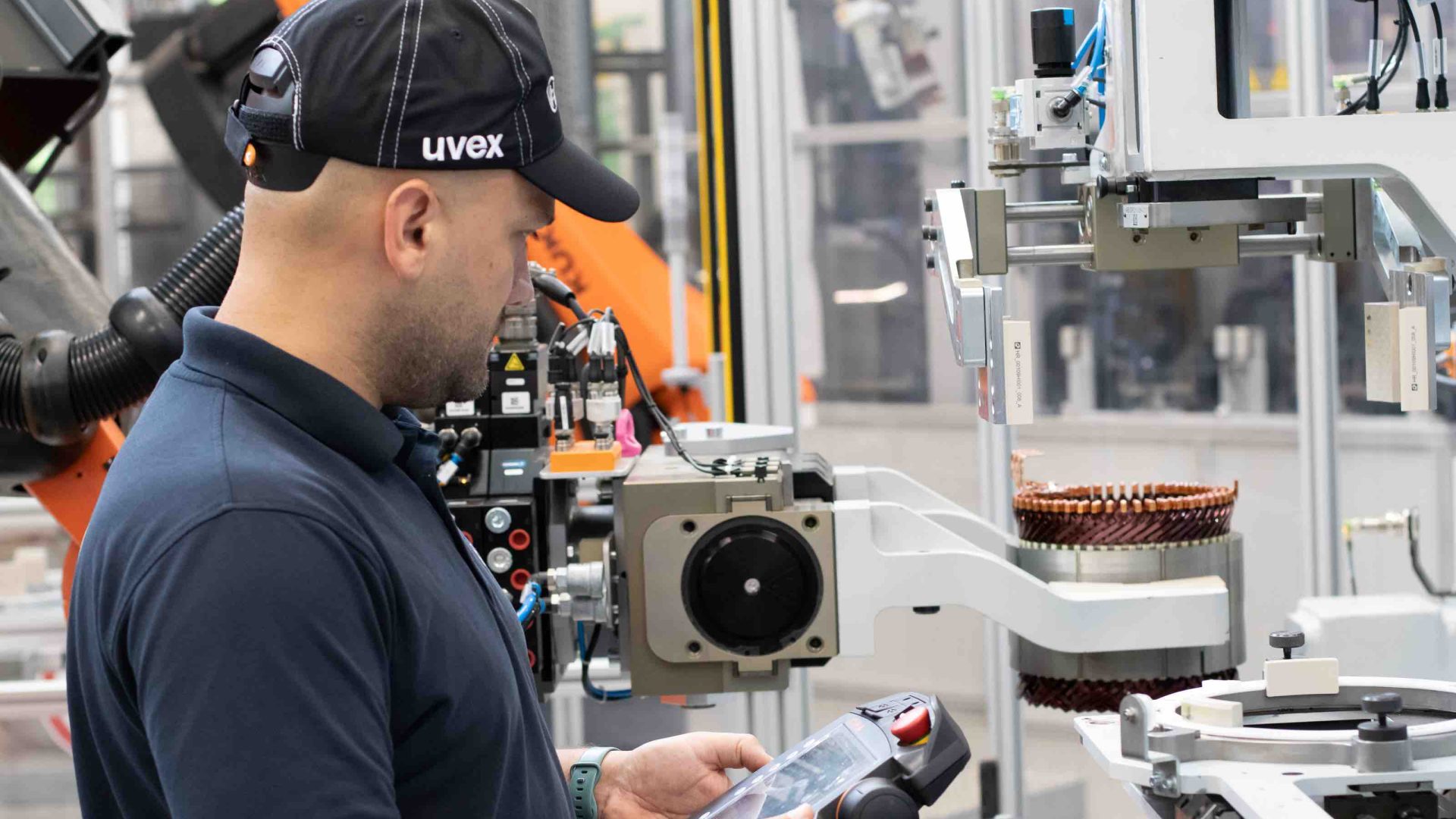
Bosch’s Alternative Powertrain Technology at IAA Hanover
A key element of Bosch’s growth strategy remains its broad portfolio of alternative powertrain technologies. The company is consolidating its market position in battery-electric mobility: in 2026, one-third of all newly registered battery-electric trucks in Europe are powered by electric motors and inverters from Bosch. A major new order from long-time partner Daimler Truck for the eActros electric truck underpins this success: the agreement covers the supply of electric powertrain components manufactured in Europe.
Similar to the passenger car segment, the pace of transformation in the commercial vehicle market also varies by region: electromobility is rapidly gaining momentum and is becoming especially widespread in China. Bosch estimates that by 2030, about one in four newly registered heavy-duty trucks worldwide will be climate-friendly – powered by batteries or fuel cells – with that figure going up to about half by 2035. In the North American market, on the other hand, the traditional – and in some cases, hybridized – diesel engine continues to dominate. “Achieving the world’s climate goals in the transport sector isn’t an ‘either-or’ proposition – we have to use every technology that helps us transition away from fossil fuels,” Heyn said. “Batteries are also becoming the lead technology in commercial vehicles, but in heavy-duty long-haul transport and on global markets, they will continue to rely on hydrogen and alternative fuels to supplement them.” That’s why Bosch consistently focuses on technological diversity and, in addition to fuel-cell power modules, also supplies key components for hydrogen-powered combustion engines. At the same time, the company intends to systematically expand its leading position in diesel engines and continues to optimize conventional injection systems to help vehicle manufacturers meet new emissions standards such as Euro 7. For the global fleet, renewable synthetic fuels can also help make rapid progress toward climate goals.
Sensors
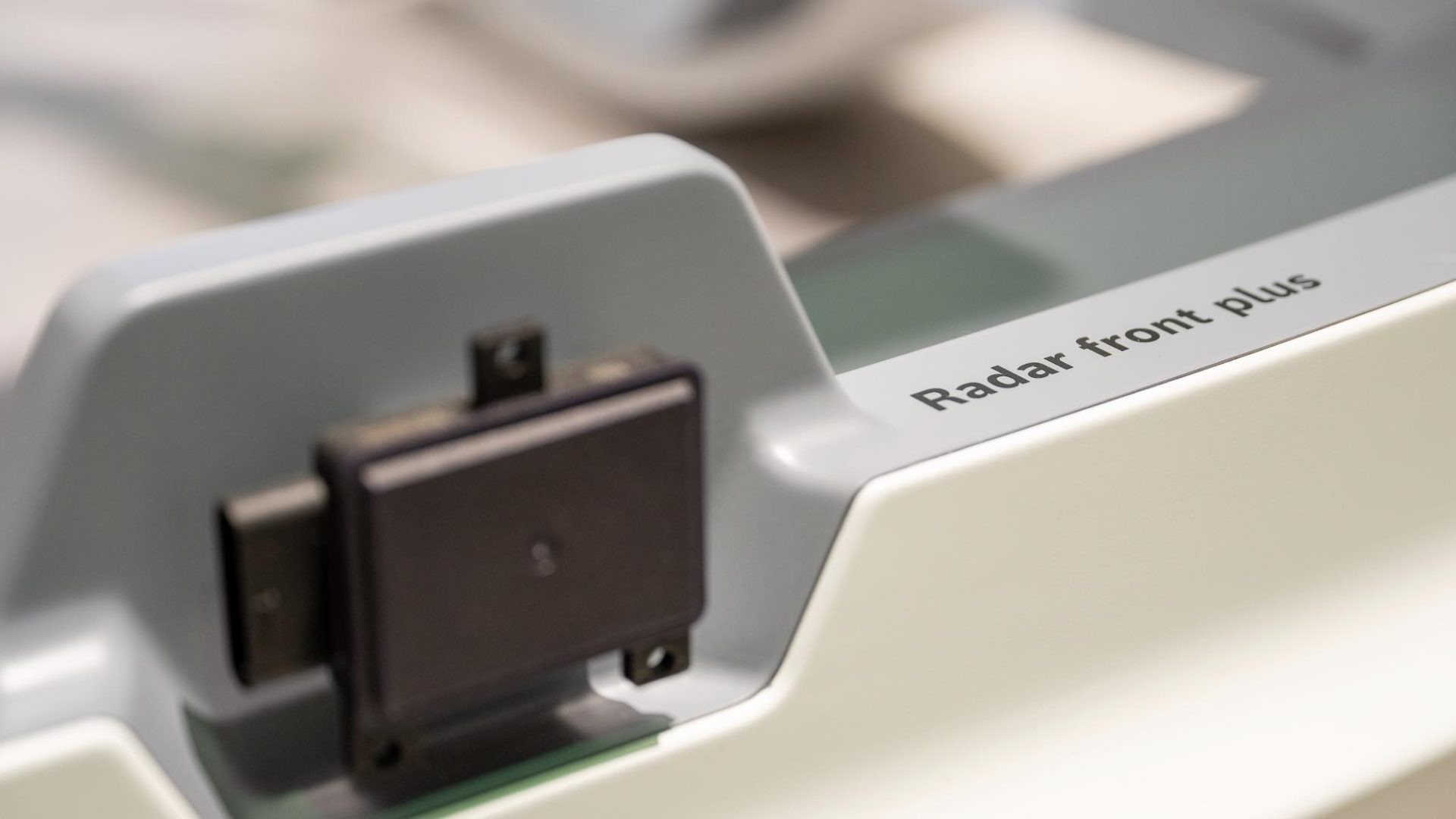
The commercial vehicle industry is undergoing a transformation, one that’s not limited to powertrain technology: to improve safety on its roads, the EU has made an increasing number of driver-assistance features mandatory in recent years; the most recent regulations were introduced in July 2026. The emergency braking assistant must now also reliably identify pedestrians and cyclists, and the driver monitoring system is required to detect not only drowsiness but also distraction. Bosch provides the necessary sensors and functions. In 2027, the company will launch new generations of its multipurpose camera and radar sensor, both of which will enable precise detection of people and vehicles, thanks to the latest AI technologies and significantly greater computing power. A digital rearview mirror with a built-in camera that analyzes driver behavior and issues warnings when it senses driver distraction went into mass production in 2026 at two well-known European manufacturers. Even outside Europe, major markets such as India and China are tightening their safety standards. In India, for example, new regulatory requirements are pushing up demand for modern driver assistance systems, such as emergency braking assist and blind-spot detection. Bosch is already working there with leading commercial vehicle manufacturers to implement the appropriate ADAS solutions in order to support the introduction of the new safety standards.
With its comprehensive portfolio of systems and sensors, Bosch helps create a complete view of the truck’s surroundings and enhances driving safety and convenience. Thanks to intelligent software algorithms, data from the various sensors in the vehicle is combined and analyzed in real time. The cameras and radar systems are also suitable for higher levels of automation. “Level 4 automated driving is the goal, in part to address the driver shortage in the logistics sector,” Heyn said regarding the automation roadmap. “The software can handle increasingly complex driving tasks, thus reducing the burden on the logistics system.”
- Bosch aims to double heavy-duty commercial vehicle technology sales from over €4 billion today to a potential €8 billion by 2035, driven by sustained growth in trucks over six metric tons.
- One in three newly registered battery-electric trucks in Europe in 2026 runs on a Bosch electric motor and inverter, with a major new order from Daimler Truck for the eActros securing long-term supply of European-made electric powertrain components.
- Bosch is entering a new joint venture with Brakes India and Wheels India (TSF Group) to develop smart actuators for compressed air generation, air suspension, and parking brakes.
- The company maintains a multi-technology powertrain strategy, combining growth in battery-electric systems with hydrogen combustion engine components, fuel-cell power modules, and continued optimisation of diesel injection systems for Euro 7 compliance.
- New generations of Bosch’s multipurpose camera and radar sensors, launching in 2027, will support stricter EU driver-assistance requirements introduced in July 2026, including pedestrian/cyclist detection and distraction monitoring; similar ADAS demand is rising in India and China.
- Bosch and its subsidiary ETAS are developing central electrical/electronic architectures to decouple hardware and software, enabling over-the-air updates and helping fleet operators reduce total cost of ownership through software-defined trucks.
How many start-ups are there at IAA Hannover 2026?
This year, more than 30 startups from 13 countries will present their innovations on site.
How many fast-charging points will be needed to electrify Europe?
By 2030, around 35,000 publicly available MCS fast-charging points for heavy-duty vehicles will be needed across Europe, some 4,000 of them in Germany. In total, up to 50,000 truck-capable charging points will be required EU-wide. Currently, however, a mere 730 charging points with a minimum output of over 350 kW are available EU-wide exclusively for heavy-duty commercial vehicles. At mixed-use locations, there are just under 2,000 public charging points for heavy-duty commercial vehicles.
What is TSF Group?
The TSF group’s interests span the automotive and financial services sectors. Companies promoted by the Indian group have combined revenue of more than Rs. 35,000+ crores (around 3.2B€), 45,000+ employees, 1,400+ branches, and 50 factories.