The Eco of Scania
Scania Eco Soul. Core 800 battery packs will power the Husky E-Motion and the newly introduced Leitwolf E-Motion. Agreement with Toyota for Hydrogen fuel cells
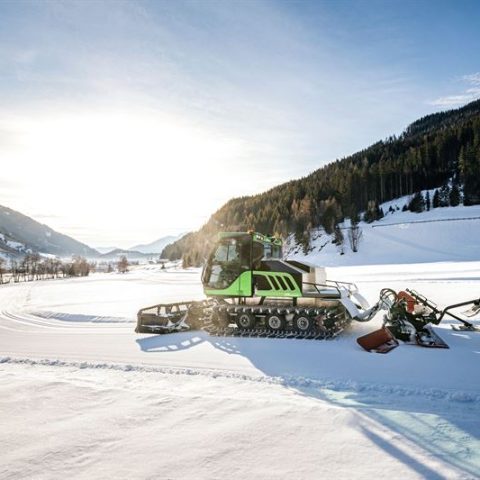
Scania has diversified its truck power sources without ever turning its back on fossil-fuel technology. In a single month, September, it put together an agreement with Toyota on hydrogen fuel cells and, remarkably, an off-highway project involving the battery conversion of Prinoth snow groomers. Let’s start with the latter. Scania will supply its Core 800 battery packs, selected to meet these challenges and delivering robust performance based on years of experience in electrified off‑road and industrial applications.
“Collaborating with Prinoth is an exciting challenge for us, as it involves deploying our battery technology in extremely demanding conditions. Snow groomers operate in very low temperatures and steep terrain, moving heavy volumes of snow. This requires batteries that can deliver high power, withstand cold climates, and handle vibrations. We are proud that our technology has been recognised through this long-term agreement,” says Elin Åkerström, Managing Director, Scania Industrial Batteries.
The Eco of Scania Sounds Electric on the Snowfields
The partnership builds on an existing collaboration between the two companies, that started with Husky E-Motion, the world’s first market-ready fully electric snow groomer, introduced in 2022. Since its launch, the machine has been successfully deployed across multiple markets, including Norway, France, Italy, UK, and the United States. The Core 800 battery has been used in the Husky E-Motion since 2023, demonstrating strong performance, seamless integration, and reliability in demanding winter conditions. The successful collaboration has now evolved into a long-term partnership.
The second machine is the Leitwolf E-Motion, recently introduced by Prinoth. This model is equipped with Scania Core 800 battery packs in top and side orientation, configured to meet higher energy and power requirements, further expanding the electrification of heavy-duty snow grooming operations.
Scania’s Core 800 is a lithium-ion battery pack with an installed energy of 97 kWh and high energy density. Its modular design enables flexible installation and scalability, with systems ranging from 21 kWh up to 624 kWh. The battery features integrated liquid cooling, advanced safety architecture, and a proprietary Battery Management System, ensuring reliable operation, long service life, and optimised performance in harsh environments.
“At Prinoth, we have chosen to continue our collaboration with Scania because of the high quality of their battery systems, which we have tested in some of the most challenging environmental conditions. Scania’s team has contributed deep technical expertise and a strong commitment to meeting our needs, while working together with us to continuously improve our products,” says Roberto Pegoraro, Head of R&D Snow Groomers.
Scania’s industrial battery systems are already used across a wide range of applications, including mining, construction, agriculture, and logistics vehicles, as well as energy storage solutions and airport ground support equipment. The partnership with Prinoth further strengthens Scania’s position as a provider of sustainable electrification solutions for demanding industrial segments.
Scania and Toyota join forces to test 40 hydrogen fuel cell trucks
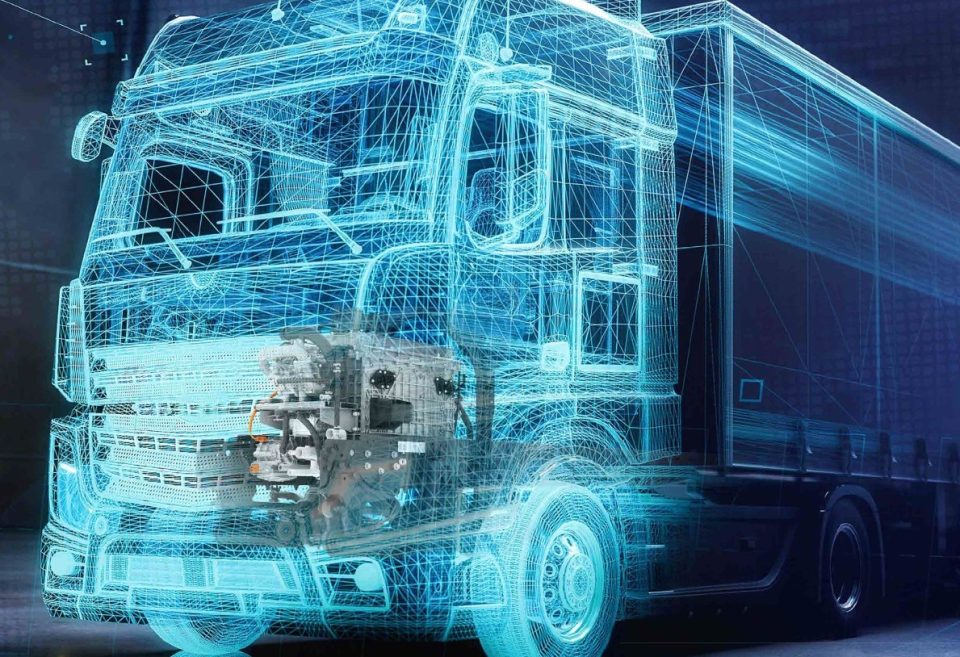
Moving to trucks, Scania and Toyota are joining forces to evaluate hydrogen fuel cell technology in real-world heavy-duty transport, with 40 Scania vehicles set to be equipped with Toyota’s latest fuel cell systems.
Under the partnership, Toyota will supply its third-generation fuel cell system, delivering 300 kW and designed for heavy-duty and other demanding applications. The technology will be integrated into vehicles operating within Scania’s Pilot Partner programme, which involves selected customers testing new transport technologies in everyday operations.
The first Scania hydrogen fuel cell electric trucks are expected to enter operation during the first quarter of 2027.
To go deeper, read the complete article of Sustainable Truck and Van