Eaton and the two Vortices of hydrogen
Eaton and the two Vortices of hydrogen. What does it mean? As you know diesel-international.com has put hydrogen under the spotlight. Blue, brown, green hydrogen. The entire supply chain is in motion. Here you will find Eaton’s contribution. Eaton and the two Vortices of hydrogen: Twin vortices Series “Power management company Eaton today announced its […]
Eaton and the two Vortices of hydrogen. What does it mean? As you know diesel-international.com has put hydrogen under the spotlight. Blue, brown, green hydrogen. The entire supply chain is in motion. Here you will find Eaton’s contribution.
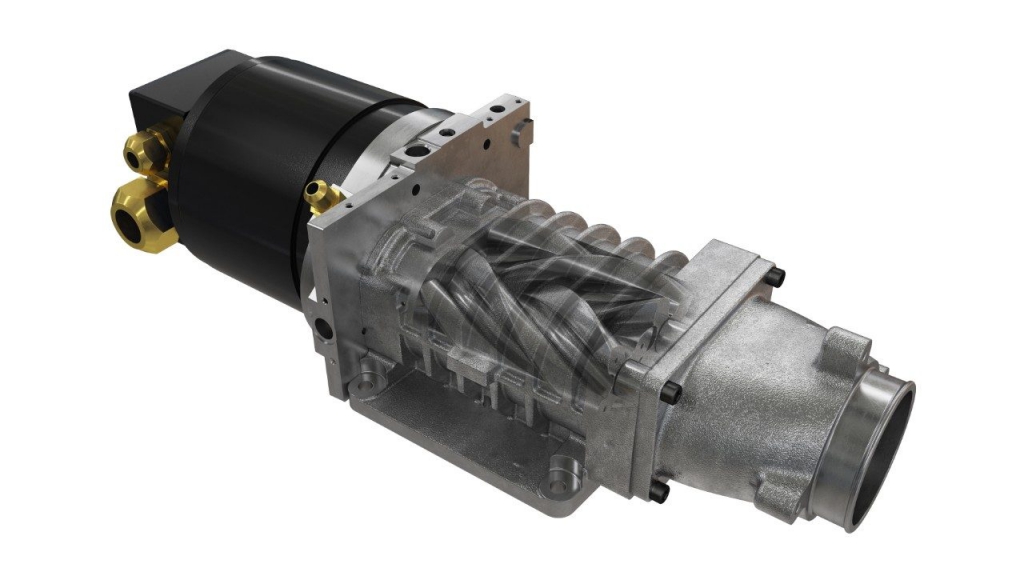
Eaton and the two Vortices of hydrogen: Twin vortices Series
“Power management company Eaton today announced its Twin Vortices Series (TVS) technology has proven to be an integral component in hydrogen fuel cell modules, which benefit from the precise air flow control offered by the TVS unit to operate at peak efficiency. The TVS fuel cell blower is electrically driven, providing accurate and fast air control to enable rapid fuel cell voltage control for transient duty cycles. Eaton’s TVS technology is known throughout the transportation industry for its supercharged internal combustion engine applications, but minor modifications have made the unit ideal for fuel cells. To operate efficiently, fuel cell stacks need precisely controlled air and hydrogen flow. Fuel cells are composed of proton exchange membranes layered between a positive electrode (cathode) and a negative electrode (anode). Hydrogen is introduced to the anode, and oxygen from the surrounding air is directed to the cathode. Hydrogen molecules then break into protons and electrons due to an electrochemical reaction in the fuel cell catalyst, enabling the protons to travel through the membrane to the cathode. The number of layers of proton exchange membranes dictates the amount of power each individual stack can produce, which subsequently means the more stacks a vehicle has the more power it produces.
TVS is mounted to an electric motor
Unlike the TVS supercharger, the TVS fuel cell blower is covered by a housing and directly mounted to an electric motor, which operates in a range of 300 – 450 volts direct current and has no pulley or front cover. The electric motor can be calibrated to operate at fewer than 14,000 revolutions per minute. The technology is also scalable across a broad range of pump displacements and can be adapted to fit an individual customer’s specifications. Eaton is already supplying TVS units to several customers for use in hydrogen-powered buses, with plans for increased production going forward. The next step in the TVS fuel cell program is developing units that enable next-generation fuel cells, which will have greater power density, pressure ratios, longer operational lifespan and improved noise, vibration and harshness levels.”