Volvo Energy invests in Connected Energy for second life battery business
Volvo Energy invests in the UK-based, second-life battery energy storage specialist Connected Energy in order to further accelerate Volvo Group’s battery business and sustainability opportunities.
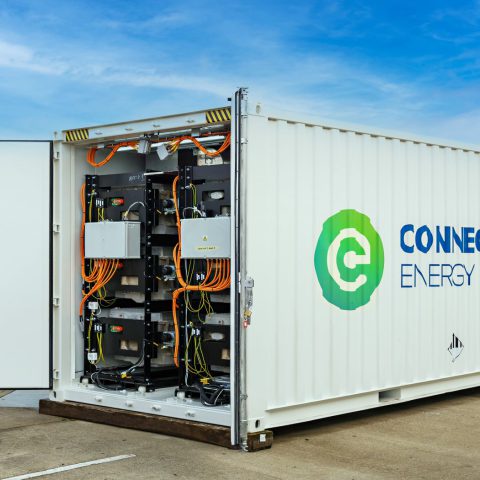
In its mission to support and secure an attractive and sustainable circular business model for batteries, Volvo Energy, the Volvo Group electrification business unit, is investing approx. SEK 50 M for 10 percent in the UK-based second-life battery energy storage specialist Connected Energy.
With its headquarters in Newcastle upon Tyne, Technical Centre in Norfolk and systems operational in the UK, Belgium, Germany and Netherlands, Connected Energy is one of only a handful of companies in the world to have proven that second life vehicle batteries can be used in commercial battery storage systems. Connected Energy has sixteen operational systems across Europe: Belgium, Germany, the Netherlands and the UK with its largest at Cranfield University in Bedfordshire, England.
Volvo and Connected Energy together for an environment perspective
“There is a great deal of untapped potential in the second-life use of batteries. This forward-leaning investment aims to facilitate the scaling-up of second-life battery energy storage systems and further secure circular business opportunities for the forthcoming ramp-up in Volvo Group’s second-life battery returns,” says Joachim Rosenberg, President Volvo Energy. He continues: “Together with Connected Energy, we will minimize the environmental impact of the batteries that has powered Volvo Group vehicles. By repurposing the batteries, we obtain the full value from them – from a climate, environment and business perspective.”
“We couldn’t be more pleased to welcome our new investor Volvo Energy on board and look forward to forging a path to increasing the sustainability of both electric vehicles and grid connected energy storage. Our collaboration will enable us to optimize the potential for battery reusage and ensure that the resources in the batteries are used effectively,” says Matthew Lumsden, CEO Connected Energy.
Volvo Energy is one of five new investors including Caterpillar Venture Capital, the Hinduja Group, Mercuria, OurCrowd to join existing investors of Connected Energy; Engie New Ventures, Macquarie, and the Low Carbon Innovation Fund.