US testing for the Fendt 1100 Vario MT Gen2 tracked tractor with a MAN heart
Among the finalists for Tractor of the Year 2027 in the High Power category, the Fendt powered by the MAN D38 was unveiled to the international press at an exclusive US event. Four models in total, with outputs of up to 680 hp and numerous technological innovations on board
From Iowa, in the heart of the American Corn Belt, Fendt is relaunching its flagship proposition at the top of the high-power segment. The second generation of the 1100 Vario MT series, built at AGCO’s Jackson, Minnesota plant, was unveiled at the Farm Progress Show and represents a considerably deeper update than the machine’s overall styling might suggest. Trattori attended the launch and also had the opportunity to get behind the controls of the new tracked tractor on the grounds of Hegland Farms — a welcome experience not least because the flagship model of the new range was selected among the finalists for Tractor of the Year 2027 in the High Power category.
The choice of location was no coincidence. Hegland Farms is a family-run operation in Iowa founded in 1965 by Merlyn Hegland and now run by the second generation, David and John Hegland. It is a business covering almost 15,000 acres, around 6,000 hectares, three-quarters of which is planted with corn and the remainder mostly with soybeans, alongside a significant pig-farming operation. In other words, exactly the kind of operating environment the 1100 Vario MT was designed for: large areas, long working hours and equipment with high traction demands.
Fendt 1100, four models up to 680 hp
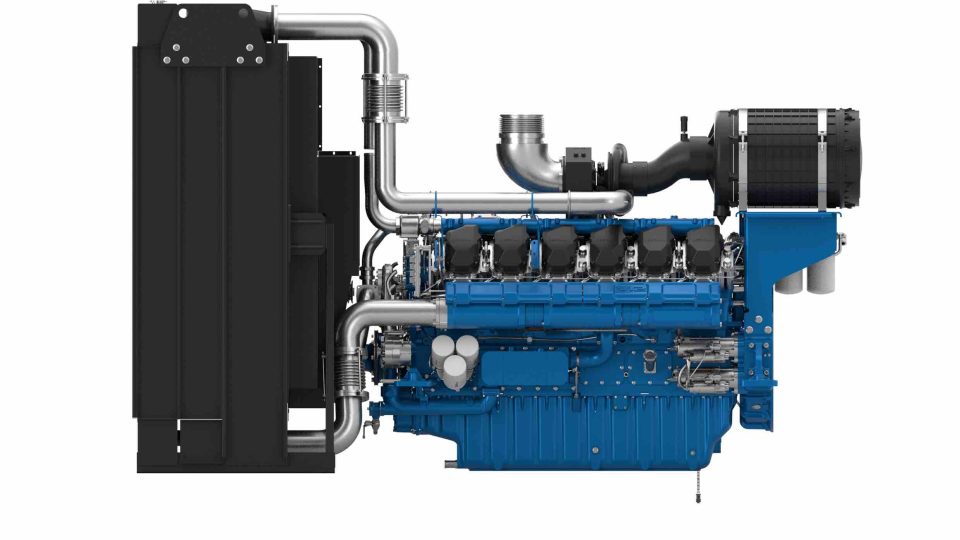
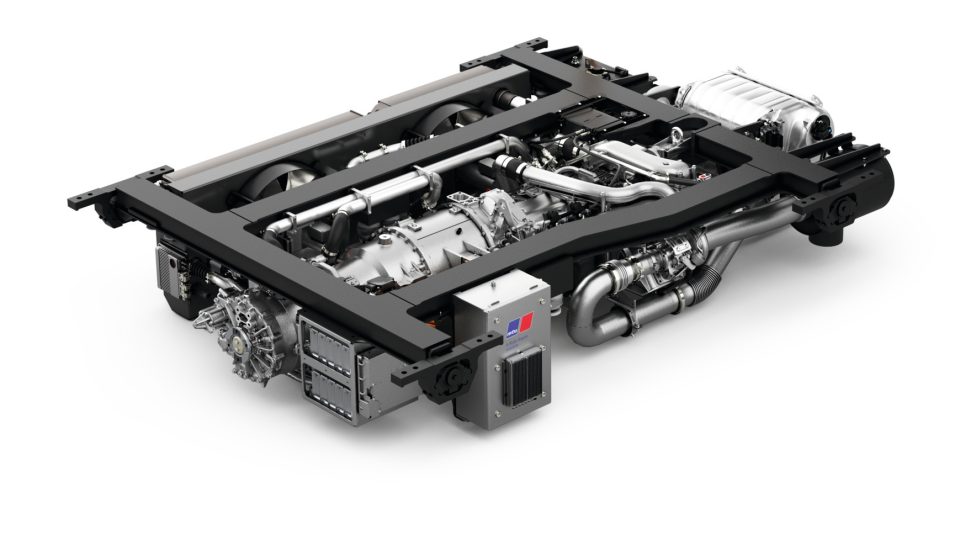
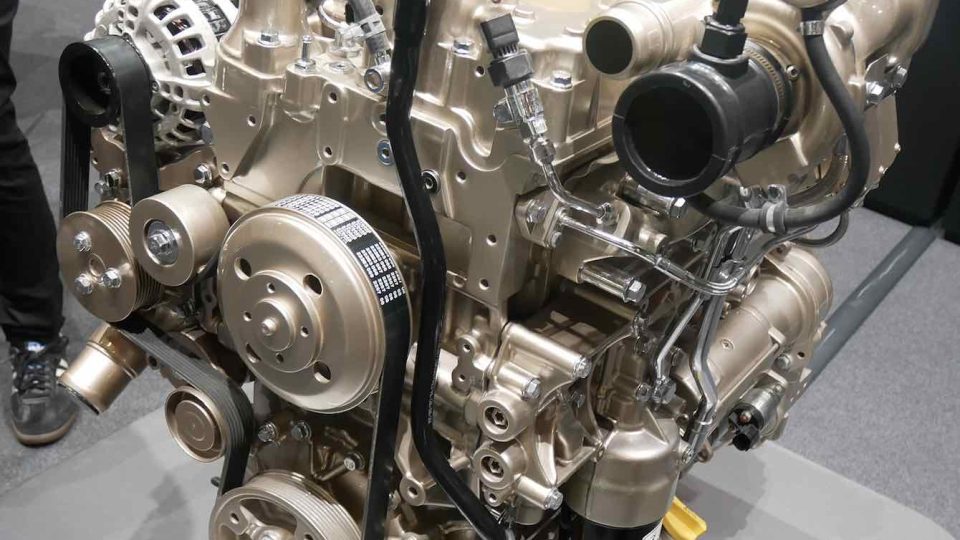
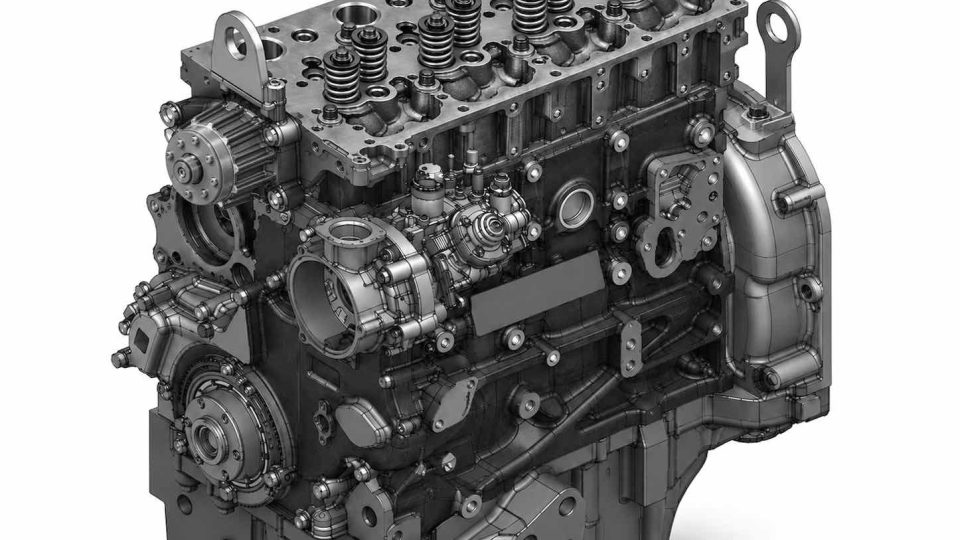
The range retains four models — 1151, 1156, 1162 and 1167 Vario MT — but pushes the power band from 521 to 680 hp. The first three adopt the MAN D38 six-cylinder, 15.2-litre engine, rated at 521, 571 and 625 hp respectively, while at the top of the range the 1167 is fitted with the MAN D42, a 16.2-litre unit capable of developing 680 hp (500 kW) and a maximum torque of 3,100 Nm.
The low-rev Fendt iD concept remains central: the engine’s operating range runs roughly between 1,000 and 1,700 rpm, with the torque curves developed to deliver maximum torque already at the lower end of that range. This is intended to keep fuel consumption, noise and wear in check without sacrificing responsiveness under load. On the D42, a new piston design has also been introduced to improve combustion efficiency, although at the time of the presentation Fendt had not yet disclosed quantitative figures for fuel savings.
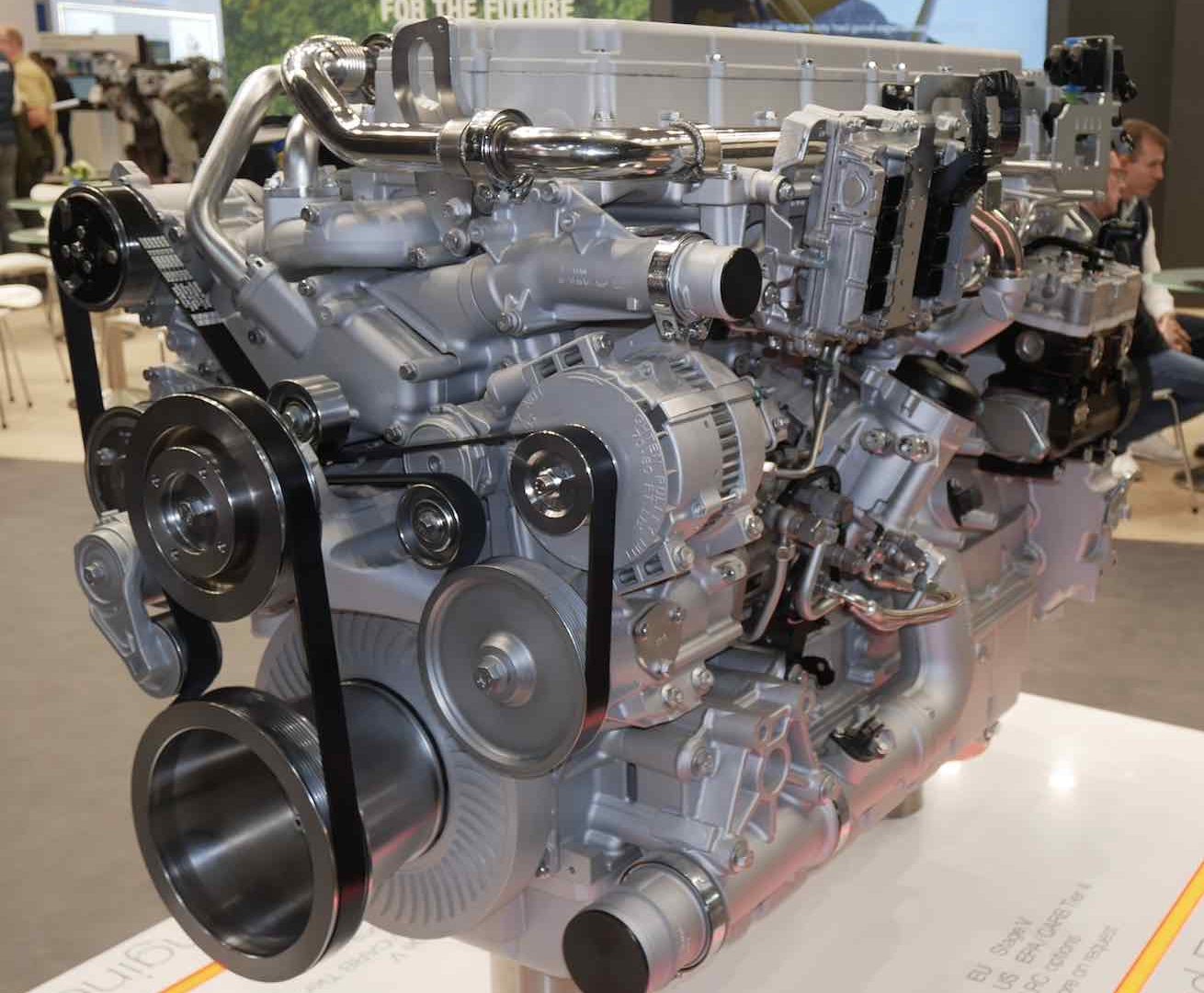
The VTG turbocharger also takes on the role of exhaust engine brake, a particularly useful solution when working with heavy towed implements that have no braking system of their own. Tank capacities have also increased, to 1,370 litres for diesel and 141 litres for AdBlue. The engines can also run on fuels compliant with EN 15940, including HVO.
Reinforced VarioDrive for the 1167
One of the most technically significant changes concerns the transmission. The VarioDrive principle remains the familiar one, with both hydraulic motors acting on the rear axle and one of the two decoupled at higher speeds to improve efficiency. On the new generation, however, the transmission has been reinforced to handle the full power output, including the 1167’s 680 hp.
It is precisely this combination that allows Fendt to claim the 1167 as the most powerful tracked tractor on the market fitted with a continuously variable transmission. The Tractor Management System automatically coordinates engine speed and transmission ratio according to the operator’s set speed and the load, keeping the powertrain within its most efficient operating range. This means no gear changes are needed as ground resistance or gradient varies — one of the clearest advantages of the Vario solution when working long hours with high-draft equipment.
The 2-track layout remains the heart of the machine
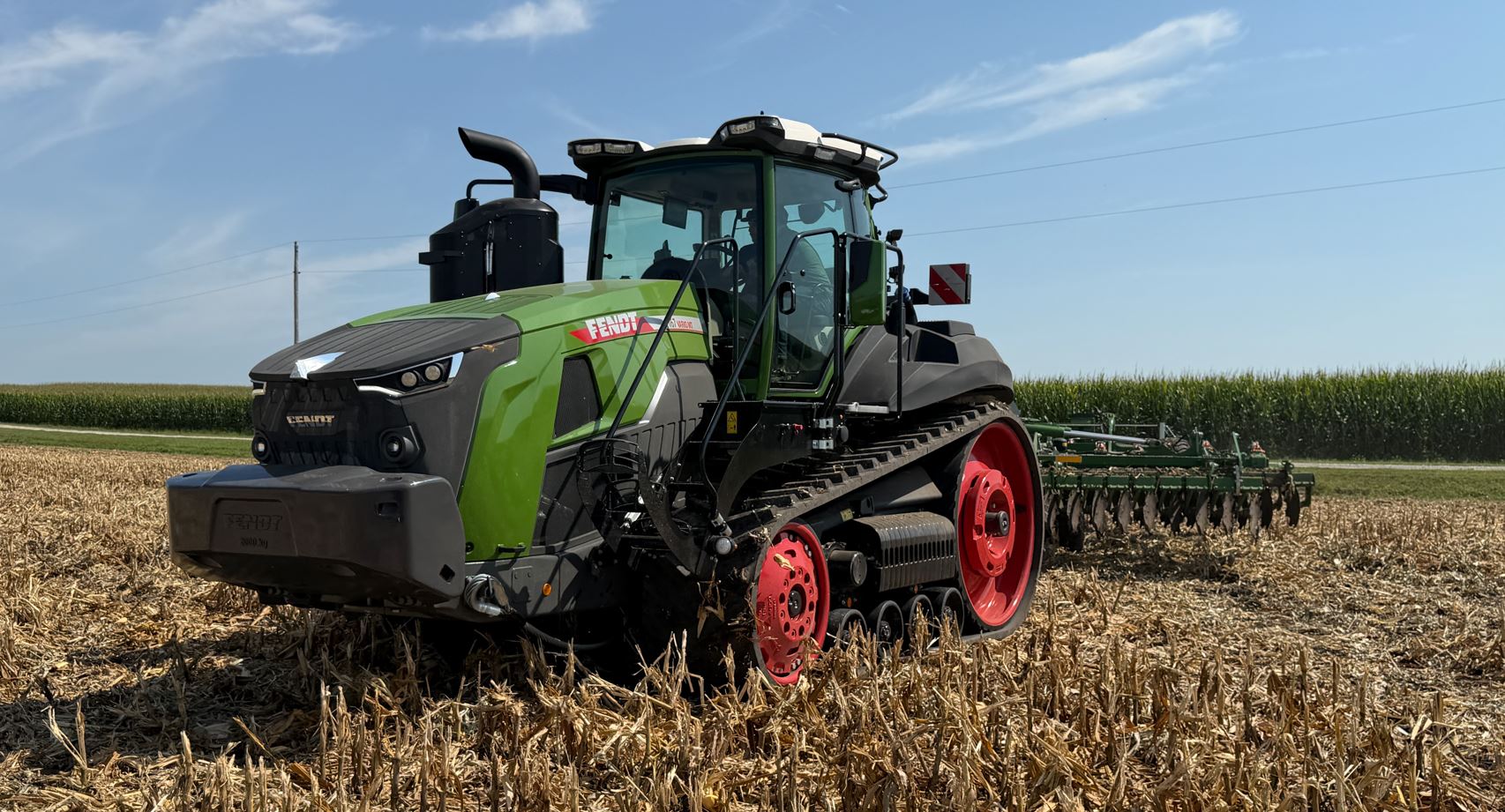
While the engine and transmission have evolved, Fendt has left the fundamental principle of the 1100 MT unchanged. The two-track Mobile Trac System architecture is one of the defining features of a lineage that traces back to the early Caterpillar Challengers, and one the manufacturer still regards as particularly effective for heavy-duty work.
Each track unit comprises a large rear drive wheel, a front idler wheel and eight mid-rollers arranged in two rows, giving a longitudinal ground contact area of around three metres. The rubber tracks (Michelin on the test models) are offered in different widths and configurations depending on market and application.
The SmartRide suspension allows the two track units to oscillate independently, following the contours of the ground, while pivoting bogies keep the rollers in contact with the surface. The aim is twofold: to transfer the available torque to the ground and to spread the load over as wide an area as possible. Compared with a conventional wheeled tractor, the larger contact area helps limit slippage and ground pressure, with particularly noticeable benefits on heavy soils.
Steering also follows a distinctive philosophy. The tractor doesn’t turn by braking one track; instead, a dedicated circuit generates a speed differential between the two belts while keeping tractive power available. Counter-rotation is possible, giving an extremely tight turning radius, though this manoeuvre naturally needs to be judged against ground conditions.
Hydraulics up to 440 litres/minute
To power increasingly demanding implements, the dual-pump Load Sensing hydraulic system remains available, with two 220 litre/minute units. The two circuits can operate independently — useful, for instance, with a pneumatic seed drill, where the fan requires high flow at relatively low pressure while other consumers simultaneously demand higher pressure and lower flow. This helps limit throttling losses. The working hydraulics and transmission circuits also remain separate, avoiding any contamination of the gearbox oil. Up to eight spool valves and 83 litres of extractable oil are available.
Other Features
- Operating weight starts at around 19.7 tonnes
- Ballasting up to 26.8 tonnes
- SmartRide+ function
- Link Control
- X6 Heavy Duty cabin
- ISOBUS, documentation and order management, telemetry
What makes the Fendt 1167 unique in its segment?
It is the most powerful continuously variable tracked tractor on the market, with the transmission reinforced to handle the full 680 hp delivered by the MAN D42 engine.
How does the Fendt 1100 MT achieve its tight turning radius without a conventional steering system?
Rather than braking one track, a dedicated hydraulic circuit creates a speed differential between the two tracks, allowing counter-rotation and an extremely tight turning radius while keeping full tractive power available.
What is new in the operator environment on the Gen2 model?
The new X6 Heavy Duty cab brings the FendtONE interface — multifunction joystick, configurable controls, 3L-Joystick, digital dashboard and a 12-inch armrest terminal — aligning the tracked tractor with the rest of the Fendt wheeled-tractor range.
What North American-specific features have been built into the design?
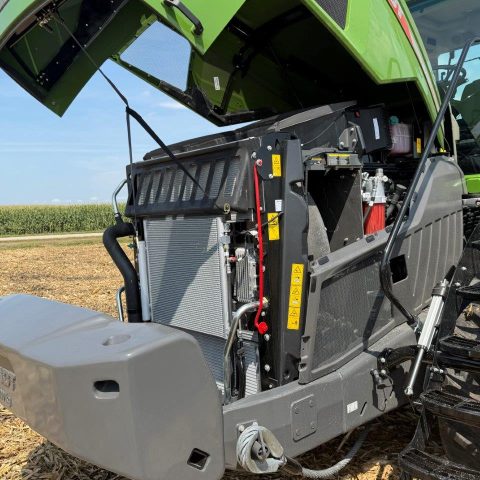
A reversible fan can invert airflow to clear debris from the grille and radiators, while a passive suction system with cyclonic separators continuously removes dust from the engine air filter — features developed for demanding US field conditions.