Balancing in Traction Batteries, according to AVILOO
Independent battery diagnostics specialist AVILOO explains how intelligent balancing within the BMS ensures the performance and safety of modern electric vehicles
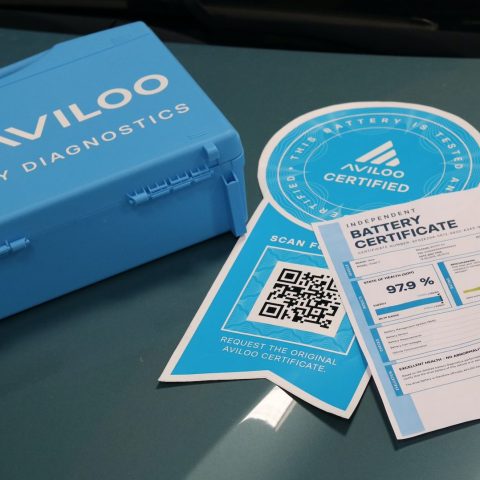
Managing the efficiency and lifespan of a BEV system is a world away from managing an internal combustion engine. A vital aspect is the traction battery, and AVILOO has plenty to share on the subject. After all, when the going gets tough, the tough get going. So, let’s give room to the experts: AVILOO is a well-known player in battery diagnostics for electric and plug-in hybrid vehicles.
Modern electric vehicles rely on high-performance traction batteries consisting of hundreds to thousands of individual cells. These cells are connected in series and in parallel to provide the voltage and capacity required for vehicle propulsion. While a single cell delivers only around 3.0 to 4.25 volts, electric vehicles require system voltages of 300 volts or more. To achieve this voltage, numerous cells are connected in series. To deliver the desired driving range, additional cells are connected in parallel to increase the overall capacity.
The AVILOO CPO Give Us a Typical Example
Patrick Schabus, Chief Product Officer at AVILOO, gives a typical example: “Three cells are connected in parallel to form a cell group (cell level). Of these cell groups, 108 are connected in series – resulting in a total of 324 cells in a single traction battery. In parallel-connected cells, the state of charge equalizes automatically, but this is not the case with cells connected in series. This is where a critical technology comes into play: balancing.”
But why is this process so important? Balancing refers to equalizing the states of charge (SoC) of the individual cell levels within a battery pack. Without balancing, differences in the state of charge cannot compensate for themselves. Even minimal deviations during initial assembly, or factors such as manufacturing tolerances, thermal differences, aging effects, and uneven load distribution, lead to imbalance over time. The result: individual cells reach full charge or depletion earlier than others – and the weakest cell ultimately determines the usable energy of the entire pack.
An imbalanced battery system can have far-reaching consequences. Imbalance not only reduces driving range, but can also result in an incorrect state-of-charge indication and, consequently, a significant overestimation of range. Even more critical is the fact that imbalance can accelerate battery aging, potentially leading to secondary damage and, in extreme cases, cell defects with an increased risk of fire.
In electromobility, top balancing is the standard approach: at the end of the charging process, the states of charge of the cells are equalized to ensure accurate range calculation and maximum usable energy extraction. Without this process, the performance of modern electric vehicles would continuously decline. The importance of balancing increases with system complexity. In 800‑volt architectures, twice as many cells are connected in series compared to 400‑volt systems – a challenge that can only be managed through reliable balancing.
Balancing and State of Health (SoH)
Balancing is closely linked to the diagnosis of cell condition. The battery management system records key parameters such as capacity loss, internal resistance, and charging behavior. AVILOO uses this data in combination with the FLASH Test to precisely determine both the balancing status and the state of health of a battery. To this end, cell voltages are read out, states of charge are calculated, and the results are visualized in a heat map – ranging from green (optimal) to red (critical).