Caterpillar announces the introduction of an integrated microgrid power system for telecommunications towers
The system employs solar PV panels and a Caterpillar diesel generator set to power the telecommunications system while fully charging an energy time-shift storage system.
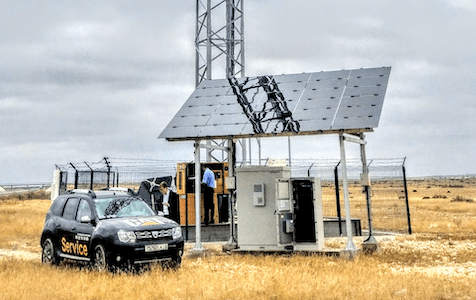
Caterpillar announced the introduction of an integrated microgrid power system for telecommunications towers capable of reducing diesel fuel consumption and associated carbon emissions by up to 80% while decreasing total owning and operating costs.
Available initially from Caterpillar dealers in Africa and the Middle East, the microgrid system employs solar PV panels and a Cat diesel generator set to power the telecommunications system while fully charging an energy time-shift storage system. Power is drawn from energy storage when solar power is not available at night or in inclement weather.
Hybrid power systems can reduce total owning and operating costs, substantially decrease fuel consumption and associated greenhouse gases, and maximize system reliability. They are particularly well-suited for applications in remote areas where grid power is intermittent or unavailable and fuel delivery is challenging and costly. The system features a modular design enabling the addition of components to increase power output for rising traffic and network upgrades over time.
This field-proven system can be offered through an Energy-as-a-Service agreement, which supplies a turnkey solution for addressing power needs and climate-related goals without requiring customers to purchase or maintain system assets. Optimized, deployed and supported by select Cat dealers, this agreement enables telecommunications customers to amortize start-up costs and outsource responsibility for service and maintenance while reducing the risk of obsolescence.
“As customers embark on the energy transition journey, they are seeking tailored solutions to meet their requirements,” said Stephanie Baughman, Retail Vice President for Caterpillar Electric Power. “Our hybrid solution for telecommunications towers combines next-generation power technologies with industry expertise and a flexible service agreement that delivers a sustainable, reliable and cost-effective solution to our customers.”
Caterpillar actively contributes to a reduced-carbon future through continued investments in new products, technologies and services. These include commercially available power solutions capable of operating on hydrogen fuel; Distributed Energy Resource Management System (DERMS) software solutions for monitoring, managing, and monetizing on-site energy assets; a full hybrid energy solutions technology suite; Cat combined heat and power (CHP) systems and combined cooling, heat and power (CCHP) systems; support for hydrotreated vegetable oil (HVO), biodiesel, and blended fuel products; and solutions expertise in landfill gas, biogas, and other waste-to-energy applications.