Volvo Penta at ConExpo with solutions towards net-zero
Volvo Penta showcased its strengthened portfolio of electromobility and combustion solutions at ConExpo to meet the industry’s net-zero ambitions.
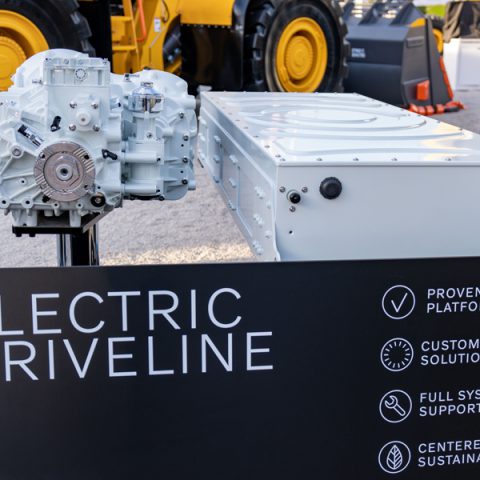
Volvo Penta presented technologies and service offerings at ConExpo that will support both the current demands to reduce emissions, and the future business needs, of construction and mining customers. The company’s growing foothold as an electromobility systems supplier is the catalyst to the next-stage collaborative partnership with its customer Gradall – which was unveiled at the show this week. The leading North American telescopic boom excavator manufacturer is presenting an electrified concept model of its multipurpose, highway-speed wheeled excavator, powered by Volvo Penta’s electric driveline.
Shortly before ConExpo, Volvo Penta announced it was expanding its power generation business into battery energy storage systems (BESS) with OEMs. The company has unveiled its first collaborative, customer partnership in this sector with decentralized and microgrid systems leader Utility Innovation Group.
“These collaborative partnerships mark new milestones in Volvo Penta’s electromobility journey and demonstrate how we can show up for our customers and support them with their energy transitions,” says Fredrik Högberg, President of Volvo Penta North America.
Built for heavy-duty applications
At ConExpo Volvo Penta showcased its electric driveline alongside its current portfolio of efficient Tier 4 Final combustion engines – the D5, D8, D13 and D16. The electric driveline leverages proven technologies from the Volvo Group and is strengthened by Volvo Penta’s deep and varied application knowledge in off-highway power solutions. This results in solutions that are built to handle the tough conditions that are found in the construction and mining industries.
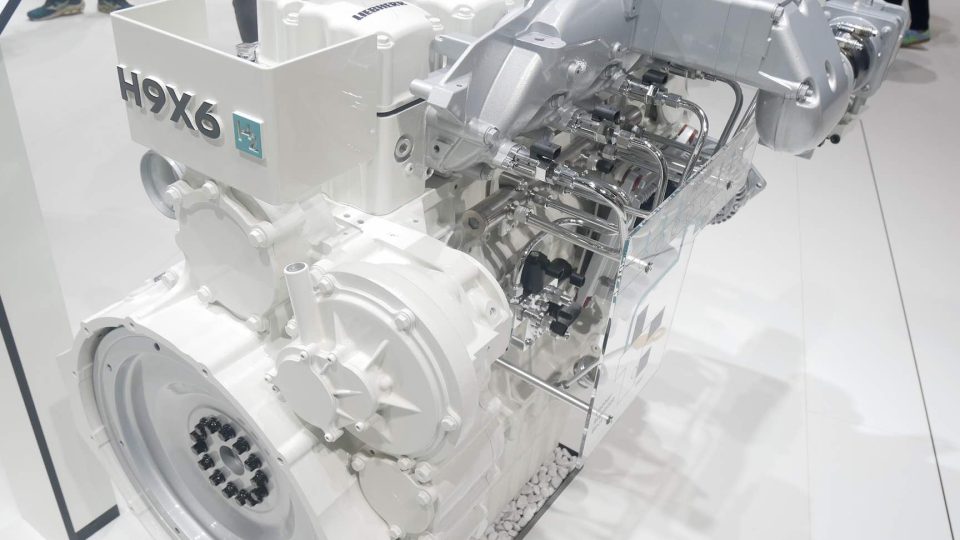
Since 2016, Volvo Penta’s industrial engines can run on renewable diesel (HVO), enabling a lower-emissions power option. Further supporting customers who are looking to transition to low-carbon solutions, is Volvo Penta’s dual-fuel hydrogen engine – an evolution of the company’s proven D8 model. The engine mainly uses hydrogen as a renewable fuel source and reduces CO2 emissions by up to 80%, without impacting power or performance. Volvo Penta will continue to evolve its engine range to run on compatible alternative fuels, enabling the transition towards lower-emissions.