cellcentric introduces brand-new BZA375 fuel cell
The new product was developed by cellcentric in less than three years, "through a combination of innovative solutions, continuous improvement and a solid understanding of customer requirements". According to the company, BZA375’s single-system design enables the transition away from the “twin-system” approach so far applied for BZA150 in the heavy-duty truck target application
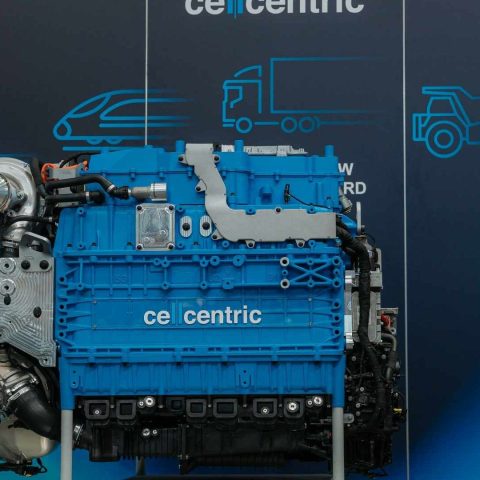
cellcentric, the joint venture shared by Volvo Group, Daimler Truck, and now also Toyota, focused on the development of fuel cell systems for heavy-duty commercial mobility, has recently launched a brand-new product, named BZA375. The latter is a fuel cell system designed, among other possible applications, for heavy-duty transportation. The BZA375 was introduced at Hannover Messe in these days.
The new product was developed in less than three years, “through a combination of innovative solutions, continuous improvement and a solid understanding of customer requirements”. According to the company, BZA375’s single-system design enables the transition away from the “twin-system” approach so far applied for BZA150 in the heavy-duty truck target application. This design reduces complexity, enables easy incorporation into existing vehicle platforms designed for diesel powertrains, and allows for a more compact, cost-effective integration for cellcentric’s OEM customers.
cellcentric’s new fuel cell system: some key features
First prototypes have been undergoing rigorous performance and durability testing for months and are now available to cellcentric’s customers for their own testing and validation activities. These are the new product key performance, as stated by cellcentric:
- up to 375 kW continuous net power – more than 500 horsepower – out of a single-system package
- 20% less fuel consumption vs. the previous cellcentric fuel cell system BZA150, enabling a fully loaded 40-ton truck to operate on less than 6 kg of hydrogen per 100 kilometers under real-world driving conditions
- 40% reduction of waste heat at 300 kW net power vs. BZA150, enabling significantly more compact and cost-effective cooling systems
- 40% higher power density vs. BZA150 – further facilitating integration into existing vehicle architectures, designed to fit into engine compartments originally developed for conventional 13-liter diesel engines
- 40% reduction in complexity vs. BZA150, thanks to a significant reduction in components and interfaces
- less than 500 kg weight, allowing payload levels to be maintained at levels customers expect from proven diesel technology.